
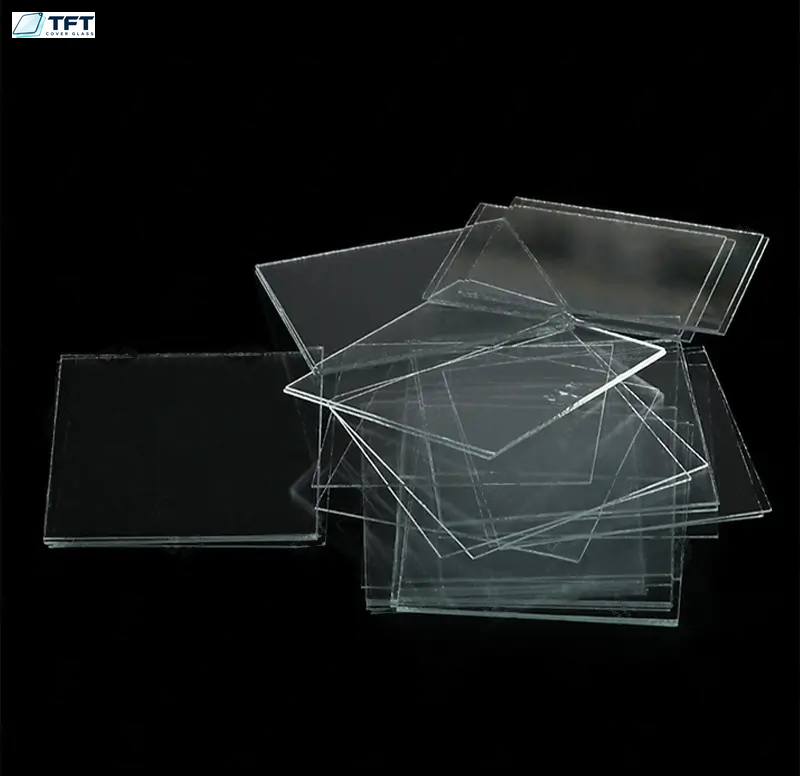
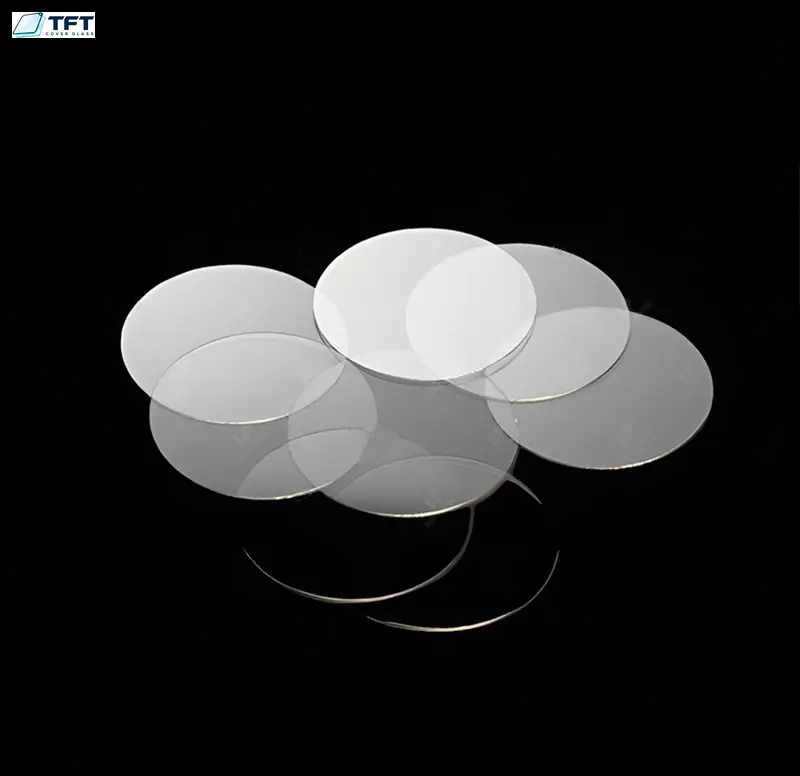
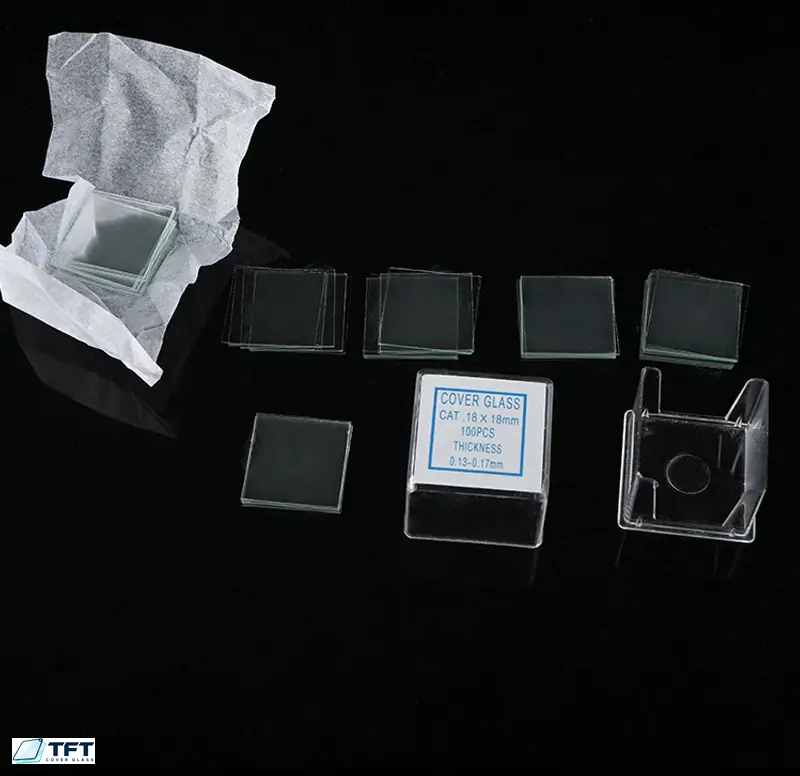
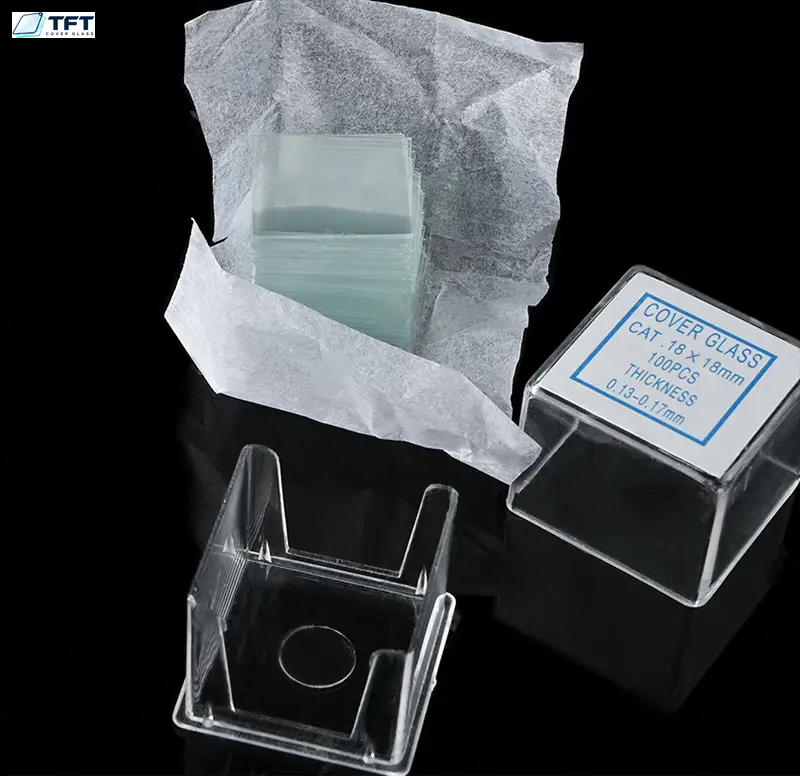
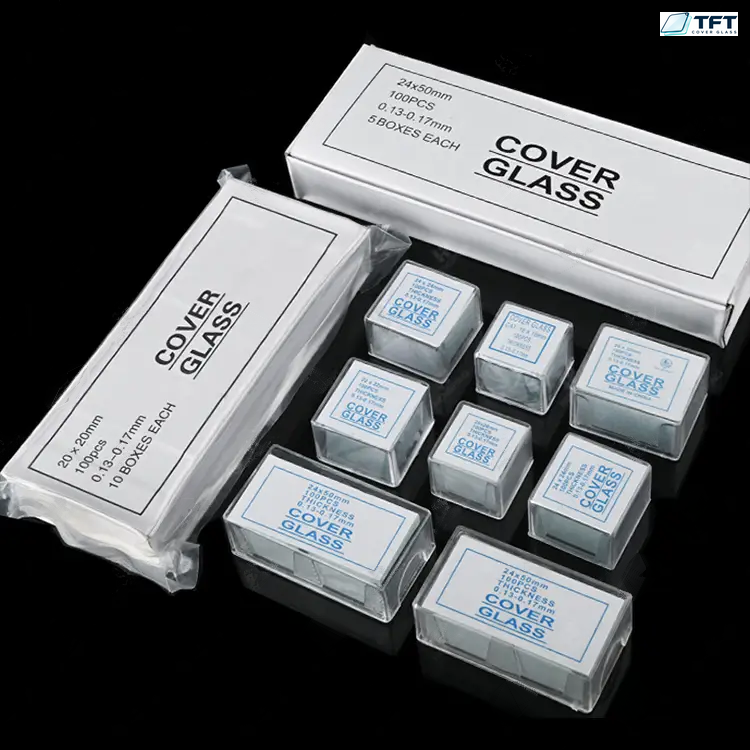
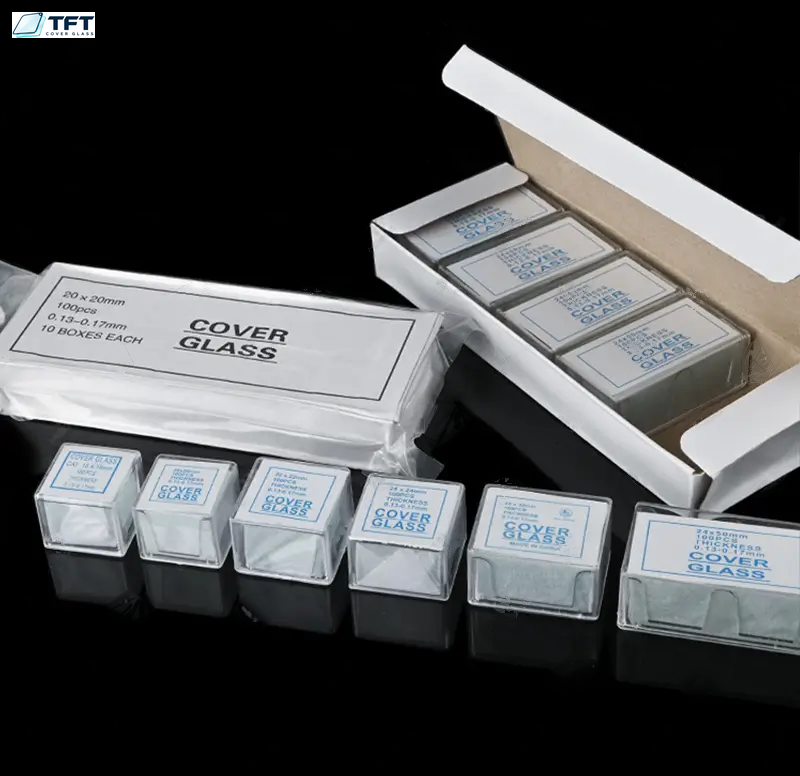
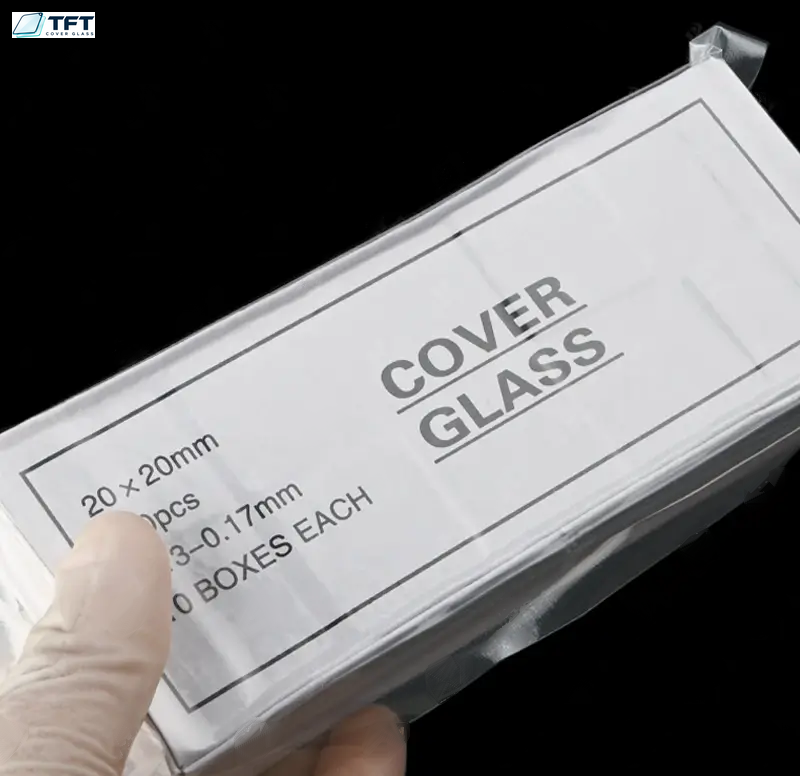
Key Functions of Microscope Cover Glass
- Keeps solid specimens flat and liquid samples in a uniform thin layer (essential for high-resolution microscopy with shallow depth of field).
- Holds the specimen in place via weight or surface tension.
- Protects the sample from dust, contamination, and accidental contact.
- Prevents the objective lens from touching the specimen or immersion oil/water.
- Enables permanent mounting by sealing with mounting media (e.g., commercial sealants, nail polish, or VALAP – a Vaseline/lanolin/paraffin mixture).
- Allows direct growth of cells or microorganisms on the cover glass before mounting.
Key Technical Specifications of Microscope Cover Glass
Thickness Standards
Cover glass thickness directly affects image quality in high-resolution microscopy. Objectives are typically corrected for No.1.5 (0.16–0.19 mm, ideally 0.17 mm). Deviations cause spherical aberration, blur, and reduced resolution.
Standard Grades
- No.0: 0.05–0.13 mm
- No.1: 0.13–0.16 mm
- No.1.5: 0.16–0.19 mm
- No.1.5H: 0.17–0.18 mm
- No.2: 0.19–0.23 mm
- No.3: 0.25–0.35 mm
- No.4: 0.43–0.64 mm
Correction collars on some objectives allow adjustment for different thicknesses.
Practical Usage Tips
- Apply at a 45° angle and lower slowly to avoid bubbles.
- Clean reusable cover glasses with detergent; for high-precision work, use ultrasonic cleaning or chromic acid soak + distilled water rinse.







 EN
 FR
 DE
 ES
 PT
 IT
 NL
 DA
 RU
 AR
 TR
 JA
 KO
 ID
 UK
 TH
 VI
 PL
 MS
 ET
 EL