
Introduction
In the custom display industry, the cover glass is more than just a protective layer—it is the primary interface between the user and the device. At TFT Cover Glass, we emphasize the importance of the “3A Surface Treatments” (AF, AR, and AG) to ensure a premium experience. While AG and AR are crucial for optical clarity, Anti-Fingerprint (AF) coating has become the non-negotiable standard for modern full-lamination display modules. From rugged industrial HMIs to precision medical instruments, AF coating is what delivers that essential clean, smooth touch.
But what science lies behind that smooth, smudge-resistant surface? In this guide, we break down the principles, manufacturing technologies, and performance metrics of anti-fingerprint (AF) coating to help you make informed decisions for your next project.
What is Anti-Fingerprint (AF) Coating on Cover Glass?
Anti-Fingerprint (AF) coating, also known internationally as anti-smudge or oleophobic coating, is a specialized coating (film) applied to the surface of the cover glass. Fingerprints are essentially residues of contaminants, primarily oil, sweat, and dust, that stick to a surface after it is touched. On untreated glass panel, these contaminants adhere stubbornly, creating unsightly smudges.
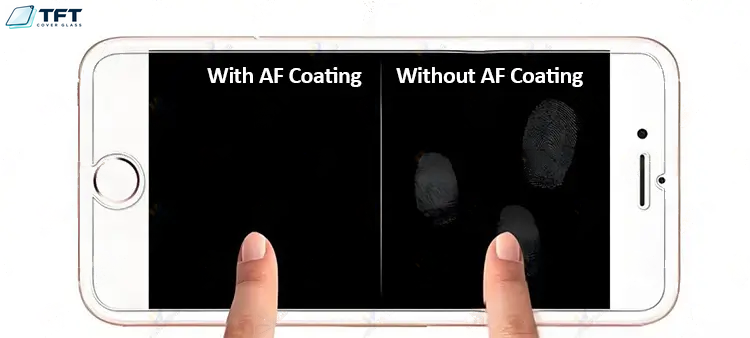
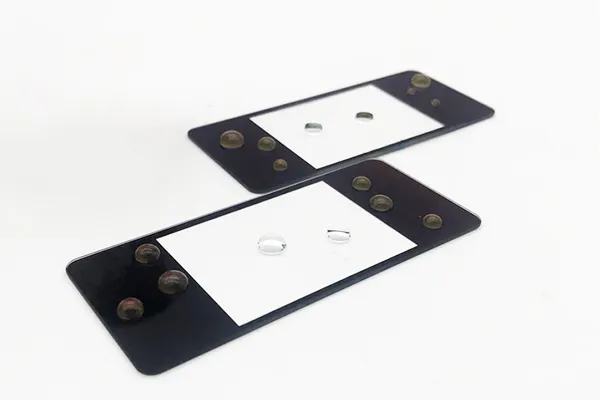
The anti-fingerprint (AF) coating works by chemically modifying the glass surface to minimize these residues. In simple terms, it mimics the “Lotus Leaf Effect.” Just as water beads up and effortlessly rolls off a lotus leaf, an anti-fingerprint coated glass surface repels liquids and oils. By changing the surface’s wetting properties, the coating prevents contaminants from adhering strongly.
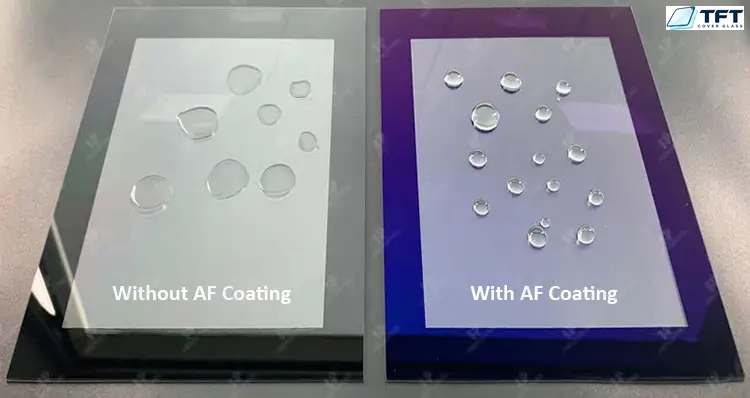
Ultimately, this creates a cover glass that is highly hydrophobic (water-repelling), feels incredibly smooth to the touch, and is easy to wipe clean, maintaining a pristine appearance for longer. (Read more: )
How Does Anti-Fingerprint Coating Actually Work? (Oleophobic vs. Hydrophobic)
The magic of anti-fingerprint (AF) coating lies in its nano-scale chemistry. The coating creates an ultra-thin layer on the glass surface that drastically reduces surface tension.
Hydrophobic vs. Oleophobic
Before examining the chemistry, it is important to distinguish these properties:
Hydrophobic coatings repel water, while oleophobic coatings specifically repel oils and greasy contaminants such as skin sebum. Most high-quality anti-fingerprint coatings used on displays combine both hydrophobic and oleophobic properties to effectively reduce smudging from sweat and finger oils simultaneously.
The Core Material of Anti-fingerprint Coating
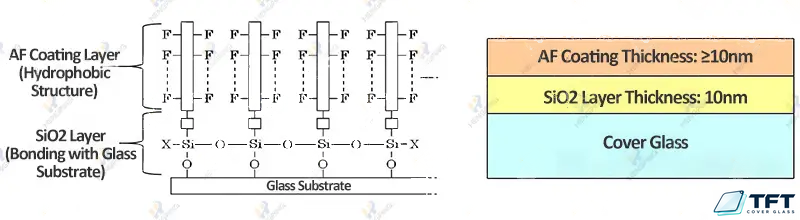
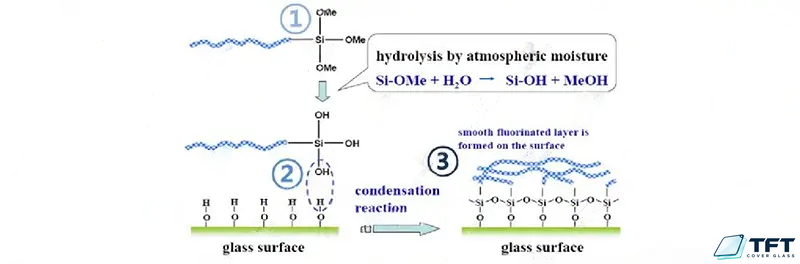
The core material used to achieve this is typically a fluorine-containing compound. Its molecular structure contains two key groups:
- Active Silane Group: This group reacts chemically with the water (hydroxyl groups, -OH) naturally present on the glass (SiO2) surface. It forms a strong covalent bond (Si-O-Si), anchoring the coating firmly to the glass substrate.
- Organic Fluorine Group: This group faces outward and provides extremely low surface tension. This is what delivers the hydrophobic (water-repelling) and oleophobic (oil-repelling) properties.
The Reaction Mechanism of Anti-fingerprint Coating
The silane hydrolyzes with moisture in the atmosphere to form silanol, which then reacts with the hydroxyl groups on the glass surface. This reaction ensures the AF layer isn’t just “sitting” on the glass but is chemically bonded to it.
Why Should Apply Anti-Fingerprint Coating on Cover Glass?
There are various methods to achieve surface anti-fouling, such as applying specific anti-fouling paints, physical micro-carving, or AG (Anti-Glare) matte etching. However, these mechanical or etching processes can negatively affect the transparency, surface roughness, or smoothness of the glass to varying degrees.
Therefore, for full-lamination display modules, the industry standard is to apply a transparent anti-fingerprint (AF) layer via evaporation or spraying. Anti-fingerprint (AF) coating is the preferred solution because it offers unique characteristics that other processes cannot match:
- Touch Experience: It significantly lowers the friction coefficient, giving the glass a “silky” or smooth feel that users love.
- Preserves Original Texture: It does not alter the glass’s original texture.
- Optical Clarity: It has excellent optical properties and does not reduce light transmission.
- Low Surface Tension: It provides superior hydrophobic and oil-resistant effects.
- Durability: It offers good weather resistance, chemical resistance, and high abrasion resistance.
What Are the Main Industrial Technologies for Applying Anti-Fingerprint Coating?
There are two mainstream technologies used in the industry today: Vacuum Evaporation (PVD) and Spraying (Wet Method). At TFT Cover Glass, we choose the method based on the specific requirements of the project.
AF Vacuum Evaporation (The Premium Method)
This process utilizes Physical Vapor Deposition (PVD) to create a high-quality coating.
The Mechanism of AF Vacuum Evaporation Technology
Under vacuum conditions, an electron gun emits a high-speed electron beam that bombards and heats the AF material. This causes the material to evaporate and deposit onto the glass cover, forming a dense, uniform film.
The AF Vacuum Evaporation Process Steps
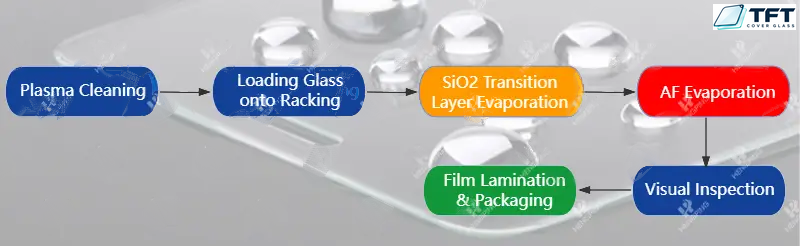
- Preparation: First, the glass cover is thoroughly cleaned. It is then arranged and suspended inside the vacuum coating chamber.
- Coating (The Key Step): Unlike simple spraying, this process involves two stages. A SiO2 layer is deposited first to act as a transition layer, followed by the deposition of the actual AF film.
- Post-Processing: The glass is removed from the machine and placed in a clean room for a “static setting” period of over 2 hours. Only after this rest period does it undergo visual inspection, protective lamination, and packaging.
Why is the “Static Setting” Necessary?
You might wonder: If the coating is done, why wait 2 hours before packaging?
Even though the anti-fingerprint coating (film) has formed on the glass, its chemical state is initially unstable. The static setting period allows residual active groups to continue reacting fully. This curing time is vital for ensuring the coating achieves its expected performance, specifically regarding maximum adhesion and abrasion resistance.
AF Spraying (The Cost-Effective Method)
The AF spraying process was developed as an alternative to vacuum evaporation with a specific goal: to save on equipment costs. It represents a low-cost, high-yield anti-fingerprint (AF) coating technology.
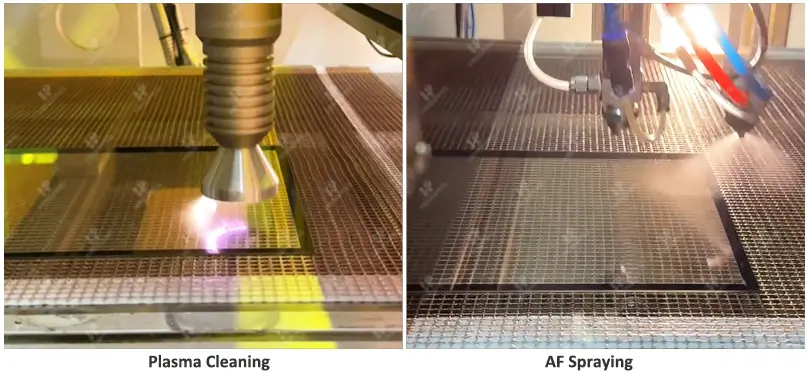
The Mechanism of AF Spraying Technology
This method utilizes high pressure to spray the liquid AF solution uniformly onto the cover glass surface to form the AF film layer. Subsequently, the glass is subjected to a baking process at specific temperatures (160~180°C) for a set duration (10~15 minutes). This baking step is crucial to ultimately enhance the adhesion of the AF layer to the glass surface.
The Workflow of AF Spraying Method
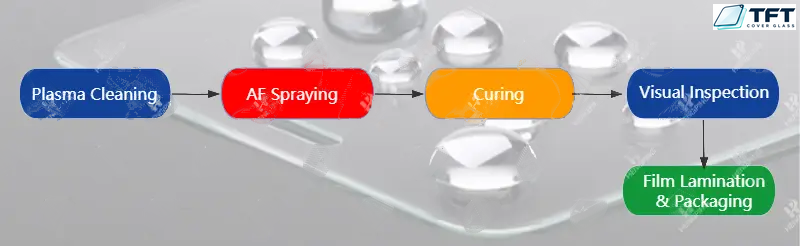
Compared to the vacuum evaporation process, the workflow for AF spraying is much simpler. Its main production sequence primarily consists of plasma cleaning, followed by the AF spraying and baking (curing) stages. Finally, the glass undergoes visual inspection before moving to protective lamination and packaging for shipment.
Comparison: Spraying vs. Vacuum Evaporation
From a technical perspective, the fundamental difference between the AF spraying process and the AF vacuum evaporation process is that the vacuum evaporation method involves a SiO2 transition layer. This layer is formed in a single step with the AF film under vacuum conditions, whereas the spraying process lacks this transition layer.
In the AF vacuum evaporation process, because SiO2 acts as a transition layer, it establishes a strong bond with the glass substrate. Consequently, the AF film formed via vacuum evaporation comprehensively outperforms the sprayed AF film in extreme performance tests. The most direct evidence of this superiority is found in abrasion resistance tests and chemical resistance tests.
Here has summarized the pros and cons of these two mainstream anti-fingerprint (AF) coating technologies in the table below:
| Parameter | AF Solution (Spraying) | AF Pellets (Vacuum Evaporation) |
| Equipment Cost | Low | High |
| Coating Process | Plasma Pre-treatment + Spraying | Vacuum Evaporation |
| Production Cycle | Continuous, 0.5m/min | Interval (Batch), 30~40 min/furnace |
| Capacity | ~2000 pieces/hour | ~500 pieces/hour |
| Water Contact Angle | ≥110° | ≥110° |
| Abrasion Resistance | Relative Deviation | Better |
| Comprehensive Cost | Low | Medium |
In summary:
For mid-to-low-end cover glass panel, the spraying process generally meets all requirements. Due to its low cost and high production efficiency, it is often the priority choice.
However, for high-end cover glass panels that demand superior reliability, durability, and abrasion resistance, especially those requiring AR coating, the vacuum evaporation process is the ideal choice.
How Are the Performance and Durability of AF Coating Evaluated?
Once the anti-fingerprint (AF) coating process is complete, a comprehensive evaluation of its effect and performance is an essential step. The results from this evaluation serve as critical feedback, driving the optimization of AF pellet and liquid selection as well as the adjustment of process parameters. This continuous cycle is necessary to ensure the anti-fingerprint (AF) coating performance meets strict requirements. (Read more: 5 Key Parameters of Anti-Glare Glass: A Buyer’s Guide >>)
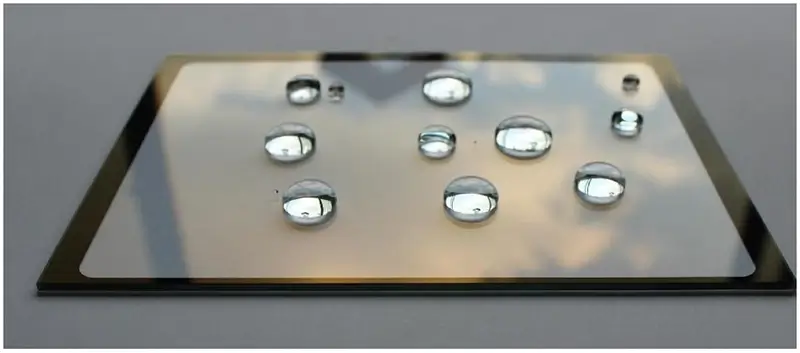
Typically, there are three main methods used to evaluate anti-fingerprint (AF) coating performance: the Water Contact Angle Test, the Abrasion Resistance Test, and the Dynamic Friction Coefficient Test.
Water Contact Angle Test
The Water Contact Angle (WCA) represents the angle formed between a liquid surface and a solid surface when a droplet rests on it, determined by surface tension.
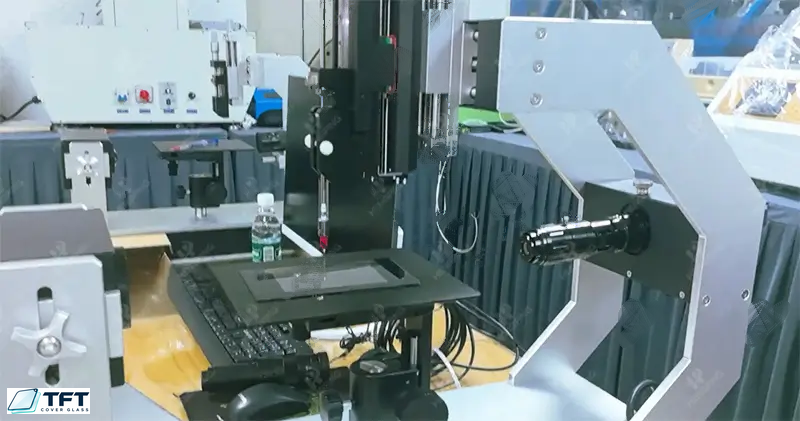
- Purpose: To primarily evaluate the anti-fingerprint performance of the AF coating on the cover glass surface.
- Test Conditions: Place the cover glass with the CG ink side facing down on the test platform. Measure the contact angle on the AF-coated side. It is recommended to test 5 different points to assess the uniformity of the coating.
- Acceptance Criteria: The standard requirement is ≥110°. The strict requirement is ≥115°.
Abrasion Resistance Test
This test typically uses different abrasive materials, mainly steel wool or an eraser. Regardless of the material used, the testing process and criteria are similar.
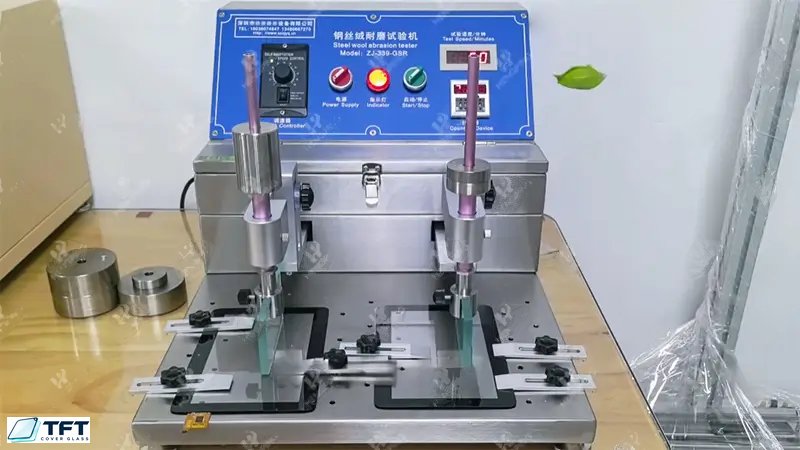
- Purpose: To evaluate the durability and wear resistance of the AF coating layer.
- Test Process:
- Pre-test: Measure the initial WCA at 5 different points. (Standard: ≥110°, Strict: ≥115°).
- Abrasion: Use a 20×20mm grinding head (Strict: 10×10mm) with 0000# steel wool or an eraser. Apply a load of 1000g. Rub back and forth at a speed of 40 cycles/min (Strict: 60 cycles/min) with a stroke length of 40mm. Test for 2,000 cycles (Strict: 2,500 cycles). Note: One back-and-forth movement counts as one cycle.
- Post-test: After the abrasion is complete, measure the WCA at 3 points within the rubbed area.
- Acceptance Criteria: The AF coating must show no peeling, and the Water Contact Angle must remain >100°.
Dynamic Friction Coefficient Test
While some clients may pay less attention to this if the first two tests pass, it is crucial for tactile feedback.
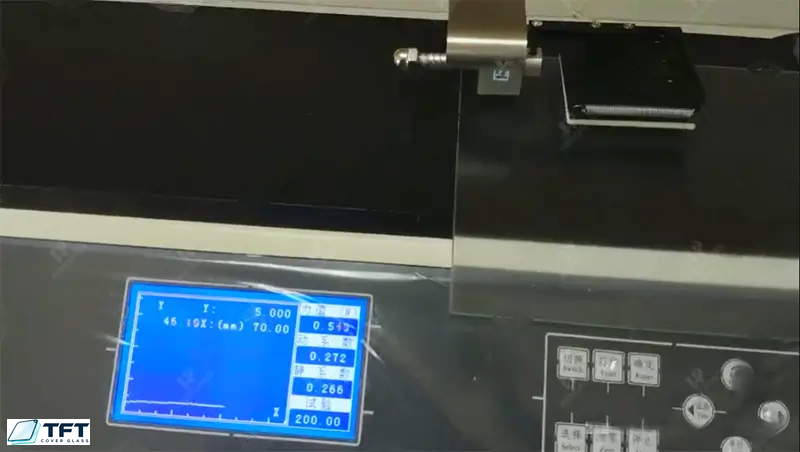
- Purpose: The dynamic friction coefficient affects the touch feel. Without AF coating, the coefficient is high, resulting in a noticeable “sticky” or rough resistance when swiping.
- Test Conditions: Use AS ONE weighing paper placed under a 200±20g load block. Place both on the AF-coated surface of the glass. Drag the load block at a speed of 100mm/min for a distance of 50mm.
- Acceptance Criteria: The standard requirement is ≤0.05. The strict requirement is ≤0.03.
What Are the Differences Between AF, AG, and AR Surface Treatments?
In the professional cover glass industry, the “3A Surface Treatments”, AF, AG, and AR, are often discussed together as the gold standard for high-performance cover glass. While they are frequently combined to optimize a single product, they serve fundamentally different functions regarding optical performance and tactile experience. (Read more: Identifying AG, AR & AF Glass: A Quick Guide for Glass Professionals >>)
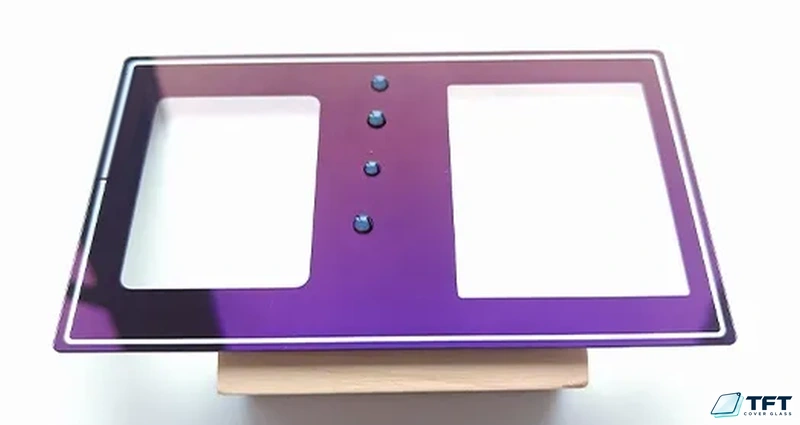
- AF (Anti-Fingerprint): Surface Chemistry & Haptics.
Anti-fingerprint utilizes a fluorocarbon coating to lower surface tension. Its primary goal is to provide oleophobic (oil-repelling) properties, making the glass easy to clean, and to reduce the coefficient of friction, ensuring a smooth, non-sticky touch experience. - AG (Anti-Glare): Light Diffusion.
Anti-glare involves a physical or chemical etching process that alters the glass surface texture (creating a matte finish). This microscopic roughness scatters incident light (diffuse reflection) to eliminate “mirror-like” reflections and reduce glare from strong ambient light. - AR (Anti-Reflection): Light Transmission.
Anti-reflective is an optical coating that uses destructive interference to cancel out reflected light. By reducing reflectivity, it significantly increases the transmittance of light through the glass, making the display appear brighter, sharper, and with higher contrast.
Industry Note: These treatments are not mutually exclusive, but can be combined. For high-end outdoor displays, for example, it is common to apply an AG+AR+AF combination: AG to scatter sunlight, AR to boost brightness, and AF to ensure the surface remains cleanable. In 3A solutions, the AF coating sits atop the stack. This not only ensures easy cleaning but also safeguards the AR and AG coatings from direct physical wear.
Where is Anti-Fingerprint Coated Cover Glass Commonly Used?
Essentially, any glass interface that requires direct user interaction or frequent handling is a prime candidate for AF coating. Without it, high-gloss surfaces quickly become clouded with smudges, ruining the aesthetic and reducing visibility.
Here are the key sectors where AF coating is indispensable:
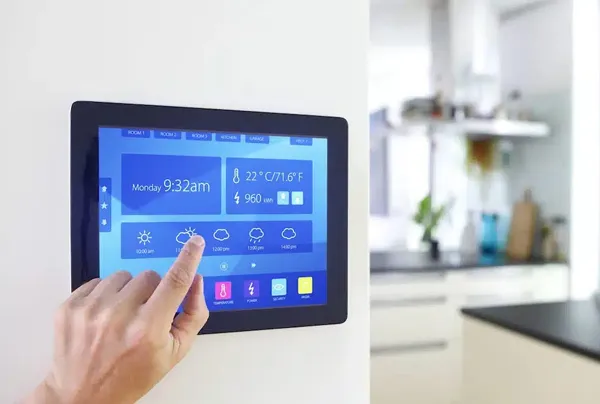
- Smart Home & Appliances:
Smart wall switches, thermostat control panels, smart locks, and touch displays on high-end refrigerators, ovens, and coffee machines. - Automotive Interiors:
Center Information Displays (CID), digital instrument clusters, climate control touch panels, and rear-seat entertainment screens. - Industrial Control (HMI):
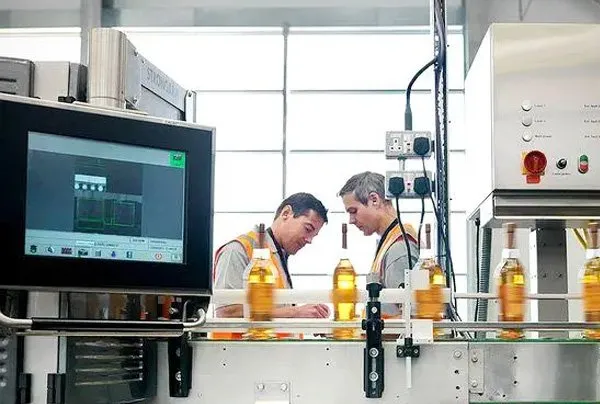
Touchscreens for CNC machines, factory automation controllers, handheld industrial tablets, and ruggedized outdoor monitors. - Medical Devices:
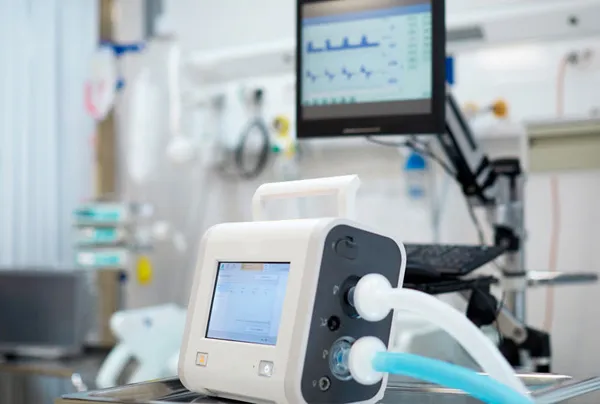
Patient monitoring systems, touch interfaces on ultrasound equipment, handheld diagnostic tools, and control panels for medical carts. - Consumer Electronics:
Smartphones, tablets, smartwatches, laptop trackpads, and camera lenses. - Public Terminals:
ATMs, self-service ticketing kiosks, Point of Sale (POS) systems, and digital signage with touch interaction.
FAQs
Q: Is anti-fingerprint coating permanent?
A: Technically, no surface coating is strictly “permanent” forever, as physical friction will eventually wear down the nano-layer. However, the lifespan depends heavily on the application method.
- Consumer Grade: Typically lasts 6~12 months of heavy daily use.
- Industrial Grade: Coatings applied via Vacuum Evaporation are designed to withstand over 10,000 steel wool abrasion cycles. This equates to years of usage in demanding environments like automotive consoles or ATM touchscreens.
Q: Can AF coating be applied to chemically strengthened glass?
A: Yes. AF coating is typically the final step in the cover glass manufacturing process, applied after cutting, chemical tempering, and printing. It is fully compatible with chemically strengthened substrates (such as Gorilla Glass, Dragontrail, or Panda Glass) and does not compromise the impact resistance or hardness of the underlying glass.
Q: Does anti-fingerprint coating affect screen clarity or color?
A: No. Properly designed AF coatings are nano-thin and transparent, having virtually no impact on color accuracy or brightness. While combining AF with Anti-Glare (AG) textures can introduce a slight haze (a natural property of AG diffusion), the anti-fingerprint layer itself is optically clear and preserves the sharpness of text and images.
Q: Can AF coating be re-applied if it wears off?
A: For end-users, effective re-application is difficult because the process requires plasma cleaning and specific temperature curing to chemically bond the coating to the glass. However, in an industrial manufacturing setting, glass can be re-processed or re-coated using professional equipment.
Q: How much does anti-fingerprint coating cost?
A: While specific pricing depends on the method (Spraying vs. Vacuum Evaporation) and project volume, AF coating adds a modest incremental cost relative to the total value of a display module. Given the market demand for clean, premium-feeling surfaces, it is considered a standard and high-value investment for mid-to-high-end devices.
Conclusion
Anti-fingerprint (AF) coating is more than just a luxury feature; it is a critical component of functional cover glass design. Whether you opt for the cost-efficiency of spraying or the high durability of vacuum evaporation, ensuring your cover glass has a contact angle of ≥110° and passes rigorous abrasion testing is vital for user satisfaction.
At TFT Cover Glass, we specialize in custom cover glass solutions that meet these exacting standards. If you are looking for a reliable partner for your display cover glass needs, visit us to learn more about our manufacturing capabilities.


 EN
 FR
 DE
 ES
 PT
 IT
 NL
 DA
 RU
 AR
 TR
 JA
 KO
 ID
 UK
 TH
 VI
 PL
 MS
 ET
 EL