
The application of cover glass panels has experienced rapid growth over the past few decades, especially driven by display and touch technologies, and glass panels are gradually becoming a key component of all types of devices.
From industrial and medical equipment to smart home, interactive kiosks and advertising displays, the demand for cover glass panels is growing and the performance requirements are getting higher and higher. As technology advances, cover glass panels not only need to be robust and durable, but also require higher display quality and user experience. In these requirements, the Anti-Glare Glass (AG Glass) plays a crucial role. So, what is anti-glare glass? How to check the quality of anti-glare glass?
This article will discuss the most important testing parameters that are usually used to check the quality of anti-glare glass.
What is Anti Glare Glass?
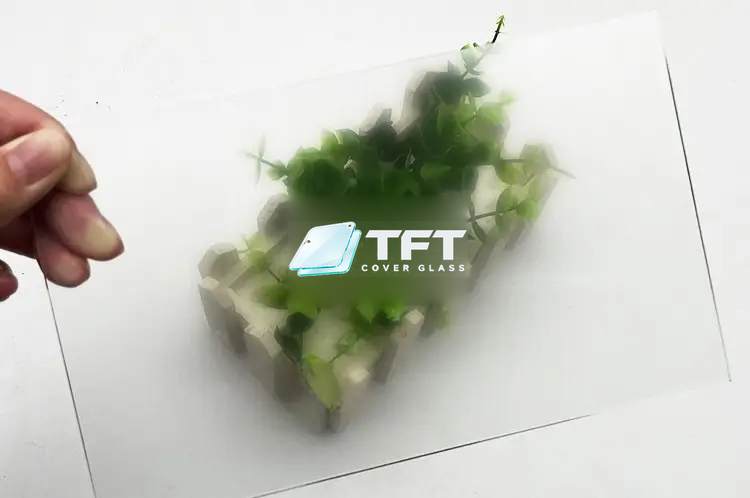
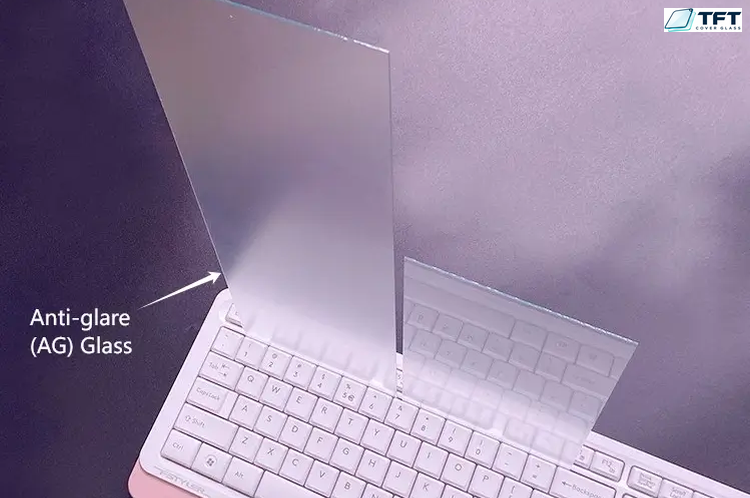
AG glass, also known as Anti-Glare glass or Non-Glare Glass, is a glass that is processed through physical or chemical methods to form tiny etched textures on the glass surface, which effectively scatters or absorbs light, reduces reflections, and enhances the display effect under bright or direct light conditions. (Read more: What Are the Different Types of AG Glass?)

AG glass is vital in the glass panel industry because it significantly improves the visual effect of products and reduces screen glare, especially in bright light environments. AG glass can significantly improve the readability of the screen and the comfort of using it, and it is widely used in a variety of devices that require clear displays, such as industrial control panels, medical device displays, outdoor applications, etc., which enhances the value of the product and the user experience.
What is the Key Testing Parameters of Anti-glare Glass?
Selecting the right anti-glare glass for your application is crucial for optimal performance and user experience, which in turn benefits your business. When faced with the wide variety of anti-glare (AG) glass specifications available on the market, how do you choose the right one?
Importance of AG Glass Testing
AG glass testing is a crucial process to ensure its quality and performance, involving a series of precise measurements to evaluate its anti-reflective properties, optical characteristics, and physical durability.
These tests not only verify that AG glass meets the expected technical specifications but also provide valuable data to optimize manufacturing processes, improve the quality, and ultimately guarantee the reliability and superior performance of AG glass in various applications. Below will detail the key testing parameters and methodologies for AG glass.
Key Testing Parameters of Anti-glare Glass
Key parameters of AG glass assessment includes gloss, surface roughness, haze, transmittance, clarity. Below will detail these key testing parameters and the methodologies employed for their accurate measurement, providing a comprehensive understanding of AG glass quality control and help you to choose the right AG glass for your applications.
Anti-Glare Glass Test Parameter Table
| Item | Single Side | Double Side | ||||||||
| Roughness | 35±10 | 50±10 | 70±10 | 95±10 | 110±10 | 35±10 | 50±10 | 70±10 | 95±10 | 110±10 |
| Gloss | 0.18 | 0.15 | 0.12 | 0.09 | 0.07 | 0.16 | 0.16 | 0.09 | 0.07 | 0.05 |
| Haze (%) | 17 | 11 | 4.7 | 3 | 2 | 17 | 11 | 6 | 2.5 | 1.5 |
| Transmittance | >89% | >89% | >89% | >89% | >89% | >89% | >89% | >89% | >89% | >89% |
Gloss of Anti Glare Glass
Ant-glare glass enables glare reduction and improved screen visibility primarily through diffuse reflection. Therefore, gloss is a critical parameter for evaluating AG glass quality and selecting appropriate AG glass panels.
The Importance of Gloss Measurement
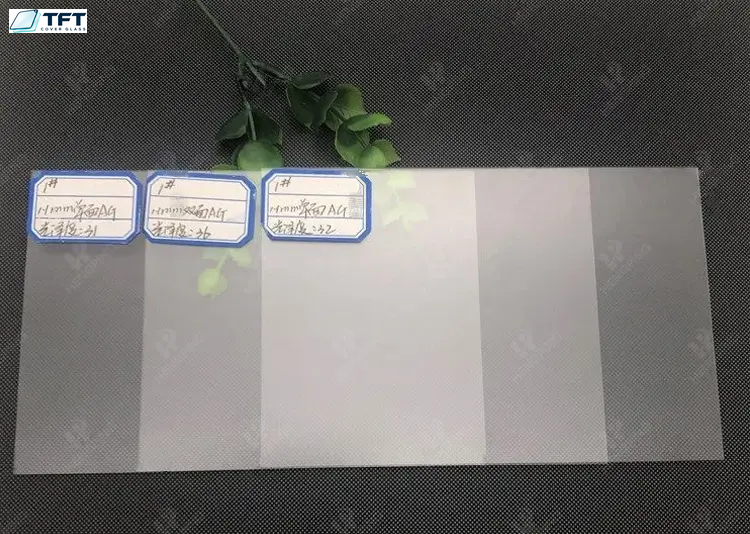
Gloss is a visual attribute of the AG glass surface, reflecting its smoothness and the characteristics of reflected light. It’s closely related to etching time, glass material, and other factors. Accurate gloss measurement is crucial for AG glass quality control, serving as a key inspection index.
The gloss range of AG glass can be controlled between 15 ~ 135 GU. Below are some typical applications of different gloss:
- 15-45 GU: Suitable for electronic whiteboards;
- 50-90 GU: Suitable for regular electronic products;
- >90 GU: Mainly used for automotive dashboard glass panels;
Gloss Measurement Methods
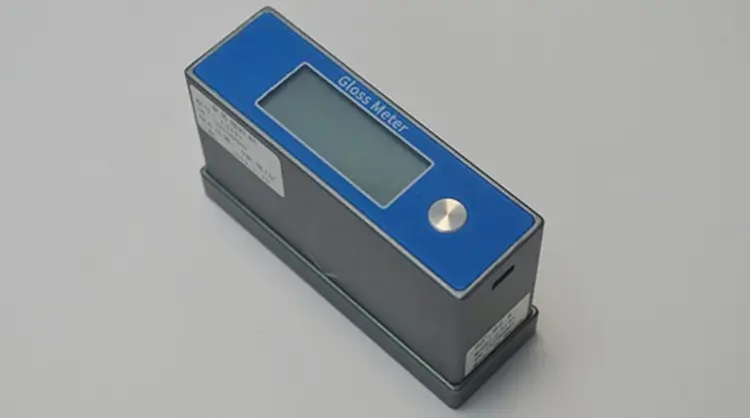
Gloss measurement involves shining a specific amount of light onto the surface and quantifying the amount of reflected light. The choice of measurement angle depends on the surface characteristics and appearance of the object being measured.
Selecting the Appropriate Gloss Measurement Angle
When selecting the appropriate measurement angle, different gloss ranges require different angles to ensure accurate results. Here are the common measurement angles for AG glass and their corresponding gloss ranges:
- Low Gloss (Below 10 GU): Use 85° Measurement Angle;
The 85° angle improves the resolution for low gloss surfaces. It is recommended to use 85° for surfaces with a gloss value below 10 GU.
- Medium Gloss (10-60 GU): Use 60° Measurement Angle;
The 60° angle is the standard measurement angle for most surfaces and is also used as a reference angle when measuring low gloss (85°) and high gloss (20°) surfaces. Typically, AG glass gloss tests are performed using the 60° angle by default.
- High Gloss (Above 60 GU): Use 20° Measurement Angle;
The 20° angle enhances the resolution of high gloss surfaces. When the gloss value exceeds 70 GU, it is recommended to use the 20° angle for measurement. The 20° angle is particularly sensitive to the haze effect, which is unique to high gloss surfaces.
- Measurement Considerations
For surfaces with varying gloss textures or slight unevenness, it is recommended to take measurements at multiple points and calculate the average value to ensure accuracy. By selecting the appropriate measurement angle, you can more accurately assess the gloss level of AG glass, ensuring product quality and performance.
Correlation Between AG Glass Gloss and Application Scenarios
The gloss of AG glass is closely related to its final application scenario. Selection should match specific needs:
- 110GU: Commonly used in the automotive industry.
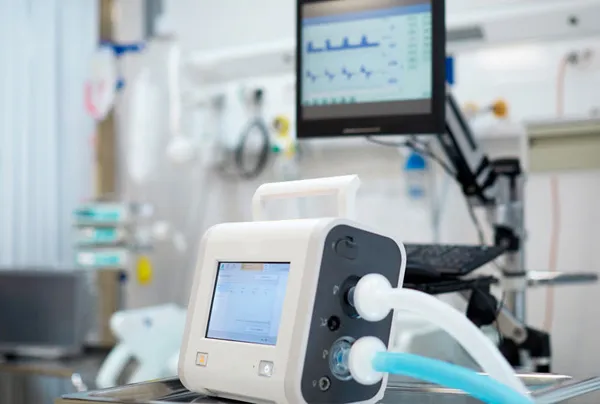
- 95GU: Often used in indoor high-light environments, such as medical equipment, ultrasound projectors, cash registers, POS machines, and bank signature pads.
- 70GU: Suitable for outdoor environments, such as ATMs, advertising displays, train station displays, and displays for construction and agricultural machinery.
- 50GU: Suitable for areas with intense sunlight.
- 35GU: Suitable for mousepads, touchpads, such as laptop trackpads.
Choosing Between Single-Sided and Double-Sided AG Glass
The choice between single-sided and double-sided AG glass depends on the final bonding method:
- Full Lamination: It is recommended to use single-side AG glass. After full lamination, the gloss remains unchanged with single-side AG glass. However, with double-side AG glass, the AG surface is filled by the OCA optical adhesive, reducing its anti-glare properties, leaving only the other AG surface to work, and the gloss increases by 10% to 20%. (Read more: What Are the Types of Backing Adhesive for Cover Glass Panels?)
- Frame Lamination: Both single-side and double-side AG glass are suitable, and the gloss is not affected.
Haze of Anti-glare Glass
Although gloss is one of the most important performance indicators of AG glass, which is directly related to the anti-glare effect, it is not the only determining factor. Haze is also a very important performance indicator.
Definition and Calculation of Haze
Haze refers to the cloudy or turbid appearance caused by light scattering in transparent or translucent materials. Specifically, haze represents the ratio between the scattered light flux and the transmitted light flux within or on the surface of the material, usually expressed as a percentage.
Calculation Method
The haze calculation is based on the following principle: Parallel light from a standard “C” light source is vertically irradiated onto a transparent or translucent film, sheet, or panel. Due to scattering from the material’s interior and surface, a portion of the parallel light deviates from the incident direction by more than 2.5°. The ratio of the scattered light flux (Td) to the transmitted light flux (T2) is defined as the haze, calculated by the formula:
Haze = (Td / T2) * 100%
This is a key parameter for measuring the optical transparency of transparent or translucent materials.
Relationship Between Haze and Transmittance
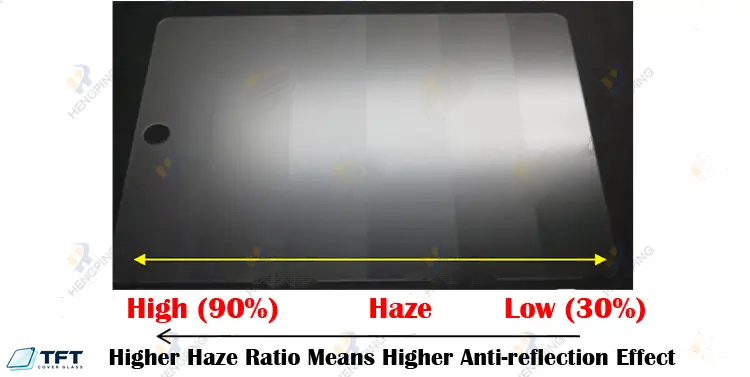
Haze is a critical parameter for evaluating the optical transparency of transparent or translucent materials. It’s crucial to understand that haze and transmittance are distinct concepts. The AG glass with high haze might still exhibit relatively high transmittance. In practical applications, for example, the cover glass of financial equipment might require high transmittance while maintaining a certain level of haze to enhance privacy; whereas in industrial control instruments, both high transmittance and low haze are necessary for clear observation.
Therefore, AG glass needs to be a balance between haze and transmittance. It is not advisable to determine the suitability of AG glass based solely on one of these parameters. Both must be considered in the context of the application to achieve the desired performance.
Haze Measurement Methods
Haze measurement typically employs a professional haze meter (also called a hazemeter). A hazemeter accurately measures the ratio of scattered light to direct light in the transmitted light to calculate the haze value.
AG Glass Haze and Application Scenarios
The ideal haze standard for AG glass depends on the specific application scenario. Different applications have different requirements for haze. Below are some common reference standards:
- Financial Equipment/Privacy Protection Applications: Requires higher haze to ensure strong privacy during daylight while maintaining adequate light transmittance.
- Industrial Control Displays: Requires lower haze to ensure clear display performance, while maintaining high transmittance for precise observation by users.
- Medical Equipment: In environments with strong indoor lighting, moderate to low haze helps improve display clarity and reduce interference.
Roughness of Anti Glare Glass
The surface roughness of AG glass is an important parameter that affects its optical properties, wear resistance and scratch resistance. It is directly related to the quality and service life of the final anti-glare glass.
Definition of AG Glass Surface Roughness
AG glass surface roughness refers to the degree of undulation in its microscopic surface structure. Compared to polished glass, AG glass undergoes special etching or grinding processes to create microscopic textures for anti-glare effects, thus increasing surface roughness. This roughness is not macroscopically visible but rather a microscopic undulation.
Different roughness levels directly affect the reflection, transmission, and scattering characteristics of the glass, consequently impacting its optical performance and user experience. Excessive roughness can lead to increased haze, reducing image clarity; while insufficient roughness may not achieve the desired anti-glare effect.
AG Glass Roughness Measurement Tools
The surface roughness of AG glass is typically measured using the following tools:
- Atomic Force Microscopy (AFM): AFM provides three-dimensional imaging of the surface with nanometer-scale resolution, accurately measuring surface roughness parameters such as average roughness (Ra), root mean square roughness (Rq), and peak-to-valley height (Rz). AFM is ideal for measuring the surface roughness of high-precision AG glass.
- Profilometer: A profilometer scans the surface with a probe to obtain surface height information, calculating surface roughness parameters. Profilometers offer lower measurement accuracy than AFM but are more cost-effective and suitable for applications with less stringent accuracy requirements.
- Optical Surface Roughness Measurement Instruments: These instruments utilize optical principles, such as scattered light intensity analysis, to measure surface roughness. This method is fast and non-contact but offers relatively lower accuracy.
The choice of tool depends on the required measurement accuracy and cost. For applications demanding high accuracy, AFM is recommended; for general quality control, a profilometer or optical surface roughness measurement instrument may suffice.
Standards for High-Quality AG Glass Roughness
The roughness standard of AG glass varies based on application requirements. The ideal AG glass roughness should ensure good anti-glare performance while maintaining adequate light transmittance and display clarity. Below are the common roughness standards, classified by Ra value, for different applications:
- Ra Value 0.5-1.0 µm — Medical Equipment
In medical equipment, the roughness standard for AG glass is usually stricter. To ensure clear display performance and reduce light scattering, the Ra value should be kept between 0.5-1.0 µm. This range minimizes excessive light scattering and ensures the accuracy of medical imaging. Medical applications demand high display clarity, and a lower roughness level helps achieve high-quality display results.
- Ra Value 0.5-1.5 µm — Industrial Control Displays
Industrial control displays require good anti-glare performance while maintaining moderate light transmittance. Typically, AG glass for industrial applications should have an Ra value between 0.5-1.5 µm. This range ensures that the glass effectively reduces light reflection and glare without overly impacting display brightness or clarity, making it suitable for environments where visual comfort and clear display are essential.
- Ra Value 1.0-2.0 µm — Financial Devices / Privacy Protection Applications
For financial devices or privacy-sensitive applications, a higher roughness is typically required to enhance light scattering and provide privacy protection. The Ra value for such applications is usually in the range of 1.0-2.0 µm. This roughness level increases privacy protection by preventing unauthorized viewing of the screen while still maintaining adequate light transmittance for normal operation.
- Ra Value 1.0-2.5 µm — Outdoor Advertising Displays
Due to the intense lighting conditions in outdoor environments, AG glass for outdoor advertising displays often has a higher roughness standard. The Ra value for outdoor applications typically ranges from 1.0-2.5 µm. Higher roughness helps reduce glare from direct sunlight while ensuring that the displayed content remains visible. Despite the higher roughness, care is taken to minimize excessive light scattering that could affect display clarity.
Specific numerical standards need to be adjusted based on actual application needs and production processes. Generally, high-quality AG glass will have Ra values controlled to tens of nanometers or even lower. However, excessively low Ra values do not necessarily represent the optimal condition, as this could affect the anti-glare effect. Therefore, a balance must be struck between anti-glare performance and surface smoothness. This requires adjustments based on specific application scenarios and customer needs, along with a comprehensive assessment incorporating other parameters (such as haze and transmittance).
Transmittance of Anti Glare Glass
Transmittance is a key indicator of the optical performance of AG glass, directly impacting the brightness and clarity of display devices. This article details the definition, measurement methods, influencing factors, and importance of AG glass transmittance in practical applications.
Definition of AG Glass Transmittance
The transmittance of AG glass refers to the proportion of light that passes through the glass, usually expressed as a percentage. It reflects the glass’s ability to transmit light. Higher transmittance indicates stronger light transmission through the glass, resulting in a brighter display. The anti-glare treatment of AG glass affects its transmittance; typically, AG-treated glass has slightly lower transmittance than ordinary glass. However, high-quality AG glass maximizes transmittance while maintaining good anti-glare performance.
Measurement Methods for AG Glass Transmittance
The transmittance of AG glass is usually measured using a spectrophotometer. A spectrophotometer accurately measures the transmittance of light at different wavelengths, obtaining the transmittance spectral curve of the AG glass. Measurements must be conducted under strictly controlled environmental conditions, such as temperature and humidity, to ensure accuracy. During measurement, the AG glass sample is placed in the spectrophotometer’s optical path and compared to a standard sample to calculate the transmittance.
Factors Affecting AG Glass Transmittance
The transmittance of AG glass is influenced by several factors:
- Glass Substrate: Different types of glass substrates, such as soda-lime glass and aluminosilicate glass, exhibit different transmittance characteristics.
- AG Treatment Process: Different AG treatment processes, such as acid etching and sandblasting, create different microscopic structures on the glass surface, affecting its transmittance. Process parameters, such as etching time and etchant concentration, also influence the final transmittance.
- Glass Thickness: Thicker glass generally has lower transmittance.
- Coating: Coatings on the AG glass surface, such as anti-reflective coatings, will affect transmittance.
- Wavelength: Different wavelengths of light exhibit different transmittance values. Transmittance in the visible light region is typically the primary concern.
Importance of AG Glass Transmittance in Practical Applications
The transmittance of AG glass directly impacts the visual effect and user experience of display devices. Transmittance is particularly crucial in the following applications:
- Outdoor Display Devices: Outdoor displays need to resist strong light interference while maintaining sufficient brightness, requiring high-transmittance AG glass.
- Medical Equipment Displays: Medical equipment displays need to clearly display images, thus requiring high-transmittance AG glass.
- Precision Instrument Displays: Precision instrument displays need to accurately display data, requiring high-transmittance AG glass.
- In-Vehicle Displays: In-vehicle displays need clear visibility under various lighting conditions, also requiring high-transmittance AG glass.
The transmittance of AG glass is an important optical parameter. When selecting and applying AG glass, the appropriate transmittance parameters should be chosen based on specific application scenarios and requirements. High-quality AG glass should maintain high transmittance while ensuring good anti-glare performance for optimal display effects and user experience.
Clarity of Anti-Glare AG Glass
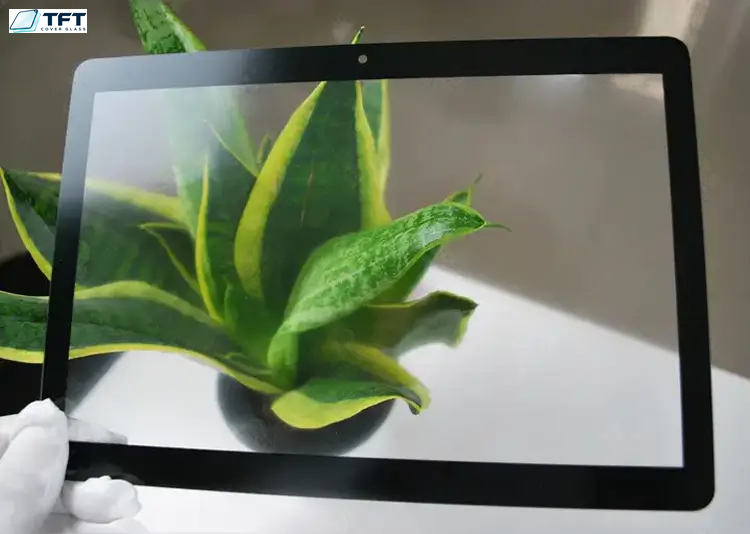
Clarity is a crucial optical indicator for anti-glare AG glass, characterizing its imaging capability and distortion level. It’s equivalent to image clarity, sharpness, imaging performance, and image reproduction. For anti-glare AG glass, clarity is generally used as the descriptive term.
Definition and Measurement of Clarity
Clarity describes the imaging capability of anti-glare AG glass. A higher clarity value indicates a sharper image and stronger imaging capability. Clarity is usually expressed as C%, calculated using the following formula:
C% = (M – m) / (M + m) * 100%
Where M represents the maximum luminous flux measured through a moving grating, and m represents the minimum luminous flux. This luminous flux data is obtained using a specialized image clarity meter. The image clarity meter calculates clarity by measuring the maximum and minimum luminous flux of the sample under different conditions.
Distinguishing Clarity from Haze and Transmittance
Clarity, haze, and transmittance are three independent optical indicators that are easily confused. However, there’s no direct linear, proportional, or differential relationship between them. Two AG glass samples with similar haze and transmittance values may exhibit significant differences in clarity. This is because they are based on different physical principles:
- Clarity: Focuses on the absolute parallel transmitted luminous flux, reflecting the sharpness and detail of the image.
- Haze: Focuses on the relative scattered luminous flux, reflecting the degree of light scattering after passing through the glass. High haze causes image blurring.
- Transmittance: Focuses on the sum of the relative parallel luminous flux and the relative scattered luminous flux, reflecting the total amount of light transmitted through the glass.
Therefore, clarity cannot be simply inferred from haze and transmittance. They require separate measurements using different instruments: a clarity meter for clarity, and a transmittance/haze meter for haze and transmittance.
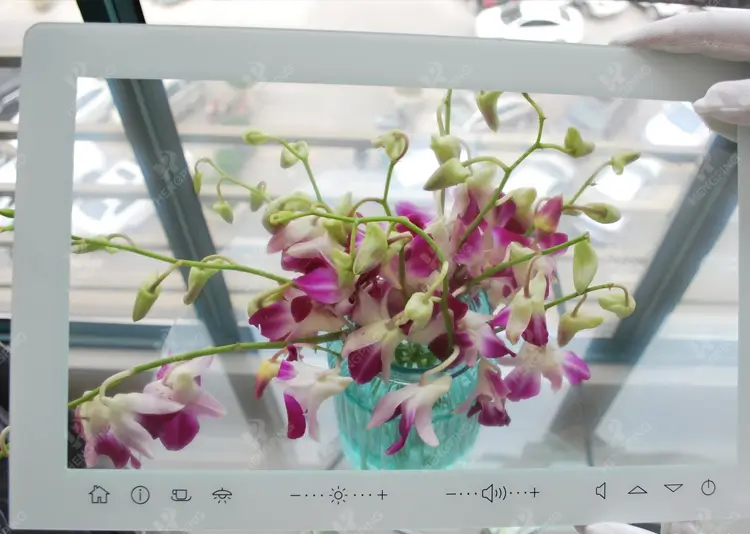
Clarity is a key parameter for evaluating the image quality of anti-glare AG glass. It is independent of haze and transmittance and cannot be substituted for them. A comprehensive assessment of AG glass’s overall optical performance requires considering clarity, haze, and transmittance to fully understand its characteristics and select the most suitable glass product.
Relationship between AG Glass Parameters
The higher the gloss, the higher the clarity and the lower the haze; the lower the gloss, the higher the roughness, the higher the anti-glare and the higher the haze; the gloss is directly proportional to the clarity, the gloss is inversely proportional to the haze and inversely proportional to the roughness.
Conclusion
The testing of AG glass for gloss, haze, roughness, transmittance, clarity is important to achieve optimal performance for specific applications. Other parameter indicators, such as thickness, hardness, and more are also important. These parameters directly impact the anti-glare effect, display clarity, light transmission, and overall user experience, making them essential for quality control and suitability in various environments. TFT Cover Glass is a professional AG glass supplier, our AG glass will be strictly tested, both for samples and mass production order. If there are any questions the necessary parameters of anti-glare glas, welcome to contact us for more detailed information!



 EN
 FR
 DE
 ES
 PT
 IT
 NL
 DA
 RU
 AR
 TR
 JA
 KO
 ID
 UK
 TH
 VI
 PL
 MS
 ET
 EL