
Glass Strengthening
Strength & Safety: Expert Physical Tempering & Chemical Strengthening. Tailored solutions to meet your exact specifications.
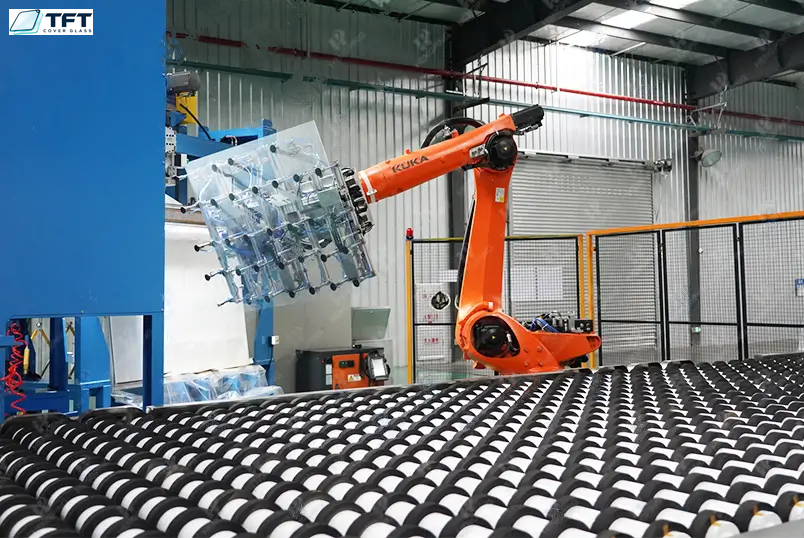
Glass Strengthening
Glass strengthening is a critical process for enhancing the mechanical properties of glass, making it more resistant to breakage and safer for end-use. TFT Cover Glass specializes in both physical tempering (heat treatment) and chemical strengthening (ion exchange) techniques. By carefully selecting the appropriate method, we can optimize the strength, scratch resistance, and overall performance of your glass panels. Trust us to deliver superior glass strengthening for diverse applications, from consumer electronics to industrial equipment.
Customized Glass Strengthening Services

- Custom Design

- Manufacturing Ability

- Low cost

- Quality Control

- 24h Service
Our Glass Strengthening Capabilities
TFT Cover Glass provides exceptional glass cutting services. Our commitment to superior glass cutting lies in delivering precise, reliable results, achieved through cutting-edge technology and a team of experts.
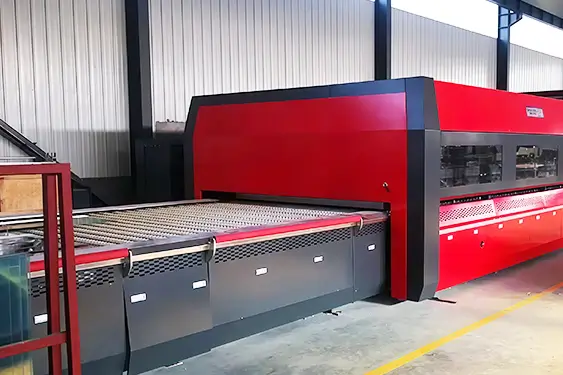
Physical Tempering
- Maximum Size: 2200*1600mm
- Thickness Range: 2~18mm
- Capacity: 8000M² glass per day
- Flatness: Longest Lenghth×5‰
- Equipment: South Physical Tempering Machine
- Advantages: Superior Airflow, Accurate Control, Precise Tempering
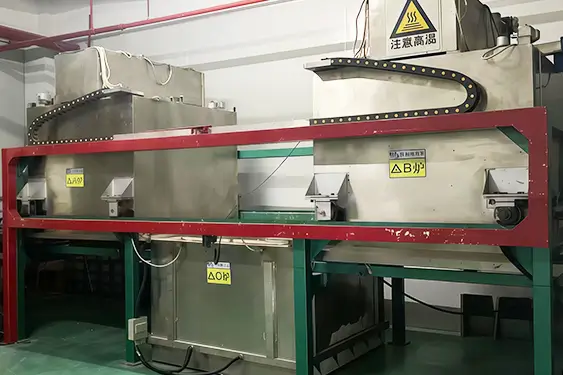
Chemical Strengthening
- Maximum Size: 2300*1800mm
- Thickness Range: 0.1~12mm
- Capacity: 23 Tons Maximum Batch Size
- Flatness: Longest Lenghth×1‰
- Equipment: Largest Furnace Body in South China.
- Advantages: Ideal for Thin Glass, Flawless Surface, Minimal Distortion
Benefits of Strengthened Glass
Strengthened glass offers a multitude of advantages over standard annealed glass, making it the ideal choice for demanding applications. Our advanced thermal and chemical strengthening processes elevate cover glass to meet the toughest demands, delivering:
- Enhanced Durability: Significantly increased resistance to impact, scratches, and abrasions, extending the lifespan of cover glass panels.
- Increased Thermal Resistance: Withstands higher temperatures and thermal stress, making it suitable for applications involving heat exposure.
- Design Versatility: Can be strengthened in a variety of shapes and sizes, offering greater design flexibility for custom applications.
- Superior Safety: When broken, strengthened glass shatters into small, blunt fragments, minimizing the risk of serious injury.
- Optical Clarity: Maintains excellent transparency and light transmission, ensuring optimal visual performance for displays and lenses.
- Dimensional Stability: Maintains precise dimensions and flatness even under stress or temperature changes, ensuring accurate fit and reliable performance.
Shattered: A Clear Look at Glass Safety
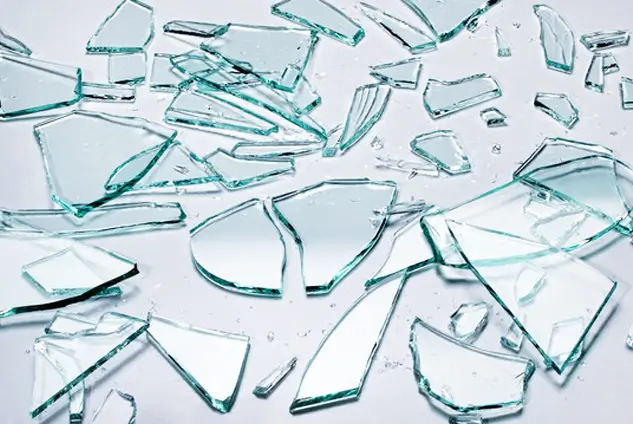
Broken Pattern of Regular (Annealed) Glass
Shatters into large, sharp, jagged shards, posing a significant safety hazard.
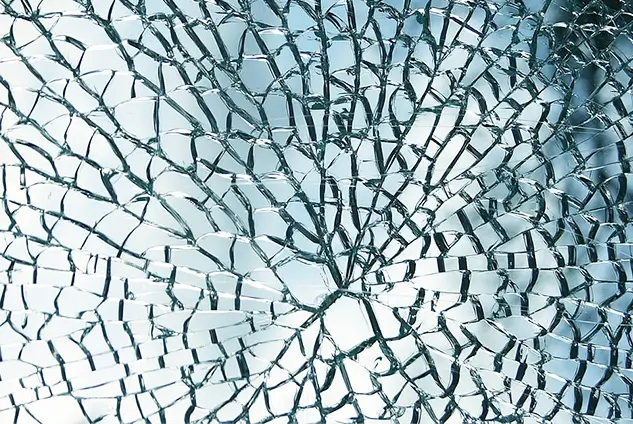
Broken Pattern of Thermal (Physical) Tempered Glass
Breaks into small, relatively uniform, blunt fragments, minimizing the potential for serious injury.
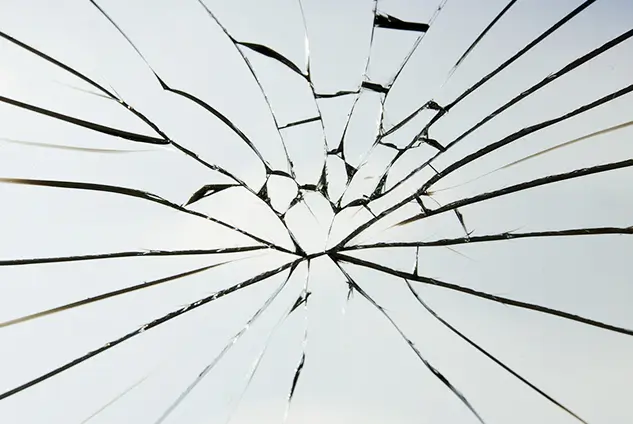
Broken Pattern of Chemical Strengthened Glass
Typically cracks in a spiderweb pattern while remaining largely intact, reducing the risk of sharp projectiles.
Choose the Right Glass Strengthening Method
TFT Cover Glass offers two distinct glass strengthening methods – physical tempering and chemical strengthening – each providing unique advantages for different applications. Understanding these differences is key to selecting the optimal solution for your project. Explore the benefits of each method below to determine which is best suited to your specific requirements.
Physical Tempering Vs. Chemical Strengthening
What‘s Physical Tempering?
Physical tempering involves heating glass to near its softening point, then rapidly cooling the surfaces with air. This creates a compressive stress layer on the surface and a tensile stress layer in the core, resulting in significantly increased strength and a unique, safe breakage pattern.
Key Advantages:
- High Impact Resistance: Withstands significant impact forces, reducing the risk of breakage.
- Enhanced Thermal Stability: Resistant to thermal shock, making it suitable for applications involving temperature fluctuations.
- Safe Breakage Pattern: When broken, shatters into small, relatively harmless fragments, minimizing the risk of serious injury.
- Cost-Effective for Larger Sizes: A practical and economical strengthening solution for large glass panels.
Glass Type Applicability:
Soda-lime Glass, Aluminosilicate Glass (Limited), Borosilicate Glass, etc.
Typical Applications:
Swtich panels, signage, kiosks, etc.
What‘s Chemical Strengthening?
Chemical strengthening enhances glass by immersing it in a molten salt bath. This process replaces smaller sodium ions on the glass surface with larger potassium ions, creating a compressive stress layer that significantly increases strength without altering the glass’s dimensions.
Key Advantages:
- Superior Strength for Thin Glass: Ideal for applications where weight and thickness are critical.
- Maintains Exceptional Surface Quality: Preserves pristine clarity and smoothness, essential for optical applications.
- Minimal Distortion: Virtually eliminates warping or distortion, ensuring precise performance.
- Ideal for Complex Shapes: Effectively strengthens glass with intricate designs and cutouts.
Glass Type Applicability:
Aluminosilicate Glass (Ideal), Soda-lime Glass (Limited), etc.
Typical Applications:
Smartphone screens, tablet displays, wearables, industrial displays medical displays, etc.
Technical Specifications
Method | Process Temperature | Processing Time | Thickness Rang | Typical Strength Increase | Surface Compression (CS) | Depth of Layer (DOL) | Edge Compression (EC) | Shape Limitations | Thermal Stability | Surface Quality | Cost |
Physical Tempering |
620°C ~ 680°C | Minutes (rapid heating and cooling) | 3~19 mm (Typical) | 4-5x Annealed Glass | > 69 MPa (10,000 psi) | N/A (Stress throughout thickness) | > 67 MPa (If measured separately) | Relatively Simple Shapes | Improved | Good |
Cheap |
Chemical Strengthening |
300°C ~ 450°C | Hours (depending on required strength) | 0.5~5 mm (Typical) | 6-8x Annealed Glass | > 600 MPa (Typical), Up to > 900 MPa | > 15 μm, Up to > 50 μm | N/A | Complex Shapes and Cutouts Allowed | No Significant Change | Excellent |
High |
Why Choose Us for Your Glass Strengthening Needs?
When it comes to glass strengthening, precision and reliability are paramount. At TFT Cover Glass, we combine decades of expertise with cutting-edge technology to deliver superior results, every time.
Unrivaled Expertise in Both Methods
We master both chemical strengthening and physical tempering, ensuring the optimal technique for your specific glass type, thickness, and application.
Customized Solutions
We tailor our strengthening processes to meet your exact requirements, optimizing for strength, clarity, and dimensional stability.
Dedicated to Quality
Rigorous quality control measures ensure that every piece of strengthened glass meets our uncompromising standards and your precise specifications.
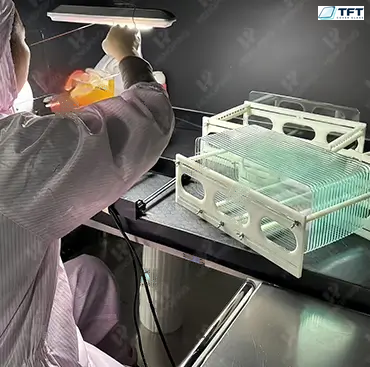
Precision-Engineered Strengthening
Achieve superior strength and consistent results with our meticulously controlled processes, delivering performance you can rely on.
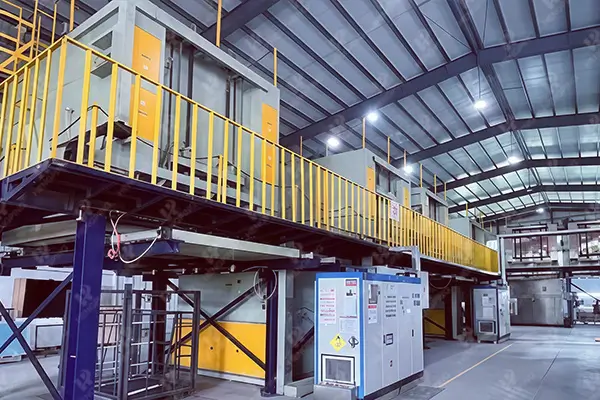
Cutting-Edge Equipment
Our advanced chemical strengthening and physical tempering equipment guarantees exceptional quality and efficiency.
Seamless Integration & Expert Support
We provide comprehensive support from design to delivery, ensuring a smooth and successful strengthening process for your project.
FAQ
Which strengthening method provides better optical clarity for cover glass panels?
Chemical strengthening maintains excellent optical clarity with virtually no distortion, making it ideal for high-resolution display cover glass. Physical tempering can introduce minor optical distortion due to the heating and cooling process.
Can a single glass panel undergo both chemical strengthening and physical tempering?
Generally no. These processes are customized to different glass types and applications. Chemical strengthening suits thin glass, while physical tempering is better for thicker glass. Hybrid processes are rare and costly.
What types of glass are best suited for chemical strengthening?
Chemical strengthening excels with aluminosilicate glasses, but we also strengthen certain soda-lime and specialty glasses.
How does chemically strengthened Gorilla Glass compare to regular chemically strengthened glass?
Gorilla Glass offers significantly superior strength. After chemical strengthening, it achieves DOL ≥ 40um and CS ≥ 650MPa, compared to regular glass (DOL ≥ 8um, CS ≥ 450MPa). Gorilla Glass also maintains a smooth, scratch-resistant surface and greater impact resistance. Ordinary glass has a transmittance of only 86-87%.
What are the typical stress standards after chemical strengthening?
Corning glass: DOL > 40um, CS > 650MPa. Float glass: DOL > 8um, CS > 450MPa.
Can tempered glass be cut or modified after strengthening?
Only chemically strengthened glass can be cut after treatment. Physically tempered glass will shatter if cut.
What are the recommended processes for printing on glass before or after strengthening?
The optimal process depends on the type of ink and strengthening method:
- Physical Tempering:
- Ceramic Inks: Print before tempering. The high temperatures fuse the ink to the glass.
- Low-Temperature Inks: Print after tempering. These inks cannot withstand tempering heat.
- Chemical Strengthening:
- Printing can be done either before or after strengthening. However, printing before chemical strengthening is generally recommended to ensure optimal ink adhesion and durability.
Specifying strengthening checks
For chemically strengthened glass, specify the required surface stress and depth of the compression layer. Agree on the measurements and sample size for the order.
See strength testingCustom Glass Fabrication Expert
TFT Cover Glass, a custom glass fabrication expert, delivers precision-machined glass products with unmatched quality and competitive pricing. Utilizing custom-designed CNC machinery and a vast inventory of materials, we expertly handle projects from prototypes to large-scale production, supporting customers from prototyping through production.
- UV Printing
- Surface Coating
- Adhesive Bonding
- Ultra Cleaning
- Testing and Inspection
- Packaging
- AGC Dragontrail™ Glass
- NSG Glass
- AG Glass
- Panda Glass
- Sada Lime Glass
- Borosillicate Glass
- SCHOTT Glass
- Ultra-clear Glass (Low-iron Glass)
- 3D Curved (Hot Bending) Glass
- Electronics
- Smart Home
- Automotive
- Industrial
- Home Appliances
- New Energy
- Medical
- Wearable Devices
- Lighting
- Commercial
- Outdoor
- Optical
Request A Free Quote
We treat your inquiry and drawings as confidential.
Contact
We’d love to hear about your project. Reach out for questions, technical support, quotes, or free samples. Upload your drawings if available for more accurate recommendations. Our engineers will give you a reply within 24 hours and provide professional recommendations tailored to your exact requirements.
- +86 131 1396 8188
- +86 131 1396 8188
- kevin.zhichuansz@gmail.com
- Lifeng Industrial Park, Longgang District, Shenzhen 518115, Guangdong, China
 EN
 FR
 DE
 ES
 PT
 IT
 NL
 DA
 RU
 AR
 TR
 JA
 KO
 ID
 UK
 TH
 VI
 PL
 MS
 ET
 EL