The 3D cover glass market, valued at approximately USD 7.73 billion in 2025, is a dynamic segment within the cover glass industry, driven by its use in smartphones, smartwatches, medical dashboards and automotive displays. The 3D covre glass market, which grew from USD 6.82 billion in 2023, is projected to reach USD 12.0 billion by 2032, reflecting a robust CAGR of 6.49% from 2024 to 2032, according to Market Research Future. And the key growth drivers include rising demand for premium consumer electronics and the adoption of curved glass in automotive infotainment systems. The Asia Pacific region dominates, holding a significant share, estimated at USD 2.3 billion in 2023, due to its strong manufacturing base, with North America following at USD 2.5 billion. Leading players like Corning (Gorilla Glass), AGC (Dragontrail), and Schott (Xensation) are advancing innovations in durability and design. Despite challenges such as high production costs and complex manufacturing process, trends like flexible glass and sustainability are shaping the market’s future, positioning 3D cover glass as a critical component in modern technology.
What is 3D Cover Glass?
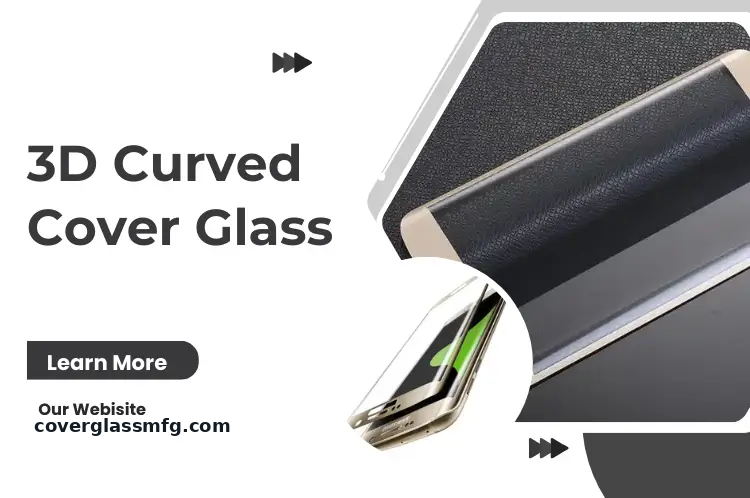
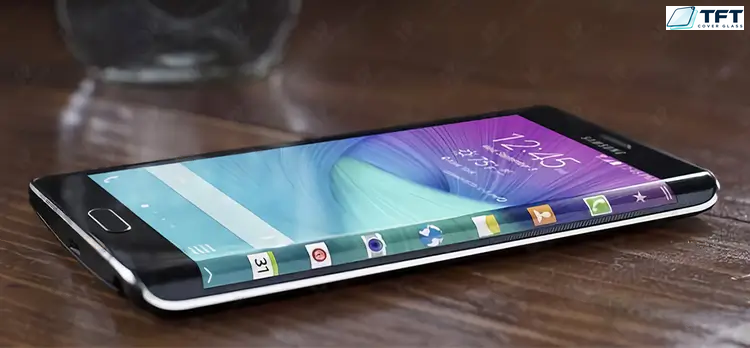
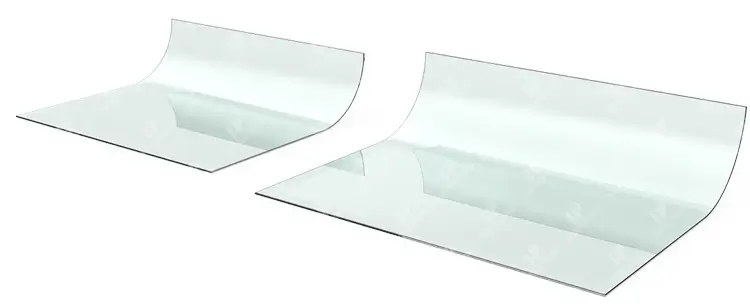
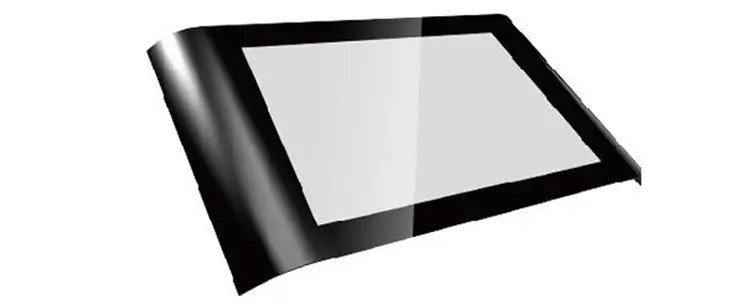
3D cover glass is a specialized type of protective glass designed for device screens, distinguished by its three-dimensional shape. Unlike traditional flat cover glass, which lies in a single plane, 3D cover glass features curved edges or a fully contoured surface, achieved through advanced manufacturing processes. This curvature is created by heating high-strength glass, typically aluminosilicate glass, to a pliable state and shaping it using techniques like hot bending or vacuum forming, followed by controlled cooling to maintain durability and clarity. The result is a seamless, sculpted layer that integrates with a device’s design, offering a modern alternative to conventional flat cover glass.
3d full cover glass
Primarily composed of materials like those used in Corning’s Gorilla Glass or AGC’s Dragontrail, 3D cover glass is engineered to provide robust protection while aligning with the evolving aesthetics of technology. Its production demands precision with tolerances as tight as ±0.1 mm, ensuring it fits perfectly over displays. As a key innovation in the cover glass industry, 3D cover glass represents a shift toward more dynamic and sophisticated protective solutions for electronic screens.
3D Cover Glass Advantages
3D cover glass offers several notable advantages that make it a popular choice in modern device design. Below are the key benefits:
Aesthetic Appeal
The curved design of 3D cover glass creates a fuller, more three-dimensional visual effect, offering a sleek and premium appearance compared to traditional 2D and 2.5D screens. Its modern and sophisticated look significantly enhances a device’s overall aesthetics, making it a compelling choice for style-conscious consumers seeking both elegance and innovation.
Improved Grip and Comfort
The curvature of 3D cover glass provides an ergonomic design that fits naturally in the hand. This makes devices more comfortable to hold and reduces the chances of accidental drops, improving overall usability.
Enhanced Visibility
With its curved design, 3D cover glass minimizes glare and improves viewing angles, ensuring better screen readability in different lighting conditions for an optimized user experience. So, it is an ideal aesthetic material for various smart devices.
Increased Durability
The structure of 3D cover glass helps distribute impact forces more evenly when a device is dropped. This can reduce the likelihood of cracks or damage, offering greater protection compared to flat glass alternatives. Its scratch resistance reaches up to 7H hardness. (Read more: 9H Tempered Glass >>)
Design Flexibility
3D cover glass allows designers or manufacturers to explore innovative and unique device shapes. This flexibility enables products to stand out in a competitive market, fostering creativity in design.
3D Cover Glass Applications
3d cover glass applications
3C Electronic Products
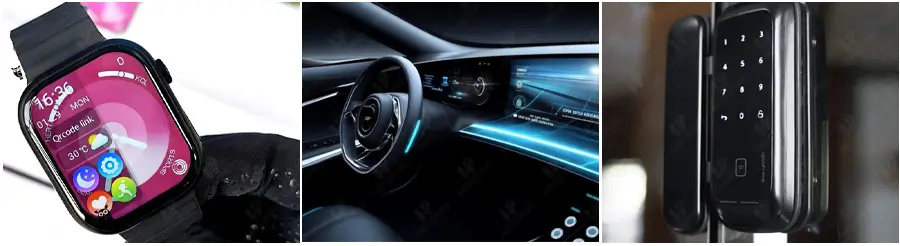
3D cover glass is widely utilized in 3C electronic products, including smartphones, tablets, smartwatches, and other smart wearable devices. The incorporation of 3D cover glass significantly enhances the exterior design and tactile experience of these products, offering a sleek, premium look and improved handling comfort.
Automotive Equipment
In the automotive sector, 3D cover glass is applied to components such as vehicle central control panels and dashboards. This provides drivers with a clearer, more intuitive visual experience, contributing to both functionality and a modern aesthetic within the cabin.
Smart Home and Industrial Displays
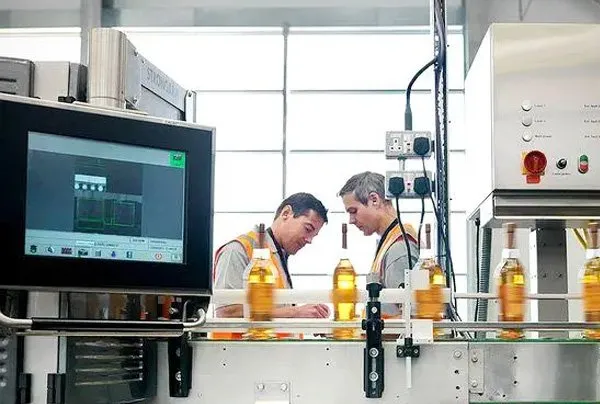
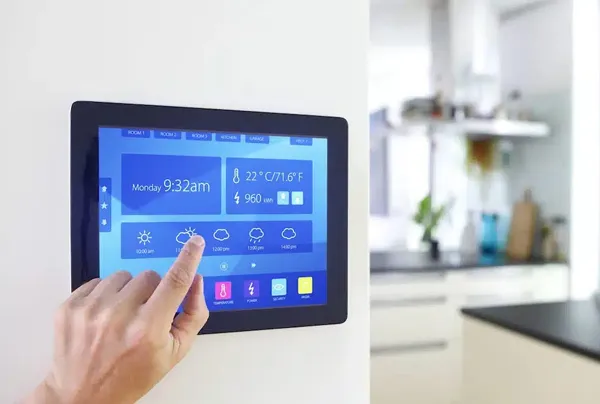
3D cover glass also finds application in the display screens of smart home devices and industrial touch-screen monitors. Its use adds a touch of technological sophistication and stylish flair to these products, enhancing their appeal and usability in diverse settings. (Related Product: Smart Door Lock Glass >>)
What’s the Difference Between 2D, 2.5D, and 3D Cover Glass?
Cover glass, also known as cover lens or glass panel, come in different shapes that significantly impact both the look and feel of a device. These are categorized as 2D cover glass, 2.5D cover glass, and 3D cover glass.
2D Cover Glass
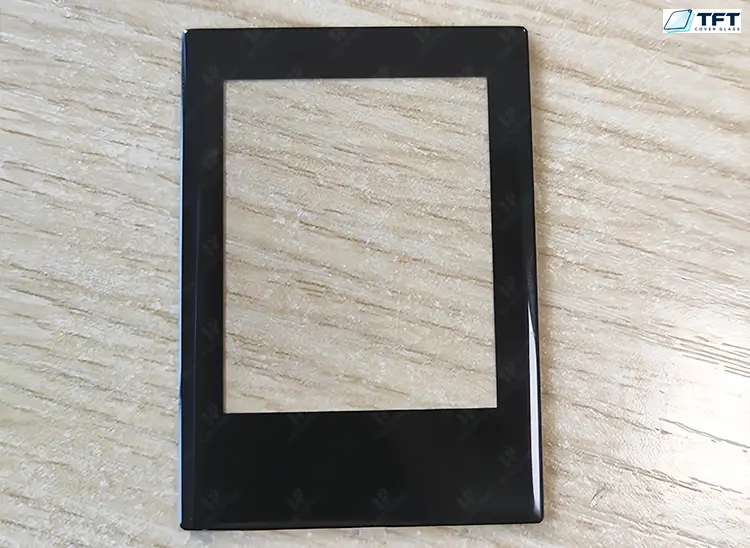
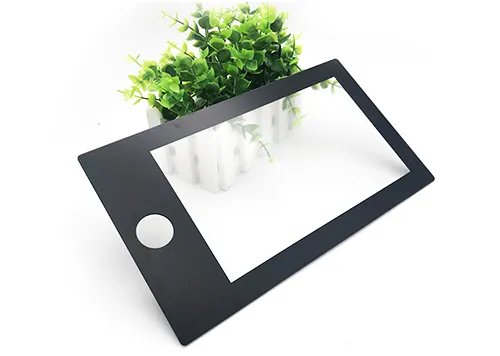
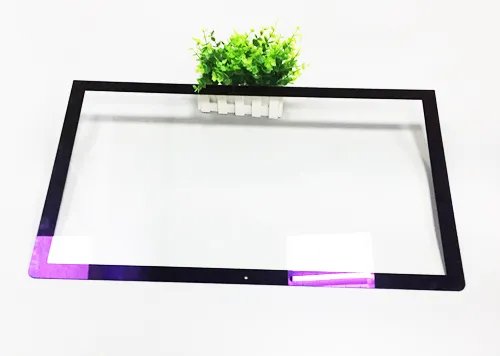
2D cover glass is traditional, flat glass without any curved edges. All points on the surface of a 2D glass panel lie on the same plane. In the past, most smartphone primarily used 2D glass for their screens.
2d cover glass
The manufacturing process for 2D cover glass typically involves cutting the glass to size, precision shaping (CNC machining), creating any necessary holes, polishing, strengthening (tempering), silk-screen printing, and applying coatings. 2D cover glass can be customized to various sizes and designs based on specific requirements.
2.5D Cover Glass
2.5D cover glass features a flat central area but with curved edges. Compared to 2D cover glass, 2.5D glass panel undergoes an additional edge-grinding and polishing process to create this smooth, rounded perimeter.
2.5d cover glass
Many modern smartphones and smartwatches utilize 2.5D cover glass for their cover lenses. The manufacturing process for 2.5D cover glass is largely similar to that of 2D cover glass, with the crucial addition of edge shaping and polishing.
3D Cover Glass
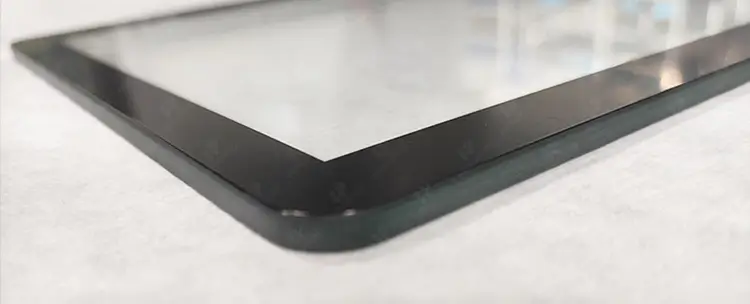
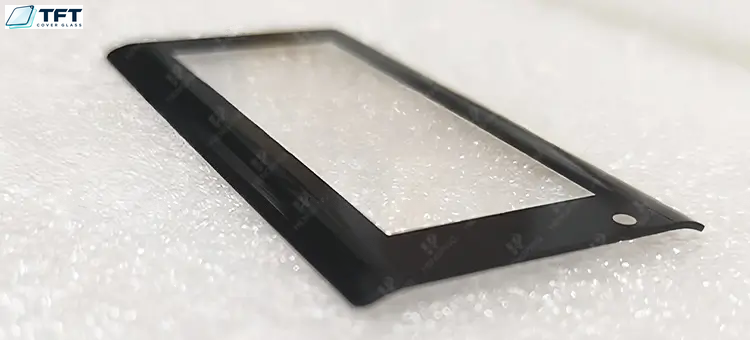
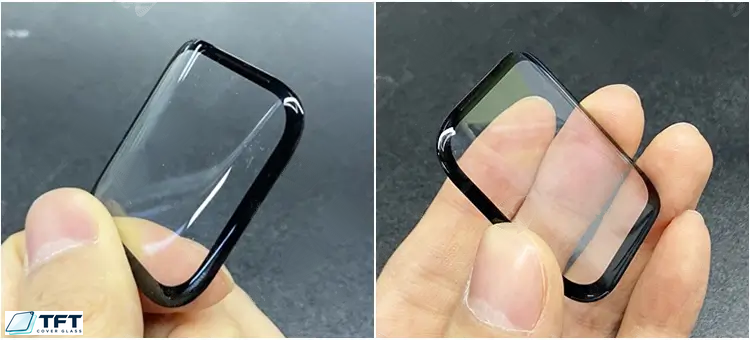
3D cover glass incorporates curved designs, either in the central area, at the edges, or both. The curvature of 3D glass is often said to provide a more comfortable grip and improve the feel for tasks like typing. 3D curved displays can also increase the perceived viewing area, better matching the natural curvature of the human retina, and leading to a more immersive experience for videos and games. (Read more: Custom Curved Tempered Glass Manufacturer >>)
3d cover glass
Compared to 2D and 2.5D glass panels, 3D cover glass requires a more complex 3D thermal bending (hot bending) process, followed by silk-screen printing, coating, and other finishing steps. Due to this increased complexity, the manufacturing process is more challenging, and yields are typically lower, resulting in a higher cost for 3D cover glass. Now, 3D cover glass is commonly used in smartphones, tablets, wearable devices, automotive instrument panels, and industrial computers, among other applications requiring protective cover glass.
What is the Manufacturing Process for 3D Cover Glass?
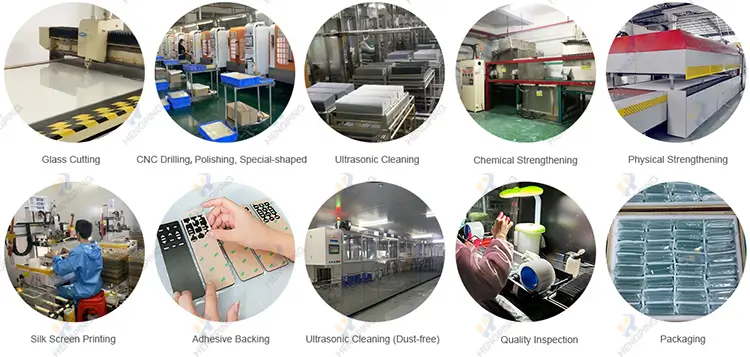
The production of 3D cover glass involves a series of precise steps to achieve the desired shape, strength, and optical properties. The key processes of 3D cover glass include glass cutting, CNC machining, grinding, thermal bending (hot bending), polishing, chemical strengthening (ion exchange), coating, and quality control.The thermal bending process is particularly critical, as it significantly influences the production yield. The detailed 3D cover glass manufacturing process is outlined below.
custom cover glass panel manufacturing process
Rough Cutting (Blank Cutting)
A sheet of raw glass material (often a specific type like aluminosilicate glass) is cut to its approximate overall shape using a cutting machine (e.g., a waterjet cutter or a diamond saw). This is a preliminary cut, leaving an allowance for subsequent machining.
Hole Creation (If Required)
Holes for cameras, sensors, or other features are created using methods like laser drilling, waterjet cutting, or specialized CNC drills.
CNC Machining (Precision Machining)
High-precision CNC (Computer Numerical Control) machines are used to refine the shape of the glass, create precise edges, and machine any intricate features. This step ensures dimensional accuracy and prepares the glass for bending.
Edge Grinding
The edges of the glass are ground using progressively finer abrasive wheels to create a smooth, finished edge profile. This removes any sharp edges and prepares the glass for the bending process. (Read more: Glass Edge Types >>)
Initial Cleaning
Clean to remove the debris from previous steps.
Thermal Bending (Hot Bending)
The pre-shaped glass is heated to a high temperature (typically near its softening point) and then carefully formed into the desired 3D shape using a precision mold.
hot bending glass
This can be done using gravity bending, press bending, or other specialized techniques.
Annealing
After bending, the glass undergoes a controlled cooling process called annealing. This relieves internal stresses introduced during the bending process, preventing cracking and improving the glass’s long-term stability.
Polishing
Both surfaces of the 3D glass are polished using progressively finer abrasives to achieve a high level of optical clarity and smoothness. This removes any surface imperfections and prepares the glass for strengthening.
Chemical Strengthening (Ion Exchange)
The glass is immersed in a molten salt bath (typically containing potassium nitrate). Smaller sodium ions in the glass are replaced by larger potassium ions, creating a compressive stress layer on the surface. This significantly increases the glass’s strength and resistance to scratches and impacts.
Cleaning
The glass is thoroughly cleaned to remove any residue from the chemical strengthening process.
Silk-Screen Printing (Optional)
Decorative elements, logos, or functional layers (e.g., black borders) are printed onto the glass using silk-screen printing or pad printing.
UV Curing (if applicable)
If UV-curable inks were used in the printing process, the glass is exposed to ultraviolet (UV) light to cure (dry and harden) the ink.
Coating
Thin-film coatings are applied to the glass to enhance its properties. These coatings are typically applied using vacuum deposition techniques like sputtering or evaporation. Common coatings include:
Anti-Scratch Coating: Increases the surface hardness and scratch resistance.
Lamination (Optional)
In some cases, the 3D glass may be laminated with another layer of glass or plastic (e.g., PVB or TPU) for added safety and shatter resistance. This is common in automotive applications.
Optical Bonding (Optional)
For some high-end displays, the 3D glass may be optically bonded to the display panel using a clear, index-matched adhesive. This eliminates air gaps, improving optical clarity and reducing reflections.
Visual Inspection
The finished 3D glass is rigorously inspected for defects such as scratches, blemishes, bubbles, distortions, and dimensional accuracy.
Performance Testing
A variety of tests are performed to ensure the glass meets the required specifications, including:
Cross-Hatch Adhesion Test: Checks the adhesion of coatings.
Abrasion Resistance Test: Measures resistance to wear.
Light Transmittance Test: Measures the amount of light passing through the glass.
Stress Test: Checks for residual stress in the glass.
Environmental Test: Such as temperature and humidity test.
How to Choose the Right 3D Cover Glass
Selecting the appropriate 3D cover glass for your device or application is crucial for ensuring both protection and an optimal user experience. It’s not just about aesthetics; it’s about durability, functionality, and compatibility. Here’s a detailed guide to help you make the right choice:
3d curved glass panel
Define Your Application and Requirements
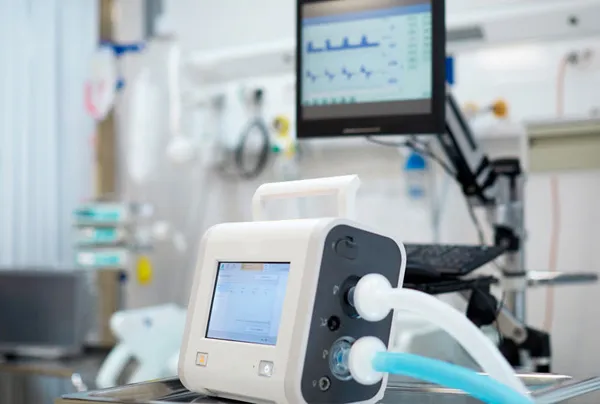
Device Type: What kind of device will the cover glass be used on? Smartphones, tablets, smartwatches, automotive displays, medical devices and industrial equipment all have different requirements for size, shape, curvature, and durability.
Screen Size and Shape: Determine the precise dimensions and curvature needed. This includes the overall size, the radius of curvature (or multiple radii for complex curves), and any cutouts for cameras, sensors, or buttons. Provide precise drawings to your manufacturer.
Usage Environment: Consider the environment where the device will be used. Will it be exposed to extreme temperatures, humidity, chemicals, or frequent impacts? This will influence the choice of glass material and strengthening process. For example, automotive applications require much greater temperature and vibration resistance than a smartwatch.
Desired Features: Identify specific functionalities required:
Oleophobic/Anti-Fingerprint Coating: Essential for reducing smudges and making cleaning easier.
Anti-Reflective (AR) Coating: Minimizes glare and improves visibility, especially in bright sunlight.
Anti-Glare (AG) Coating: Diffuses light to reduce reflections, but can slightly reduce image clarity. (Choose carefully; AG can sometimes make screens look slightly hazy).
Anti-Scratch Coating: Improves resistance to scratches from everyday use.
Privacy Filter: Limits the viewing angle, protecting sensitive information from prying eyes (consider if this is necessary).
Blue Light Filter: Reduces the amount of blue light emitted from the screen, potentially reducing eye strain (consider if this is a requirement).
Touch Sensitivity: The cover glass must not interfere with the touchscreen’s responsiveness.
Material and Manufacturing Quality
Glass Type
Aluminosilicate Glass: The most common type for high-end devices, offering excellent strength, scratch resistance, and optical clarity.
Gorilla Glass (Corning): A brand name for a specific type of chemically strengthened aluminosilicate glass, known for its durability. Specify the generation of Gorilla Glass (e.g., Gorilla Glass Victus, Gorilla Glass 6), as each offers different performance levels.
Dragontrail Glass (AGC): Another brand of chemically strengthened glass, similar to Gorilla Glass.
Sapphire Glass: Extremely scratch-resistant but more brittle and expensive than aluminosilicate glass. Typically used for smaller areas like watch faces or camera lenses.
Strengthening Method:
Chemical Strengthening (Ion Exchange): The preferred method for 3D cover glass, providing excellent strength and flexibility. Inquire about the depth of layer (DOL) and compressive stress (CS) achieved during the ion exchange process. These are key indicators of strength.
Thermal Tempering: Less common for complex 3D shapes, as it can introduce more distortion.
Manufacturing Process
Precision CNC Machining: Essential for accurate shaping and edge finishing.
Controlled Thermal Bending: Ensures the correct curvature is achieved without introducing defects.
High-Quality Polishing: Critical for optical clarity and a smooth surface.
Consistent Coating Application: Uniform and durable coatings are essential for long-term performance.
Design and Aesthetics
3d full cover tempered glass
Curvature: Ensure the curvature of the cover glass perfectly matches the device’s display. Even slight mismatches can lead to poor fit, reduced protection, and aesthetic issues.
Edge Finish: Consider the edge profile (e.g., rounded, beveled). This affects both the look and feel of the device.
Color and Transparency: Most cover glass is clear, but some may have a slight tint or include printed borders (e.g., black borders around the display area).
Overall Appearance: The cover glass should seamlessly integrate with the device’s design, enhancing its overall aesthetic appeal.
Performance and Testing
Impact Resistance: Inquire about drop test results or other impact resistance testing. Look for industry-standard tests (e.g., ball drop tests, corner drop tests).
Scratch Resistance: Ask for pencil hardness test results (e.g., 9H) or other scratch resistance data.
Optical Clarity: Request light transmittance measurements. Higher transmittance means a clearer display.
Touch Sensitivity: Ensure the cover glass does not negatively impact touchscreen performance. This is particularly important for devices with advanced touch features (e.g., pressure sensitivity).
Environmental Durability: Ask for tests that relate to your target environment (temperature, humidity, UV, and chemical resistance.)
Supplier and Cost
Reputation and Experience: Choose a supplier with a proven track record in manufacturing high-quality 3D cover glass.
Certifications: Look for relevant certifications (e.g., ISO 9001) that demonstrate quality management systems.
Technical Support: Ensure the supplier can provide technical support and assistance throughout the design and manufacturing process.
Cost: While cost is a factor, prioritize quality and performance. Cheaper cover glass may compromise the device’s durability and user experience. Get quotes from multiple suppliers and compare their offerings.
Lead Time: How fast can they deliver, particularly for prototypes?
Minimum Order Quantities (MOQs): Are their MOQs compatible with your production needs?
Samples and Prototyping
Before placing a large order, request samples and create prototypes. Thoroughly test the fit, function and aesthetics.
By carefully considering these factors, you can select the right 3D cover glass that provides the optimal combination of protection, aesthetics, and functionality for your specific application. Don’t hesitate to ask detailed questions of potential suppliers to ensure you’re making an informed decision.
Conclusion
As we’ve seen, 3D cover glass is more than just a curved piece of glass; it’s a sophisticated component that combines advanced materials science, precision engineering, and design aesthetics. From understanding the differences between 2D, 2.5D, and 3D glass to navigating the complexities of the manufacturing process, choosing the right 3D cover glass requires careful consideration. But the benefits enhanced protection, improved user experience, and a sleek, modern design are well worth the effort. And with ongoing innovation in materials and manufacturing techniques, the future of 3D cover glass looks brighter than ever. Ready to explore the possibilities of 3D cover glass? Contact us today to learn more!



 EN
 FR
 DE
 ES
 PT
 IT
 NL
 DA
 RU
 AR
 TR
 JA
 KO
 ID
 UK
 TH
 VI
 PL
 MS
 ET
 EL