
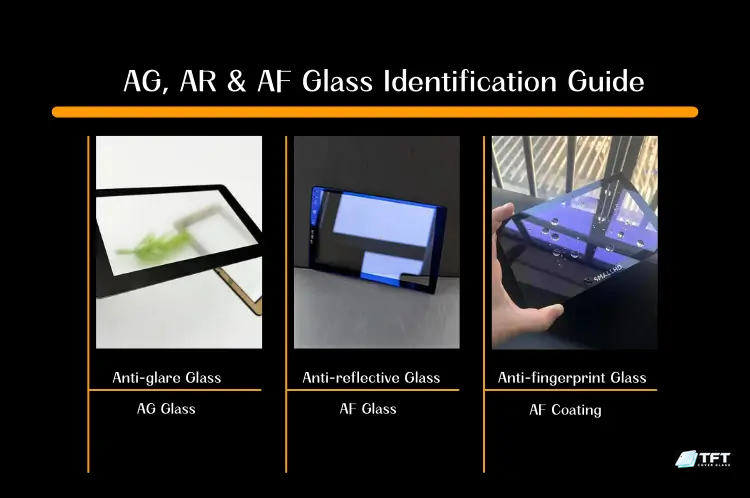
If you’ve ever learned about glass panels or glass covers utilized in modern display screens and touchscreens, you’ve heard of Anti-Glare (AG) Glass, Anti-Reflective (AR) Glass, and Anti-Fingerprint (AF) Glass. This article clarifies the distinctions between the three types of glass, outlining their respective properties, applications, identification methods, their compatibility and more.
When embarking on a new display screen or touch screen project, engineers and designers frequently grapple with reflectivity challenges. This necessitates sourcing appropriate cover glass solutions. However, newcomers to this field often lack the specific terminology required for effective research and communication with suppliers. Terms like “anti-reflective glass,” “glare-reducing glass,” or “non-reflective glass” may be used interchangeably, leading to confusion and hindering the selection of the correct glass type. Below content aims to provide clarity on the three primary types of specialized display cover glass: AG, AR, and AF and empowers engineers and procurement specialists to confidently navigate the selection process for optimal display performance.
A Deep Dive into AG, AR, and AF Glass Tech
To truly grasp the nuances of display cover glass and make informed decisions, a deeper understanding of the individual technologies of anti-glare glass, anti-reflective glass and anti-fingerprint glass is essential. Here introduces the core functionalities, applications, and distinguishing characteristics of Anti-Glare (AG), Anti-Reflective (AR), and Anti-Fingerprint (AF) treatments, providing a comprehensive overview of each.
Anti-Glare (AG) Glass
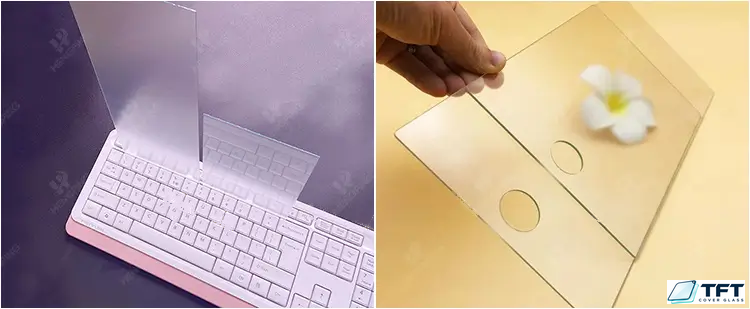
AG glass, also known as anti-glare glass or non-glare glass, mitigates reflections by altering the surface texture. Through chemical etching or coating, the originally smooth glass surface is transformed into a matte, textured finish, which creates a diffuse reflection, scattering incident light and reducing glare. The lower the gloss level, the greater the diffusion and the less pronounced the glare. AG glass is available in single-sided and double-sided variants, with the treated side always facing outwards.
Anti-Glare Glass Applications
AG glass is indispensable in high-ambient-light environments where glare can severely impair visibility. The applications of anti-glare glass in cover glass include:
- Industrial Control Panels: In factories and other industrial environments, glare can interfere with the operation of machinery. AG glass enhances the readability of control panels, promoting safety and efficiency. Examples have cranes, excavators, surveying instruments (such as soil testers, theodolites, etc.), industrial rugged tablets, environmental monitoring equipment, etc.
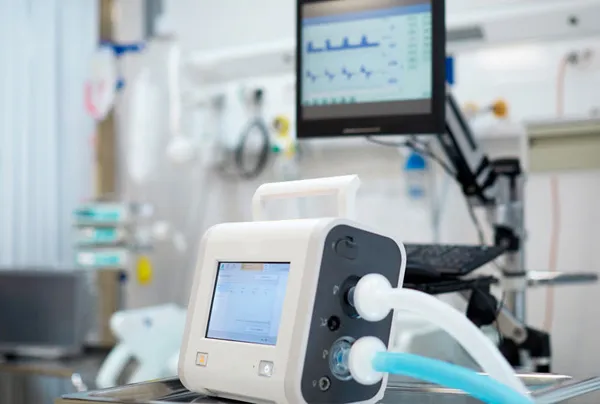
- Medical Displays: In operating rooms and other medical settings, clear visibility is crucial. AG glass minimizes glare and ensures accurate image representation on diagnostic displays. Examples has microscope, diagnostic equipment (such as ultrasound and X-ray machines), patient monitor, laboratory equipment and more.
- Outdoor Applications: Sunlight and other bright light sources can wash out images on outdoor displays. AG glass ensures content remains visible even under intense lighting conditions. Examples has GPS navigation devices, outdoor self-service terminals (e.g., ATMs, ticket vending machines, information kiosks), digital signage, new energy charging pile, etc.
Quick Identification of Anti-Glare Glass
A quick way to distinguish AG glass relies mainly on observation and touch:
Visual Inspection
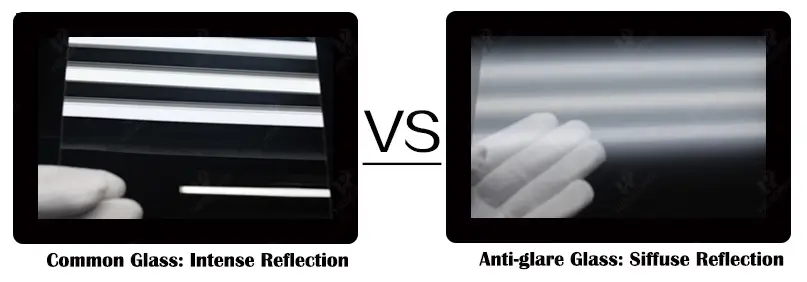
- Haziness/Frostiness: AG glass has a microscopically textured surface that diffuses light, giving it a slightly hazy, frosted, or matte appearance. Tilt the glass towards a light source. If the light scatters rather than reflecting clearly like a mirror, it’s likely AG glass.
- Reduced Reflections: AG glass significantly reduces reflections of ambient light. Look at the glass surface. If reflections appear blurred or you can see through the glass more clearly to what’s behind it, it’s probably AG glass. Comparing it side-by-side with regular glass makes the difference obvious.
- Slightly Whitish Tint: Some AG glass may appear slightly whiter than regular glass due to the light-diffusing coating.
Tactile Test
Slightly Rough Texture: Gently rub your fingertip across the glass surface. AG glass will feel slightly rough or textured compared to the smooth surface of regular glass. This texture is often subtle.
Other Methods
- Water Droplet Test: Place a small drop of water on the glass. If the droplet spreads out more quickly on the surface and forms a larger contact angle, it’s likely AG glass. This is because the micro-texture of the AG surface affects the water’s surface tension.
- Marking Test (Use with Caution): Lightly mark a corner of the glass with a soft pencil or water-based marker. If the mark wipes off easily, it could indicate AG glass, as some AG coatings are relatively soft. However, this method could damage the coating and isn’t recommended for valuable items.
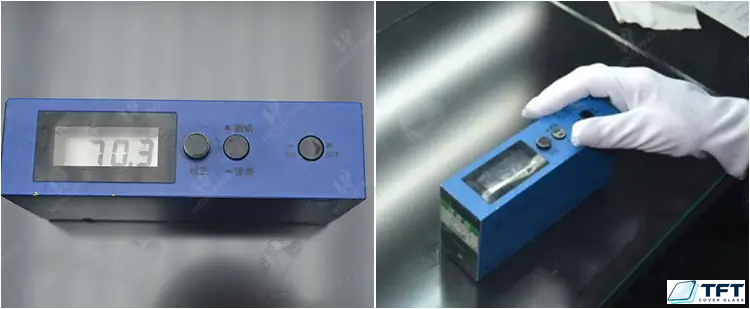
- Professional Instruments: A haze meter or gloss meter can accurately measure the haze and gloss levels of the glass, providing a definitive identification of AG glass.
It should be noted that some high-quality AG glass has a very low haze, which is difficult to distinguish with the naked eye and requires other methods of judgment. In addition, the effect of different types of AG glass varies, with some AG glass having a more pronounced haze and roughness, while others have a lesser degree of haze.
By combining the above methods, AG glass can be distinguished relatively quickly. However, if a more precise judgment is needed, it is recommended to use professional instruments for measurement.
Anti-Reflective (AR) Glass
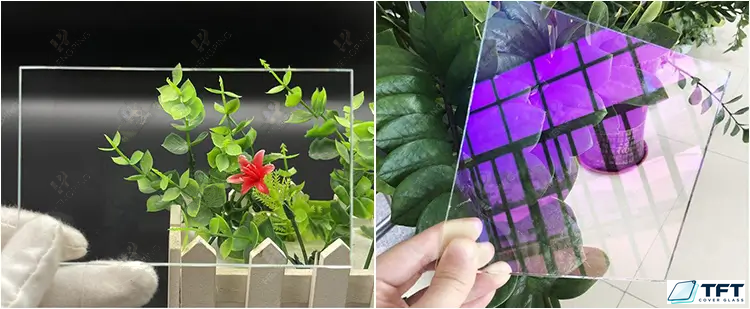
AR glass, or anti-reflective glass, enhances light transmission and minimizes reflection through specialized optical coatings applied to one or both sides of the glass. These coatings can achieve transmittance exceeding 99% and reflectance below 1%.
AR coatings utilize the principles of interference to minimize reflected light. Multiple layers of thin films with varying refractive indices are applied to the glass surface. These layers are designed so that reflected light waves from each interface interfere destructively, canceling each other out and maximizing transmission.
Anti-Reflective (AR) Glass Applications
AR glass is critical for applications where maximizing clarity and minimizing reflection are paramount.
- High-definition Display Devices: AR coatings enhance the vibrancy and contrast of images on high-resolution screens, delivering a richer viewing experience. Examples have high-end monitors, televisions, laptops/tablets/smartphones, e-readers, vehicle navigation/entertainment systems, aircraft/marine instrument panels, etc.
- Optical Instruments: Lenses and other optical components benefit from AR coatings, maximizing light transmission and minimizing internal reflections for optimal performance. Examples have camera lenses, telescopes/microscopes, solar panels, etc.
- Other Applications: Medical device displays, industrial control panels, advertising lightboxes, scanners/copiers, etc.
Any scene that requires high light transmission and low reflectivity is likely to use AR glass. AR coatings can effectively enhance the visual experience, improve device performance, and bring many other benefits. With the continuous development of technology, the application areas of AR glass are still expanding.
Quick Identification of Anti-Reflective (AR) Glass
Quickly distinguishing AR (anti-reflective/anti-glare) glass isn’t as straightforward as identifying AG glass, as AR coatings are typically very thin and transparent. Here are some methods, which are more effective when used in combination:
Comparison Test (Most Reliable)
- Find a piece of ordinary glass for comparison: This is the most effective method.
- Observe reflections at an angle: Tilt both pieces of glass towards a light source (e.g., a window or lamp) and observe the surface reflections. AR glass will have significantly weaker reflections than ordinary glass, and the color may also differ (often with a slight blue, purple, or green tint).
Observe Residual Reflection Color
Look for colored reflections: While AR glass aims to reduce reflections, due to the nature of light wave interference, some residual light of specific wavelengths often remains, creating a faint colored reflection. This reflection is typically blue, purple, or green, depending on the specific AR coating design. Ordinary glass reflections are usually white or the color of the ambient light.
Observe Objects Through the Glass
Compare clarity: Observe objects behind the glass. Images viewed through AR glass are typically clearer, sharper, and more saturated. Images viewed through ordinary glass may appear slightly hazy with somewhat muted colors.
Tactile Test (Less Reliable)
Assess smoothness: Some AR coatings may make the glass surface feel slightly smoother, but this difference is very subtle, and not all AR glass has a noticeably smooth feel.
Professional Methods
- Reflectometer: This is a professional measuring instrument that can accurately measure the reflectivity of a glass surface. AR glass has a significantly lower reflectivity than ordinary glass.
- Spectrophotometer: This can measure the transmittance and reflectance of light at different wavelengths, allowing for more precise determination of the presence and characteristics of an AR coating.
It’s important to note that these methods aren’t foolproof due to the significant variation in AR coating types and quality. The most reliable approach is conducting a comparison test or utilizing professional measuring instruments. Some high-end AR coatings have extremely low reflectivity, making them virtually indistinguishable to the naked eye, necessitating instrumental measurement.
Anti-Fingerprint (AF) Coating Glass
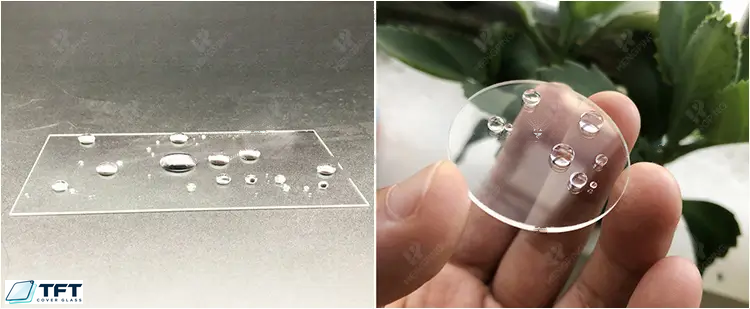
AF coating, or anti-fingerprint coating, leverages nanotechnology to create a hydrophobic and oleophobic surface. Inspired by the self-cleaning properties of lotus leaves, AF coating repels water, oil, and fingerprints.
AF coatings significantly reduce the adhesion of fingerprints and smudges, making them easy to wipe clean. The coating also imparts a smoother, more tactile feel to the glass surface.
Anti-Fingerprint (AF) Glass Applications
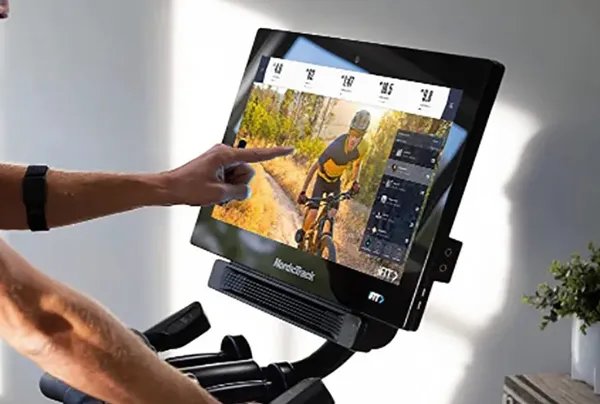
The application of AF glass is mainly focused on scenarios where frequent touching is required and cleanliness is a must. Generally, AF glass is required for all the touch screen applications. The anti-fingerprint coating is applied to the front surface of the glass.
- Consumer Electronics: This is the primary market for AF glass, encompassing a wide range of portable and household electronic devices. This includes mobile devices (smartphones, tablets, smartwatches, e-readers, etc.), computers and peripherals (all-in-one PC screens, mouse touch pads, etc.), imaging devices, and home entertainment equipment.
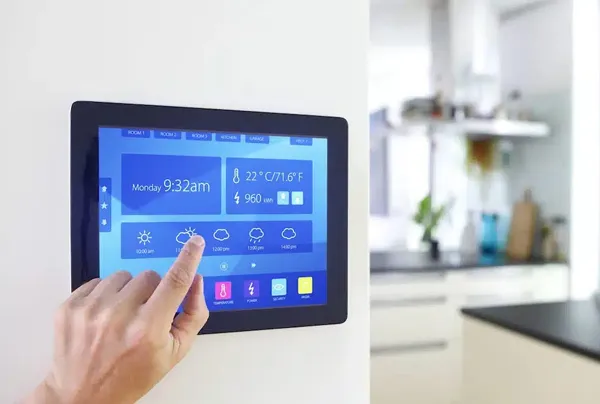
- Smart Home & Smart Building: With the increasing level of automation, the demand for AF glass in this sector is growing rapidly. This includes smart control panels, smart door locks, smart refrigerators, smart mirrors, smart security cameras, smart thermostats, and other smart appliances.
- Public Facilities & Commercial Equipment: In public spaces and commercial settings, AF glass can enhance user experience and equipment maintenance efficiency. This includes ATMs/self-service terminals, POS terminals/cash registers, digital signage/advertising displays, self-service ticketing kiosks, and exhibition display cases.
- Industrial Applications: In industrial environments with high cleanliness requirements, AF glass also plays a crucial role. This includes industrial touchscreens, medical devices, and testing instruments.
- Automotive Applications: With the increasing intelligence of automobiles, more and more in-vehicle displays are adopting AF glass. This includes navigation screens, center control displays, and rear-seat entertainment system screens.
Quick Identification of Anti-Fingerprint (AF) Glass
Actually, quickly identifying AF (anti-fingerprint) glass is challenging because the coating is extremely thin, making visual inspection and casual touch often ineffective. Here are some methods, but can’t be completely reliable, just for references.
Comparison Test (Most Reliable)
- Obtain a known piece of ordinary glass: This is crucial for comparison.
- Press firmly with your finger on both glass surfaces: Rub your finger firmly on both pieces of glass, simulating everyday use.Observe fingerprint residue: AF glass will show significantly fewer fingerprints than regular glass, and they will be easier to wipe off. This is the most intuitive and reliable method.
Reflection Observation
Observe reflections under strong light: In a brightly lit environment, carefully examine the reflections on the glass surface. AF glass may exhibit slightly diffused reflections, unlike the sharper reflections of ordinary glass. This is because the AF coating makes the glass surface more uniform, reducing light scattering. However, this difference is subtle and requires close observation.
Tactile Test
Assess smoothness: Some AF coatings make the glass surface feel smoother with less friction when rubbing your finger. However, this feeling varies depending on the coating type, and not all AF glass has a noticeably smooth feel. Furthermore, some high-quality ordinary glass can also feel very smooth.
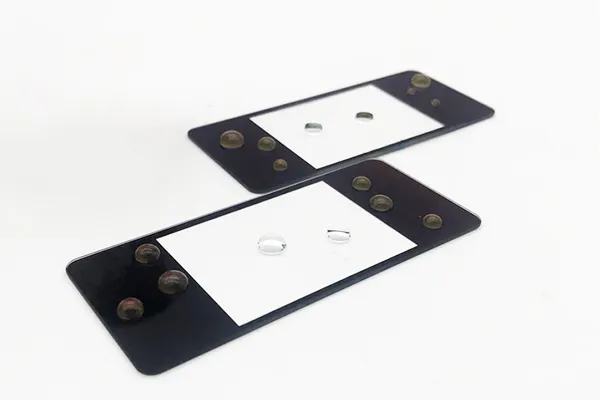
Water Droplet Test (Popular and Convenient)
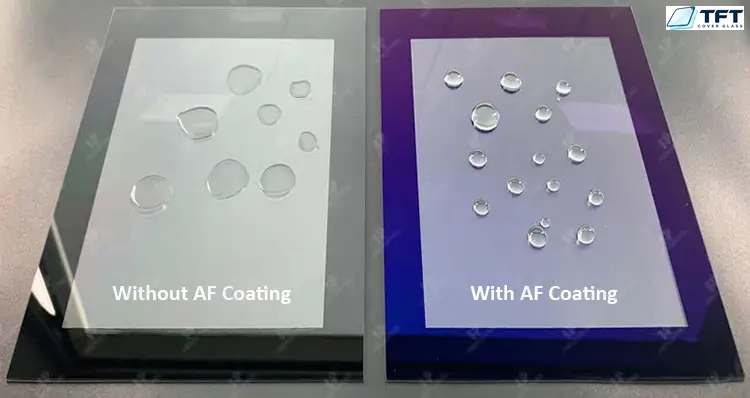 Example · Water droplets spread on the uncoated glass at left and bead on the AF-coated glass at right.
Observe water droplet shape: Place a water droplet on the glass surface and observe its shape. On AF glass, the droplet may be more rounded, roll off more easily, and have a larger contact angle. This is because the AF coating reduces the surface tension of the glass. However, this difference is also subtle and can be affected by other factors.
Professional Methods
- Contact Angle Meter: This professional tool accurately measures the contact angle of a water droplet on the glass surface, determining the presence of an AF coating.
- Professional Testing Laboratories: You can commission professional testing laboratories, which have specialized equipment and methods to accurately determine whether the glass has an AF coating.
It’s important to note that these methods are not foolproof due to the wide variation in AF coating types and quality. The most reliable approach is the comparison test, juxtaposing the glass in question with a known sample of ordinary glass. For definitive identification, it’s recommended to employ professional methods or consult with experts. Given the inherent properties of AF coatings, quick and easy differentiation remains a challenge. We hope these methods offer some assistance.
Comparing AG, AR, and AF Glass Technologies: Key Differences
| Feature | AG Glass | AR Glass | AF Coating |
| Primary Function | Reduce Glare | Increase Transmission, Reduce Reflection | Repel Fingerprints and Smudges |
| Surface Treatment | Chemical Etching or Coating | Optical Coating | Nano-coating |
| Appearance | Matte, Textured | Clear | Clear |
| Light Transmission | Reduced compared to clear glass | Increased, up to 99% | Minimal impact on transmission |
| Reflection | Diffused | Minimized, down to 1% | Minimal impact on reflection |
| Applications | High-ambient-light displays | High-definition displays, cameras | Touchscreens |
| Identification Test | Diffused light under fluorescent lamp | Enhanced image clarity | Water beading, oil-based marker test |
Compatibility of AG, AR and AF Glass
Although AG glass, AR glass and AF glass are three different types of glass and have different functions and applications, they can be combined in many applications for optimal performances. Besides being used individually, these coatings are often combined. Common combinations include:
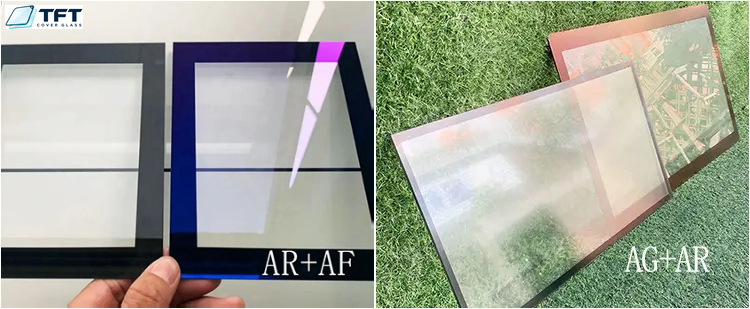
- AG+AR: This combination reduces both glare and reflections, providing a clearer display, especially in outdoor settings.
- AR+AF: This pairing enhances display clarity while minimizing fingerprints, improving the user experience.
- AG+AF: This combination reduces glare and resists fingerprints, enhancing screen cleanliness and readability.
- AG+AR+AF: This combination integrates the benefits of all three, offering the optimal display performance and user experience.
In most cases, the anti-fingerprint coating can protect anti-reflection coating for long-term use.
Selecting the Right Glass for Your Application
Choosing the appropriate glass type hinges on the specific application and desired performance characteristics. For outdoor displays or those in brightly lit environments, AG glass is crucial for minimizing glare. AR glass is preferred for applications where maximizing clarity and light transmission are paramount, such as high-resolution screens or optical instruments.
For touchscreens, AF coatings are essential for maintaining a clean and responsive interface. Understanding the nuances of each technology allows for informed decisions and optimized display performance.
Compare samples on your display
Label each sample and mark the face that will point towards the user. Compare the samples on the same display, with the same image, brightness, lighting and viewing angle. Use small text to check readability, then switch the screen off to compare reflected lights. If fingerprints are the concern, handle and wipe each sample the same way.
Record the sample label, lighting and the result that matters most for your device.
Future Trends in Display Glass
The field of display glass continues to evolve, driven by the demand for enhanced visual experiences and increased functionality. Ongoing research and development efforts are focused on improving the performance and durability of existing technologies, as well as exploring new materials and coatings. Some key areas of innovation include:
- Enhanced AR coatings: Researchers are working on developing AR coatings with even higher transmittance and broader bandwidths, further reducing reflections and improving color accuracy.
- Self-healing AF coatings: These advanced coatings possess the ability to repair minor scratches and abrasions, extending the lifespan and maintaining the pristine appearance of touchscreens.
- Antimicrobial Coatings: Incorporating antimicrobial properties into display glass can enhance hygiene and prevent the spread of bacteria and viruses, particularly relevant in public spaces and healthcare settings.
- Flexible Glass: The development of flexible glass substrates opens up new possibilities for foldable and rollable displays, revolutionizing the form factor of electronic devices.
By staying abreast of these advancements, engineers and designers can leverage the latest glass technologies to create innovative and captivating display solutions. Choosing the right glass is not merely a technical detail but a crucial factor in delivering an optimal user experience.
Conclusion
Understanding the differences between AG, AF, and AR glass is crucial for selecting the right glass for specific cover glass applications. Choosing the wrong type can lead to a suboptimal viewing experience, especially in challenging lighting conditions or high-touch environments. For instance, using standard glass in a bright outdoor kiosk would result in excessive glare, hindering readability. Conversely, a touchscreen without an AF coating would quickly become smudged with fingerprints. Therefore, understanding these differences empowers informed decisions, ensuring the selected glass enhances both the functionality and user experience of the device.
Furthermore, the increasing sophistication of display technologies and the demand for enhanced visual performance make understanding these glass types even more critical. Whether it’s for a high-end television, a medical device display, or an industrial touchscreen, selecting the right glass coating, or combination of coatings, can significantly impact image quality, readability, and overall user satisfaction.
If there are more questions about AG glass, AR glass or AF glass, welcome to contact us or share your understanding with us!



 EN
 FR
 DE
 ES
 PT
 IT
 NL
 DA
 RU
 AR
 TR
 JA
 KO
 ID
 UK
 TH
 VI
 PL
 MS
 ET
 EL