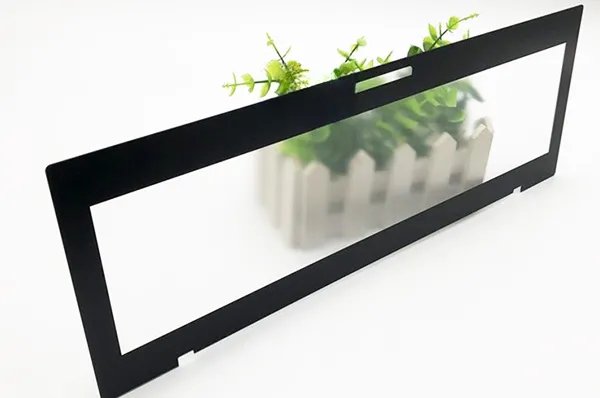
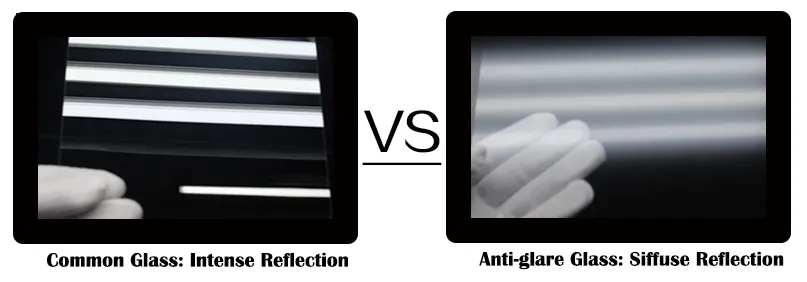
Anti-glare glass, also known as AG glass, features a specialized treatment on its surface to modify the reflective properties. Its manufacturing process transforms the inherent reflective surface of the original glass into a matte, non-reflective glass, resulting in a significant reduction in light reflectivity from the standard 8% to a mere 1%. Therefore, anti-glare glass offers a remarkably clear and transparent visual experience, enabling viewers to enjoy an enhanced visual perception.
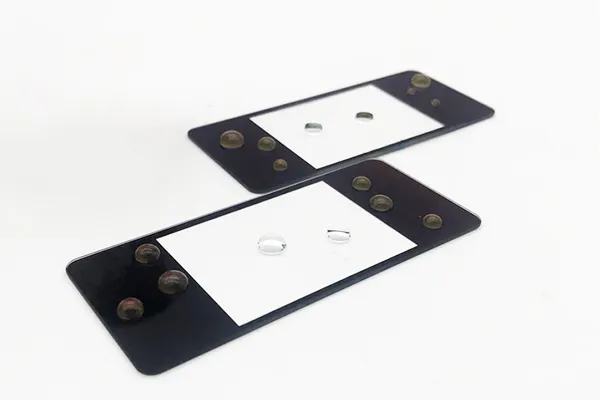
reflection of anti-glare glass and common glass
Why Anti-glare Glass Cover are Getting Popular?
Glare, come out of light reflection, is a common phenomenon in people’s daily life. For instance, while operating a computer, reflections from external scenes on the monitor can obscure display content. Similarly, the interior visuals through a glass window might become indistinct, and screens of mobile devices and tablets can become challenging to decipher outdoors or at strong lights. Fortunately, anti-reflective treatment on the glass surface proves beneficial to mitigate the effects of this glare reflected light. Anti-glare glass not only diminishes glare but also significantly reduces light and shadow reflections.
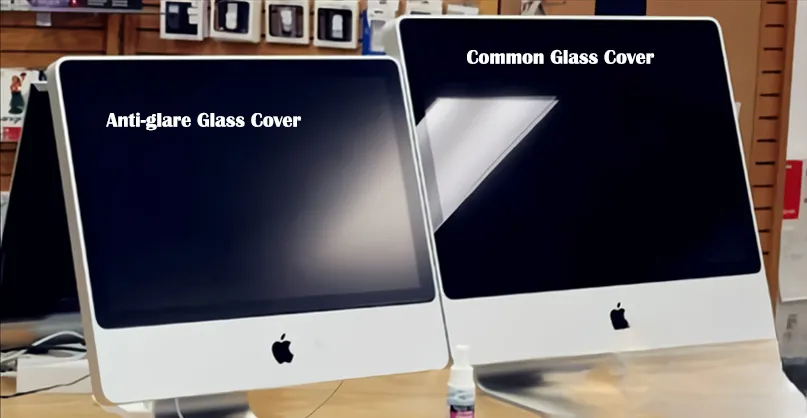
When integrated with video display screens, anti-glare glass yields a transparent, anti-reflective screen. AG glass cover solution effectively addresses reflections and glare issues common to electronic video screens and imaging displays when exposed to external light sources, subsequently enhancing image quality. In essence, anti-glare glass cover minimizes ambient light interference, elevates the display screen’s viewing angle and brightness, and curtails screen reflections. As a result, images rendered are sharper, more vibrant, and exhibit richer color saturation, markedly elevating the overall display experience.
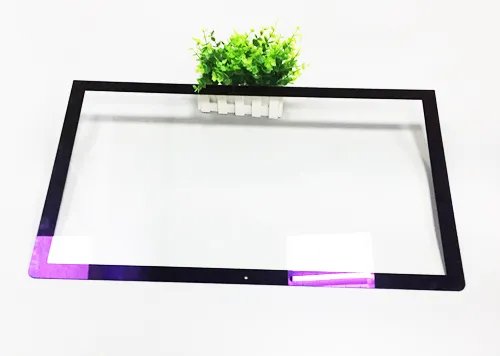
anti-glare glass cover applied in computer screen
What’s Anti-glare Glass Classification?
According to the different processing methods, Anti-glare glass is mainly divided into three types, including sprayed AG glass, coated AG glass and etched AG glass.
Sprayed Anti-glare Glass: It utilizes spray equipment to apply a layer of chemicals to the surface of the glass to form concave and convex particles, thus achieving the effect of preventing glare.
Coated Anti-glare Glass: It is a surface treatment for polarizers, in which the glass is processed with micro-convex particles to form a substance on its surface that resists light reflection.
Etched Anti-glare Glass: By the means of chemical hydrofluoric acid, there is an etching layer with a depth of about 0.05 mm on the surface of the glass, so that the surface of the glass forms a concave-convex uneven surface state. Thus, it has the function of reducing reflection and preventing glare.
So, when looking for anti-glare glass for display covers, which type would be best choice? Here are its advantages and disadvantages.
Sprayed Anti-glare Glass
The advantage of spray-coated AG is that it forms a nano-sized substance on the surface, so its production efficiency is relatively high, the cost is relatively low, and it can be mass-produced on a wide scale. While, its disadvantage is that it forms a layer of substance on the surface, so it is easy to fall off in a specific environment or if it is touched by hand frequently. The friction resistance test we did before found that it only has 3000-10000 times. Therefore, it can’t be used in some specific sectors, such as outdoor equipment, medical equipment and more.
Coated Anti-glare Glass
Coated AG glass was first used on top of rear-view mirrors in automobiles, but with the popularization of terminal electronic devices, there are more requirements for AG glass cover. The soft touch of surface hardness that coated AG glass has does not meet the requirements of electronic equipment, therefore, coated AG glass has basically faded out of the AG glass cover panel processing industry.
Etched Anti-glare Glass
Etching AG glass is processed by etching the glass surface into uneven surface state, so its advantage is never fall off, no matter what kind of environment to use. Its hardness will be as hard as the original glass, there will not be any other substances out. So, in the medical or some industries with high environmental requirements, etching AG glass are BEST choice for these equipment. Its disadvantage is that it requires high processing technology that many glass processing manufacturers don’t master.
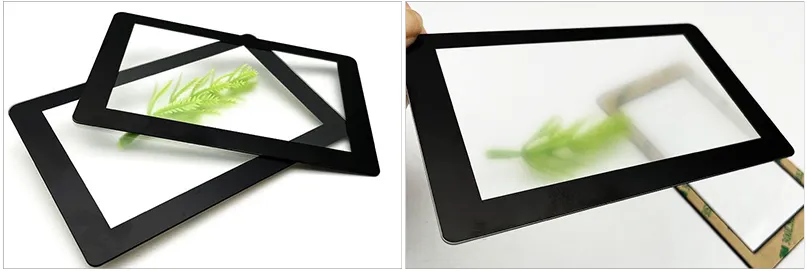
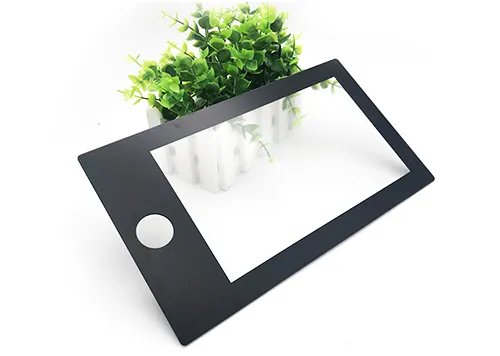
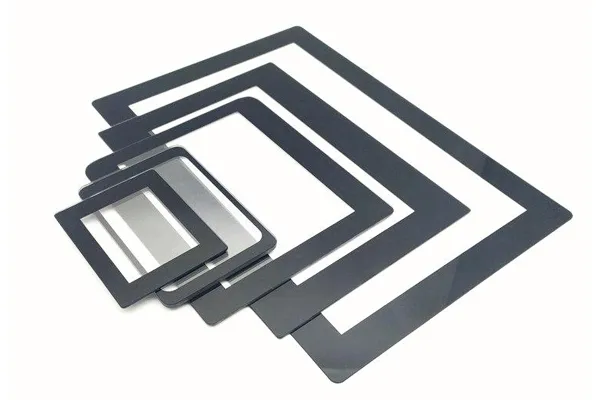
etched anti-glare glass cover panel
In fact, only etched AG glass can achieve permanent anti-glare effect. Therefore, now many manufacturer will choose etched anti-glare glass as the protective cover for their products or equipment.
What Constitutes a High-quality AG (Anti-Glare) Glass Cover?
A high-quality AG glass cover panel is not just about reducing glare but enhancing the overall user experience while ensuring durability and compatibility across applications. So, what is a good AG glass cover panel? Here we listed some parameters for the judgment.
Glossiness
Glossiness is one of the most important values for AG glass. Good AG glass should have a uniform glossiness. For example, on top of a 15-inch glass cover, when measure 5 points, or even more points, its gloss level should be controlled within 5, which is considered as a better gloss level.
Haze
Haze is just a reference value in AG processing industry. but even if it is a reference value, if the haze of every batch of production of anti-glare glass cover panel is with a same standard, then the production capacity is up to standard; If the haze of every batch of production basically has a big deviation, then the quality of AG glass cover panel is not good. And in real application, there will be great difference between every piece of AG glass cover.
Roughness
For good quality AG glass cover plate, its surface roughness is very uniform. In fact, the AG glass cover panel produced by TFT Cover Glass can achieve a surface roughness of 0.06 or less. If the granularity is coarse, it will directly affect the display effect of a piece of AG glass.
Transmittance
Maybe some Anti-glare glass cover panel manufacture will not have control on transmittance. However, we insist that the transmittance of the glass itself should not be affected at least by the glass after etching AG treatment.
How to Find a Reliable Anti-glare Glass Cover Manufacturer?
Some customers may be bothered by quality defects, delayed delivery, or other production when they purchased anti-glare glass covers. So, how to choose a reliable AG glass cover supplier? How can we get rid of the dilemma of being plagued by quality and delivery? In the supplier selection, we give the following suggestions:
QC process of AG glass cover factory
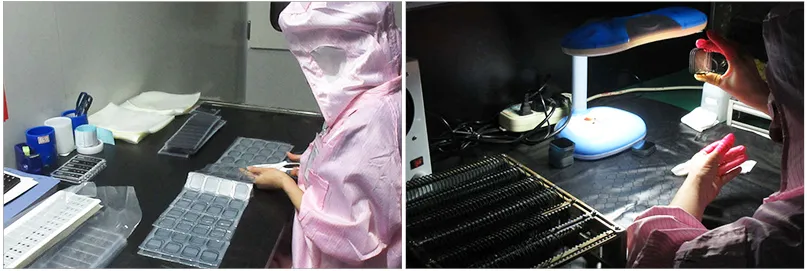
Check Processing Environment and Equipment of AG glass Processing Plant
Chemical etching processing has quite high requirements on the environment of the manufacturing factory. When the chemical reaction takes place, the temperature and humidity will affect the quality of AG glass. Moreover, The constant management of concentration of the potion is also the guarantee for the stability and quality of AG glass. Therefore, we believe that a constant temperature and humidity production and storage environment is also key parameter for the stability of every piece of AG glass cover panel. In addition, highly automated production equipment in a professional glass processing factory can avoid the error of manual operation.
Don’t Choose A Supplier with Super Low Price
No matter which technology the AG glass is processed, it is necessary to carry out secondary or even tertiary processing on the original glass. So, the cost of production is relatively higher than common glass panel.
Don’t be Too Obsessed with Glossiness
The value of glossiness is undeniably one of the most important performance indicators of anti-glare glass. But it is not the only criterion to judge whether AG glass cover panel is suitable for your applications. In the assessment of a new AG glass cover panel manufacturer, the first thing to check whether the manufacturer can offer full technical date sheet, including, haze, roughness, transmittance, resolution and more indicators. Then, it is also necessary to check whether the manufacturer can guarantee a stable quality for every batch of order.
Confirm Whether the Transmittance Rate of Glass is Changed after AG Etching Process?
Top AG glass cover panel manufacturers can basically ensure that the transmittance rate is not affected during the etching process. The transmittance of AG etched glass panel should still be greater than 89% after the AG etching process.



 EN
 FR
 DE
 ES
 PT
 IT
 NL
 DA
 RU
 AR
 TR
 JA
 KO
 ID
 UK
 TH
 VI
 PL
 MS
 ET
 EL