

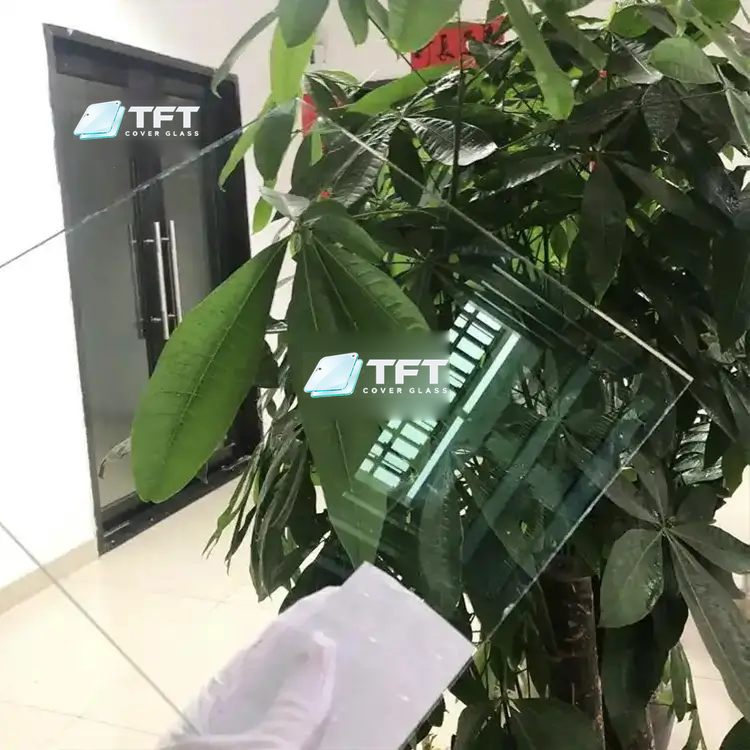
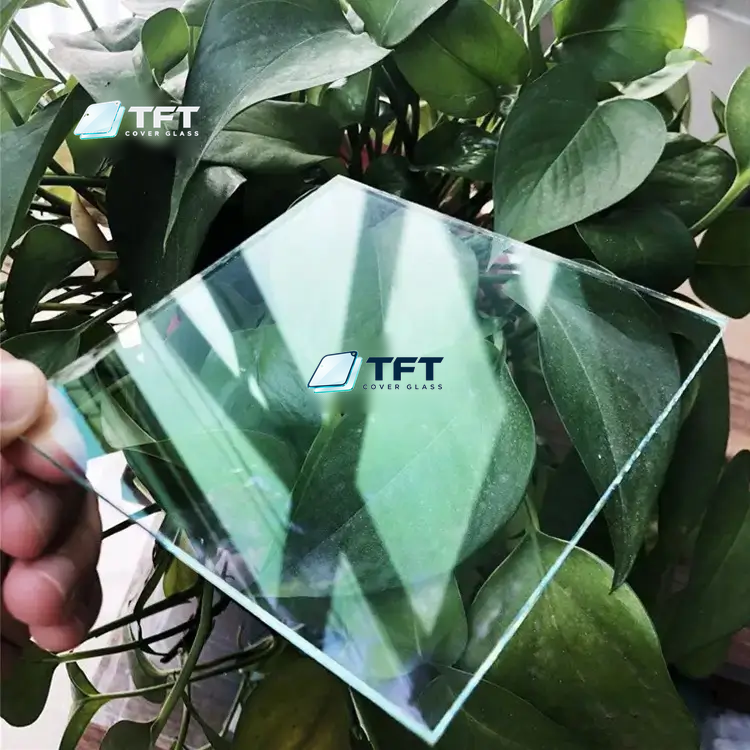
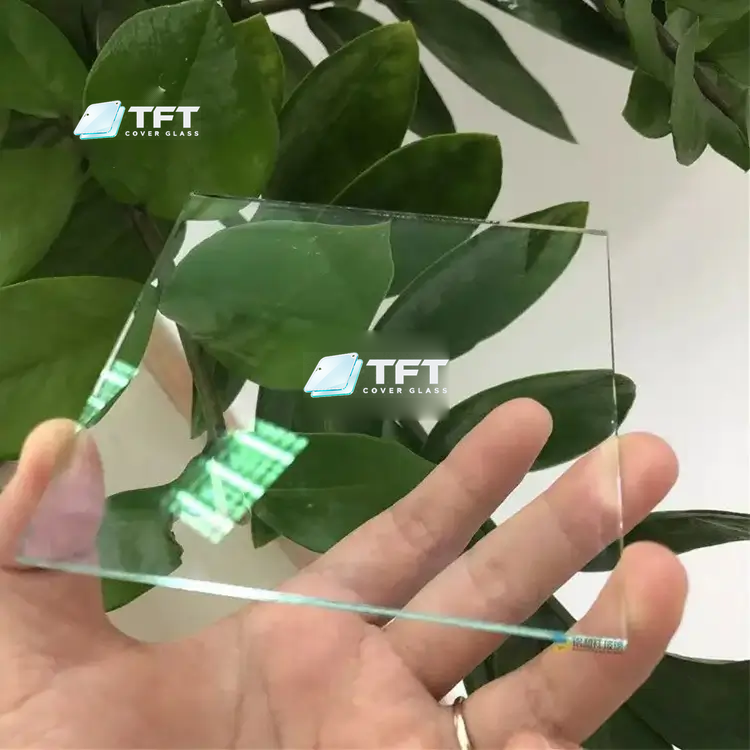
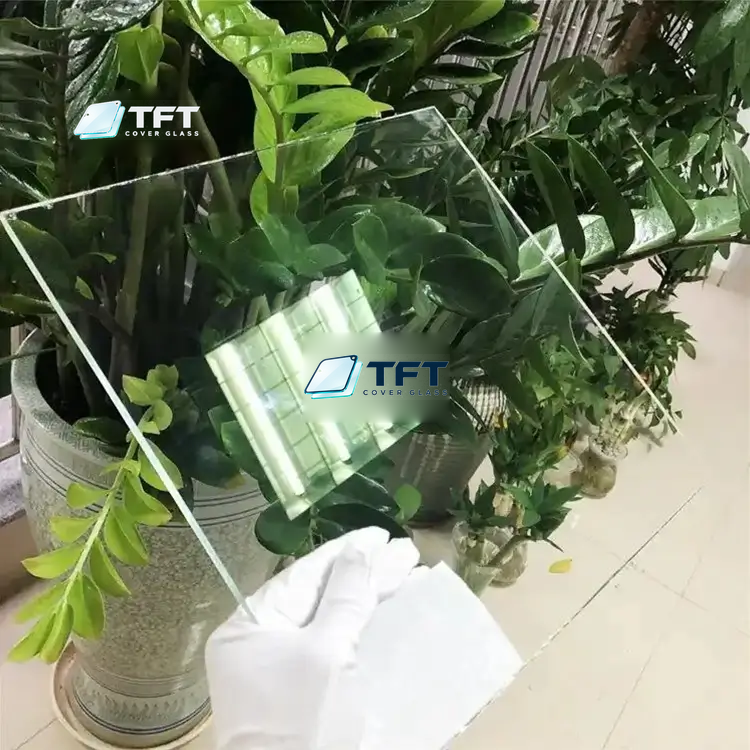
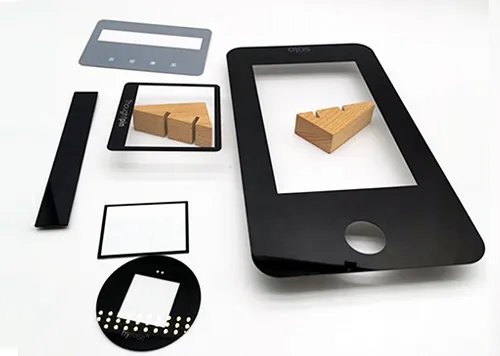
AR glass, also called anti-reflective coated glass, is the most common glass materials in cover glass industry since it can minimize light reflection and provide better field of view and high light transmission. TFT Cover Glass offers various custom options for the AR glass to meet different application requirements.
Custom-made AR Glass with Green Reflection
AR glass with a green reflection is a specialized anti-reflective coating that minimizes light reflection while subtly shifting the reflected light towards the green spectrum. This is due to the specific optical properties of the multi-layer coating.
AR coatings consist of multiple thin layers of materials with differing refractive indices. These layers are precisely engineered to create destructive interference for incoming light waves, reducing reflections. The specific materials and layer thicknesses determine the overall reflectivity and the color of the residual reflection. There are three kinds of light reflection for AR glass.
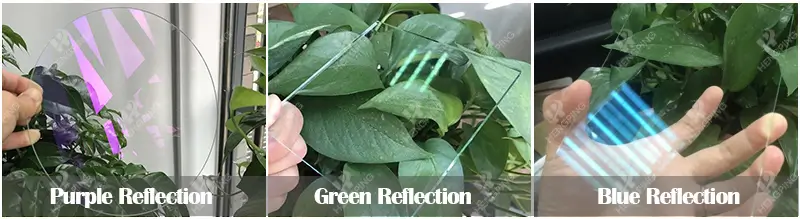
- Purple: Purple reflection is commonly seen in AR glass;
- Green: Need custom-made;
- Blue: Need custom-made;
Where Green-reflective AR Glass is Used?
The application of green-reflective AR glass depends on its specific optical properties (e.g., the exact wavelengths reflected and the overall transmission). However, potential applications could include:
- Displays: In certain display applications, a slight green tint might be considered aesthetically pleasing or even beneficial for specific color profiles. The anti-reflective properties are essential to improve image clarity and reduce eye strain.
- Optical Instruments: The specific spectral characteristics might be chosen for particular applications where certain wavelengths need to be reduced or selectively transmitted, such as in filters or specialized lenses.
- Automotive Components: Green-tinted AR glass might be utilized in specific automotive applications for aesthetic or functional reasons, possibly enhancing visibility in certain lighting conditions.
It’s important to note that the green reflection is typically subtle, and the primary function remains the reduction of glare and enhancement of light transmission. The exact specifications (reflectivity, transmission, color shift, etc.) would determine the most suitable application.






 EN
 FR
 DE
 ES
 PT
 IT
 NL
 DA
 RU
 AR
 TR
 JA
 KO
 ID
 UK
 TH
 VI
 PL
 MS
 ET
 EL