
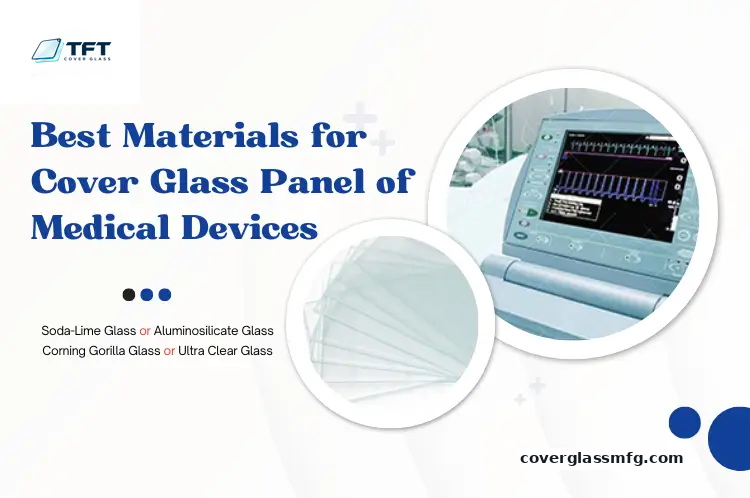
This article explores the diverse range of glass types available for the cover glass of medical devices, evaluating their key properties, suitability for various medical applications, and the trade-offs associated with each. From strengthened soda-lime glass to advanced aluminosilicate glass, we provide a comprehensive overview to guide medical device manufacturers in making informed material choices.
Introduction
The medical device industry is increasingly shifting from acrylic panel to glass panels for display applications. The glass panel, whether acting as a protective cover lens, a touchscreen interface, or part of a display screen, plays a vital role in the device’s overall functionality and reliability. The “best” glass material is not a one-size-fits-all solution, but rather a careful selection process based on the specific demands of medical device and its intended use environment. Factors such as impact resistance, scratch resistance, optical clarity, chemical resistance, and cost all come into play. Below discusses the key glass materials that are commonly used, their strengths and weaknesses, and their common applications for medical devices.
What Key Properties Define Medical Device Glass Panels?
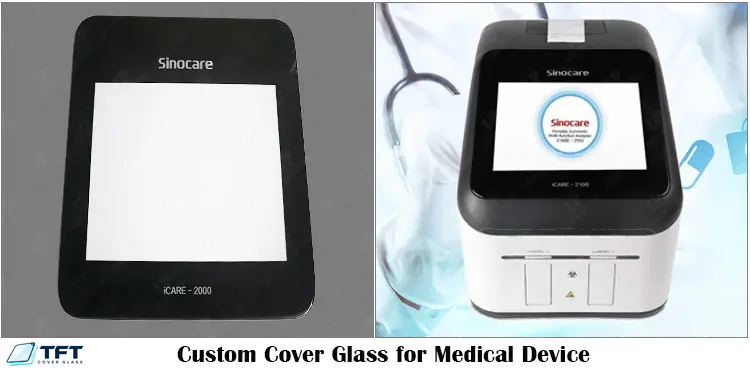
Stringent requirements govern cover glass panels in medical devices, significantly impacting both the user experience for healthcare professionals and the accuracy of data interpretation. While the industry continues to evolve, the core demands for these glass panels consistently revolve around safety, durability, environmental adaptability, and aesthetics, ensuring reliable device operation across a wide range of applications. (Read more: Reasons to Choose Cover Glass Panels for Medical Devices >>)
- Optical Clarity: High light transmission and minimal distortion are essential for accurate visual representation of medical images and data.
- Impact Resistance: The ability to withstand accidental bumps, drops, and impacts is critical for maintaining device functionality and safety.
- Scratch Resistance: Resistance to surface scratches from cleaning, handling, and contact with other objects ensures long-term display readability and prevents potential contamination traps.
- Chemical Resistance: Exposure to harsh cleaning agents and disinfectants is commonplace in medical settings, so the glass must resist degradation or damage from these substances.
- Surface Properties: Features like anti-glare (AG), anti-fingerprint (AF), and anti-reflective (AR) coatings can significantly enhance usability and hygiene.
- Thickness and Weight: These factors contribute to the overall device design and portability.
- Regulatory Compliance: All materials must meet relevant medical device standards and regulations.
Glass Materials for Glass Panels Used for Medical Device Panels: A Comparative Analysis
Like other cover glass applications, medical device glass panels primarily utilize soda-lime and aluminosilicate glass. However, selecting the most suitable glass material for your specific medical device project requires careful consideration. As a professional cover glass manufacturer with extensive experience in medical devices, we offer the following comparative analysis to help you make an informed decision.
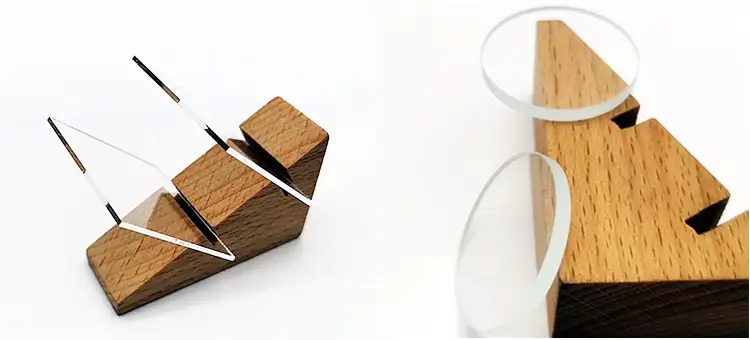
Soda-Lime Glass: Cost-Effective and Versatile
Soda-lime glass is the most common and cost-effective type of glass material for display cover glass or touchscreen cover glass. While it has good optical clarity, it is relatively susceptible to scratches and impacts in its untreated state. And, the most widely used type of soda-lime glass is ultra clear glass.
- Strengths: Cost-effective, good optical clarity, readily available.
- Weaknesses: Lower impact and scratch resistance compared to other options.
Medical Applications Recommended
For medical device where the glass panel is limited to indicator lights and black printed markings, and without any screen or display, the requirements for glass transmittance are minimal. In such cases, soda-lime glass offers sufficient scratch resistance (5.5H Mohs hardness) and stability at a cost-effective price.
For medical devices with a display-only function, no touch capabilities, and with minimal risk of impact from hard objects, standard soda-lime glass and ultra-clear glass may be a sufficient and cost-effective choice.
Aluminosilicate Glass: High Strength and Durability
Aluminosilicate glass offers significantly higher strength and scratch resistance compared to soda-lime glass. This makes it a popular choice for demanding medical applications.
- Strengths: Excellent impact and scratch resistance, good optical clarity.
- Weaknesses: Higher cost than soda-lime.
- Popular Brands: Corning Gorilla Glass, Panda Glass, etc..
Medical Applications Recommended
Ideal for touchscreens, high-impact applications, and devices requiring long-term durability, particularly in demanding environments. We generally suggest Corning Gorilla Glass or Panda Glass.
Corning Gorilla Glass: Premium Durability and Brand Confidence
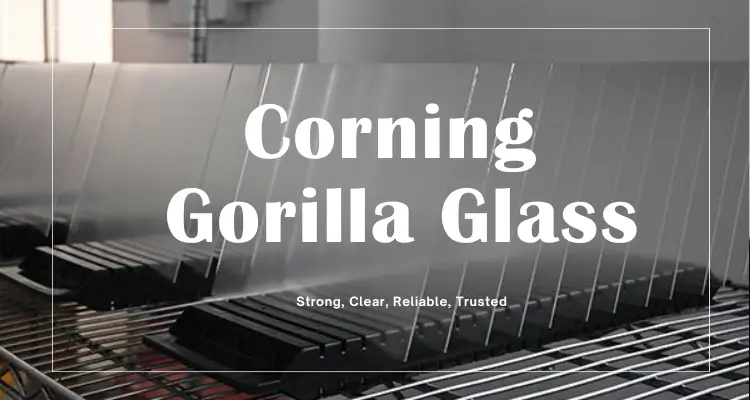
With chemical strengthening enhancing its properties, Corning Gorilla Glass delivers exceptional durability for medical devices, achieving a compressive strength (CS) above 650 MPa, a depth of layer (DOL) exceeding 40 μm, and a surface hardness of 9H. This robust performance protects against daily impacts and ensures long-term reliable operation, making it the preferred glass for many medical applications.
- Strengths: Exceptional impact resistance, high scratch resistance, excellent optical clarity (transmission≥92%), thin and lightweight, recognized brand, ect.
- Weaknesses: Higher cost (than other glass options).
Medical Applications Recommended
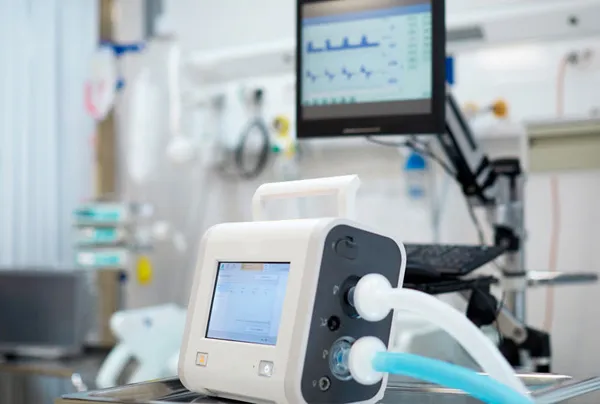
Corning Gorilla Glass is well-suited for any medical device glass panel requiring high strength, scratch resistance, and clarity. This includes devices with lenses, such as laryngoscopes, blood analyzers, heart rate monitors, ventilators, dental examination equipment, and blood pressure monitors.
AG Glass: Enhanced Visibility and Patient Safety
A common concern raised by our clients is the detrimental effect of glare on displays used in operating rooms and other high-illumination settings. The resulting reflections can compromise a physician’s ability to accurately assess and operate equipment. To address this, many customers have upgraded from standard glass to anti-glare (AG) glass for applications such as ultrasound monitors and imaging screens in surgical suites.
- Strengths: Reduced glare and reflection, enhanced image clarity, “paper-like” touch feel, etc..
- Weaknesses: Possible increase in cost.
Medical Applications Recommended:
AG glass is highly recommended for medical devices used in brightly lit environments or where reflection is a concern. This includes ultrasound equipment displays, surgical imaging screens, operating room monitors, and any touch-based interface in settings with strong overhead lighting. The improved visibility and reduced eye strain provided by AG glass contribute to more accurate diagnoses, safer procedures, and enhanced overall clinician performance.
In addition, for the glass panels of medical equipment consoles, low-gloss AG glass is used, which allows for more responsive and safer manoeuvring. (Read more: 5 Key Parameters of Anti-Glare Glass >>)
Other Glass Materials for Cover Glass of Medical Devices
Driven by ongoing technological innovation, the selection of glass panels for medical devices is constantly expanding. We are pleased to announce the availability of the following materials:
- Grey Glass: Offers a sleek, dead front effect (all-black) design for enhanced aesthetics.
- Antimicrobial Glass: Actively inhibits the proliferation of harmful bacteria, algae, fungi, and mold, achieving an antimicrobial effectiveness (R)≥3 and a 99.9% antibacterial rate.”
Glass Surface Coatings
Beyond the base glass material, various special surface coatings can further enhance the performance of cover glass panels of medical devices.
- Anti-glare (AG) coatings: Reduce reflections and improve visibility in bright environments.
- Anti-fingerprint (AF) coatings: Reduce fingerprints and smudges, making cleaning easier. This is mostly recommended for medical devices where maintaining a high level of hygiene is paramount, as AF coatings facilitate quick and effective cleaning and disinfection.
- Anti-reflective (AR) coatings: Increase light transmission and improve image clarity.
- Antimicrobial coatings: Inhibit the growth of bacteria and other microorganisms.
Making the Right Choice: A Holistic Approach
Selecting the best glass material for your medical device panel requires careful consideration of all relevant factors, including:
- Device Intended Use: What are the specific performance requirements for the device?
- Operating Environment: What are the environmental conditions the device will be exposed to?
- Budget Constraints: What is the allowable cost for the glass panel?
- Regulatory Requirements: What medical device standards and regulations must be met?
Conclusion
By carefully evaluating these factors and consulting with experienced glass panel manufacturers, you can ensure that you select the optimal material for the cover glass panels of your specific medical devices, maximizing performance, safety, and longevity. The right choice contributes to increased reliability and quality of the entire equipment. TFT Cover Glass provides the medical industry with high quality glass panel for multiple purposes. With our vast experience, stable production cycle, fair costing and a support for both multi-variety and small-batch productions, you can be assured that you are working with the best. Welcome to contact us anytime!



 EN
 FR
 DE
 ES
 PT
 IT
 NL
 DA
 RU
 AR
 TR
 JA
 KO
 ID
 UK
 TH
 VI
 PL
 MS
 ET
 EL