What is Dead Front Effect?
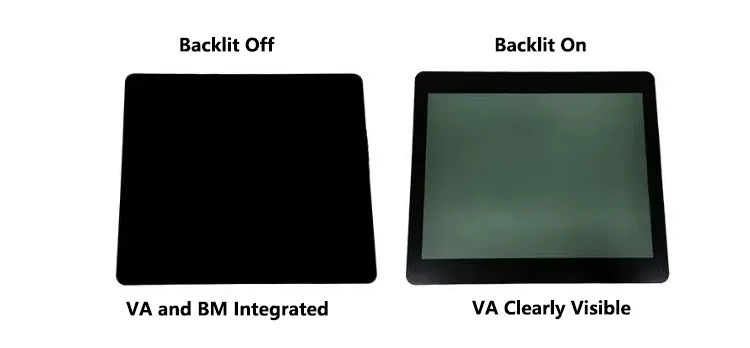
The dead front effect of display panel means that the screen is clearly visible when the screen is on, and when the screen is off, the screen turns black and blends in with boarder. The dead front design gives products a modern and high-end look. In addition, dead front effect enhances the user experience by making the display stand out more, reducing external distractions, and improving viewing.
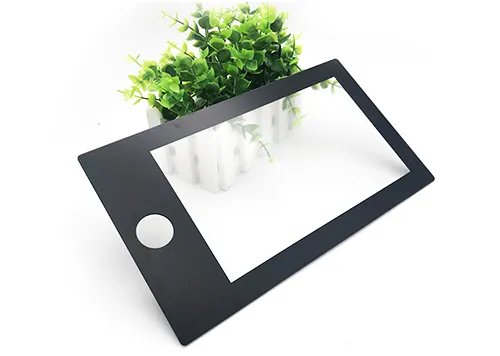
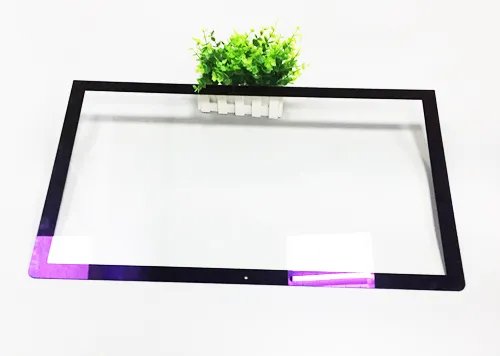
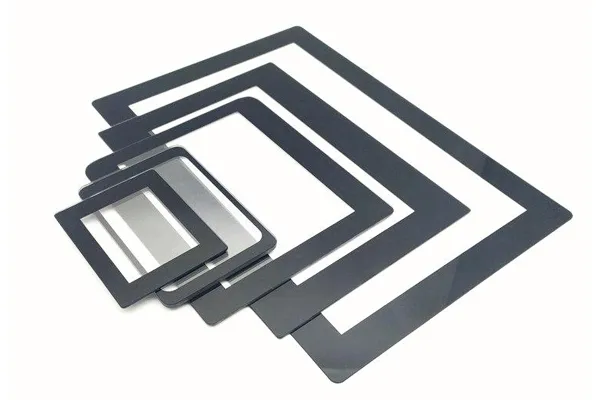
Dead front cover glass is essential for displays and screens to achieve dead front effect.
Dead front cover glass means that the VA (View Area) window area of
cover glass is processed into semi-transparent, when touch screen is lit up, content on display can be clearly saw; when touch screen is off, the glass cover and OLED screen present a one-piece all black effect, and no boundary between the VA window area and the black border of the glass cover can’t be saw.
Why Choose Dead Front Cover Glass?
As consumers’ demands for product appearance and user experience continue to rise, it has become a key task for designers to focus on differentiation and innovation in product design. Dead front glass cover panels, especially those that are integrated with the displays and screens, are now welcomed in the market as they can provide product with unique aesthetics, premium user experience.
Where is Dead Front Cover Glass Used for?
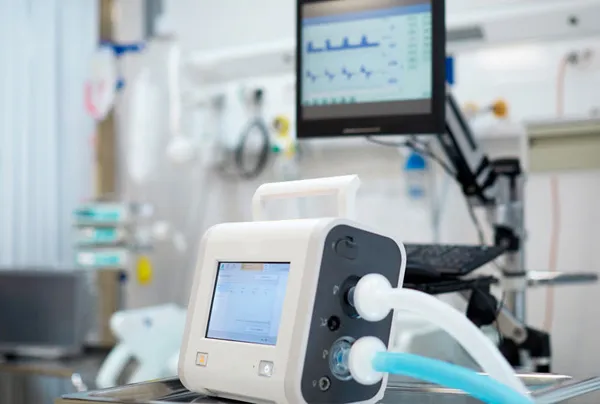
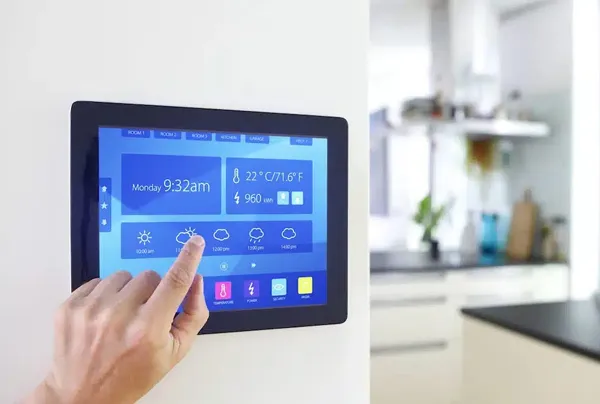
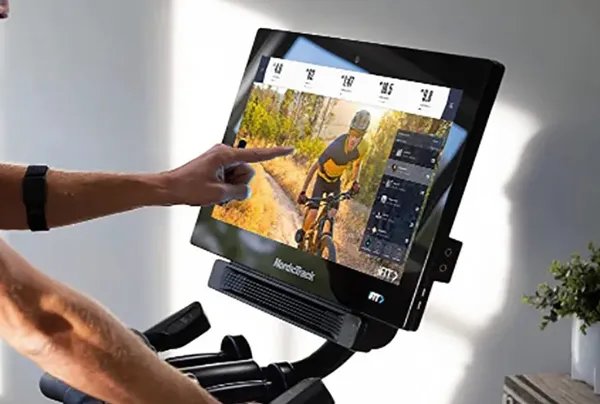
Dead front glass panels are now widely used in touch screen terminals for smart wear, smartphones, smart homes, smart control centers, engineering vehicles, train displays, medical devices, in-vehicle displays, and more. If you are a manufacturer of these products, maybe you can try a dead front cover glass.
5 Ways to Achieve Dead Front on Cover Glass for Display Screen?
Currently, dead front glass panel can be achieved by different technologies or methods. As a professional manufacturer of display cover glass panel manufacturer, here we introduce 5 different ways to achieve dead front effect on cover glass of display screen.
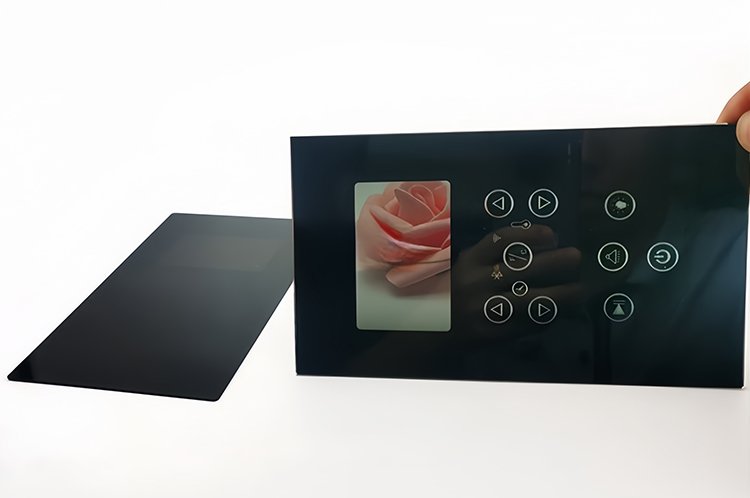
Silkscreen Printing
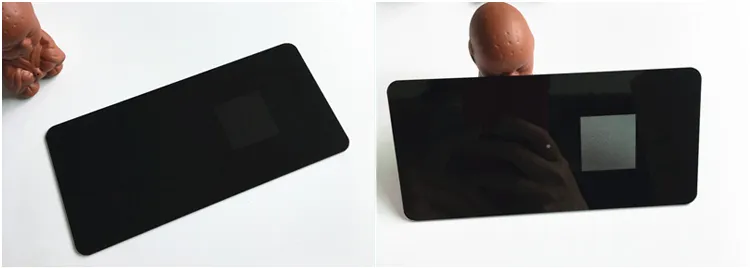
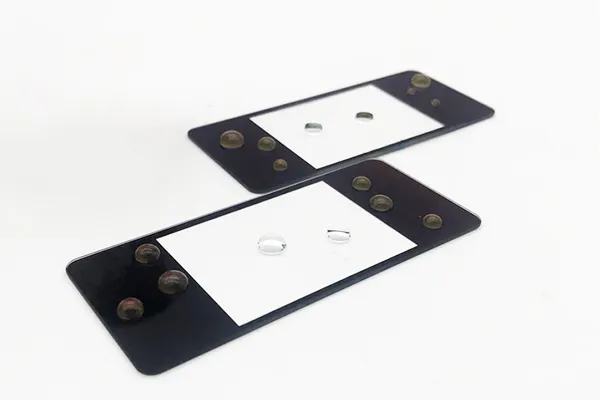
Silkscreen printing is the most common used method to make a dead front glass panel. After CNC grinding, strengthening, silkscreen printing with a black border, the cover glass panel is processed with a layer of IR ink semi-transparent printing on the window area or key buttons section. Then, the dead front effect is achieved by adjusting the color of the ink and the transmittance rate.
Notices of Silkscreen Printing for Dead Front Glass Panel
- Ink: When choosing translucent black ink, it is highly recommended to choose the same color system as the border color since too black and too light will cause color difference segment layer.
- Transmittance: According to the brightness of the LED lights and the application environment, the transmittance rate ranges from 1% to 50%. Currently, the most used transmittance for dead front glass panel for display screens is 15 ± 5% and 20 ± 5%.
Although silkscreen printing has been used for dead front glass manufacturing, it is only suitable for cover glass panel in small size. For cover glass panel in large scale size, silkscreen printing is not recommended because the semi-transparent ink is very thin, when the LED is lit, all printing defects will be revealed, such as scratches and stripes of silkscreen printing plate, orange peel of uneven ink formation, impurities and so on. Therefore, dead front glass panel in large size can’t be achieved by silkscreen printing.
Electroplating on Glass
Different from above mentioned silkscreen printing, electroplating is to plate a layer of inorganic film directly on the cover glass by making use of magnetron sputtering and optical principles. Then the color of touch screen window and its border presents the same by adjusting the film layer window area of reflection, transmission, color difference, thus dead front display effect is achieved.
Usually, the transmittance rate of the coating can reach 80%, and the reflection rate is less than 2%. As we all know, the cover glass of Apple Watch adopts electroplating for dead front display. However, electroplating method is only suitable for cover glass in small size, and its processing cost is relatively high.
Translucent Glass
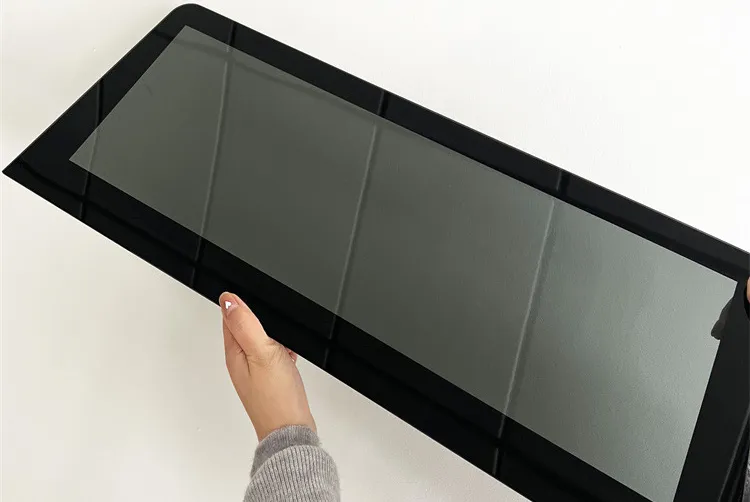
In addition to silkscreen printing and electroplate coating, the dead front effect can also be achieved by directly using translucent materials. Available materials in the market for this function are plastic and glass. Compared to plastic materials, like
PMMA, glass has features of anti-scratches, anti-impact, sleek appearance and more, so glass it is generally recommended for displays and screens of smart home, smart wearable, medical equipment, industrial instruments, and other applications. And among the glass materials, gray glass is great choice to process dead front glass panel for displays. What is gray glass? How it achieves dead front effect?
Gray glass is processed by introducing the inorganic metal oxides colorants to the transparent and colorless glass material, to turn the original colorless transparent glass into a dark gray low transmittance glass. Then, dead front effect can be achieved by color of cover glass border. Generally, the transmittance rate of gray glass is 18% ~ 38%.
In addition to grayish color and high transmittance rate,
another biggest advantage of gray glass for dead front display glass panel is that it can process cover glass in large size.
Black OCA/OCR
From the structure of displays, the effect of one-piece black is the color consistency shown by the light passing through glass cover panel, TP layer, LCM layer, and fully laminated optical adhesive together. Therefore, in addition to the glass cover, TP, LCM liquid crystal layer, the color of the optical adhesive part can also be adjusted to reduce the color difference between the display part and the edge part to achieve the effect of dead fronting.
Silkscreen Printing + Coating
Another way to realize dead front effect is to adopt screen printing method with coating method. Firstly, two layers of ink are printed on the back of the cover glass. The purpose of printing two layers is mainly to prevent the unevenness of printing one layer and the problem of leakage. Secondly, a layer of coating on the surface of cover glass can realize the function of AF/AR/AG and reduce the specular reflection of glass cover and enhance the effect of dead front. Finally, by adjusting the ink toning and coating parameter correction, the color phase of the cover glass and panel is close to each other; In the end, the BM area of the cover plate and the color phase of the AA are consistent, to achieve the effect of one-piece black.
What are Main Factors Affecting Dead Fronting Effect?
Dead front effect on displays or screens can be affected by the components and the processing technology adopted.
TFT display, polarizer, laminating method, laminating adhesives, bezel ink, coating and so on will all affect its effect. Therefore, it is essential to choose a
cover glass panel manufacturer with extensive experience and expertise, then it can provide more comprehensive technical support and customized solutions to ensure that the performance and effectiveness of dead front effect meets expectations.
Will AG/AR/AF Affect Dead Fronting Effect?
As we all know, the surface treatment of AG/AR/AR on cover glass will greatly improve the product aesthetics and user’s experiences. But, AG/AR/AR will have effects on the effect of dead front display. Generally,
premium anti-glare etched glass will have no effect on the transmittance. Therefore, it is important to choose a reliable and experienced cover glass supplier to ensure there are no technical defect on the dead front display.
Conclusion
The dead front effect can greatly improve the static aesthetics of displays, so the surface of the product looks more beautiful, more technological. And dead front display panel can improve the quality of the product and bring consumers a better experience. So, more and more manufacturers choose dead front glass panel for their products with aim to enhance market competitiveness.
TFT Cover Glass has been in cover glass processing industry for at least 15 years, we are willing to share our rich experience and cases in cover glass for various industries, including industrial equipment, medical devices, and electronics products. If you are interested in dead fronting, we can discuss it and exchange our ideas, maybe you can find more design ideas for your product!



 EN
 FR
 DE
 ES
 PT
 IT
 NL
 DA
 RU
 AR
 TR
 JA
 KO
 ID
 UK
 TH
 VI
 PL
 MS
 ET
 EL