Contents
🔍 Quick Answer Table: Cover Glass Types for Industrial Applications
| Glass Type | Best Industrial Uses | Key Performance | Typical Thickness |
| Aluminosilicate | High-end HMI, Medical Devices | 9H Hardness, Impact Resistant | 1-4mm |
| Soda-Lime | Industrial Controls, Basic HMI | Cost-Effective, Reliable | 2-6mm |
| Borosilicate | High-Temp Applications, Sterilization | Thermal Shock Resistant | 1-5mm |
| Sapphire | Extreme Environments, Military | Ultra-Hard, Chemically Inert | 0.5-3mm |
Introduction
Industrial automation and digital transformation are driving unprecedented demand for sophisticated human-machine interface (HMI) systems across manufacturing, healthcare, transportation, and smart infrastructure. Moreover, unlike consumer electronics with 2-3 year replacement cycles, industrial applications demand cover glass solutions that perform reliably for decades in harsh environments while meeting stringent certification standards and supporting specialized touch technologies.
From factory floor HMI panels and medical diagnostic equipment to EV charging stations and payment terminals, the right cover glass choice directly impacts equipment uptime, user safety, and total cost of ownership. This comprehensive guide explores the four main types of cover glass materials used in industrial applications, their specific performance characteristics, and how to select the optimal solution for your industrial equipment requirements.
Understanding Industrial Cover Glass Requirements
Industrial cover glass serves as the protective interface between users and sophisticated electronic systems in demanding operational environments. Additionally, it must provide optical clarity, touch sensitivity, and physical protection while meeting industry-specific certification requirements.
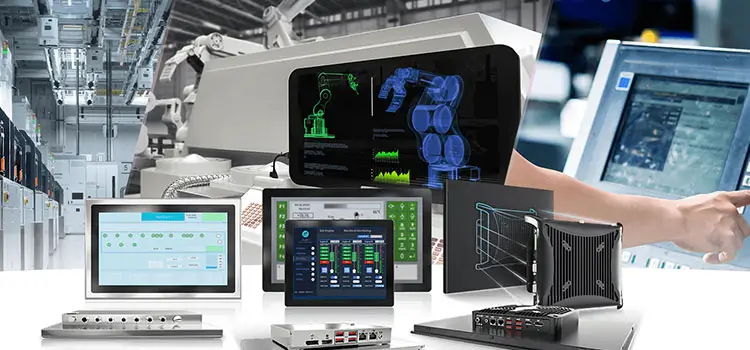
Industrial applications differ fundamentally from consumer devices in several critical ways. Moreover, industrial equipment operates continuously for years without replacement, faces extreme environmental conditions, and must comply with strict safety and performance standards.
Key industrial requirements include:
- Extended lifecycle performance: 10-20 year operational reliability vs. 2-3 years for consumer devices.
- Environmental resilience: Wide temperature ranges (-40°C to +85°C), humidity, dust, and chemical resistance.
- Physical durability: Impact resistance, vandal protection, and mechanical stress tolerance.
- Regulatory compliance: UL, FDA, PCI, IEC, and industry-specific certifications.
- Touch performance: Precise functionality through thick protective glass (up to 15mm).
“Industrial cover glass selection requires balancing performance, durability, and cost while meeting specific industry certifications. The wrong choice can result in costly equipment failures, safety issues, and regulatory non-compliance.” – Industrial HMI Design Engineer
4 Primary Industrial Cover Glass Materials
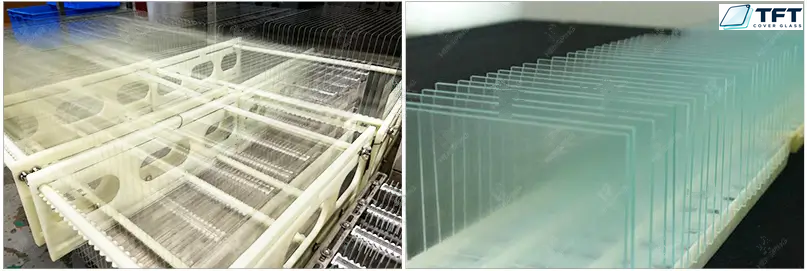
1. Aluminosilicate Glass: The Premium Industrial Standard
Aluminosilicate glass has become the preferred choice for high-performance industrial applications requiring superior durability and optical quality. Additionally, brands like Corning Gorilla Glass and AGC Dragontrail lead this segment with proven industrial track records.
Superior Industrial Characteristics
- 9H surface hardness providing exceptional scratch resistance.
- Enhanced impact tolerance through chemical strengthening processes.
- Excellent optical clarity with minimal distortion.
- Consistent performance across wide temperature ranges.
- Compatible with advanced touch technologies and coatings.
Primary Industrial Applications
- High-end HMI systems: Factory automation panels, process control interfaces.
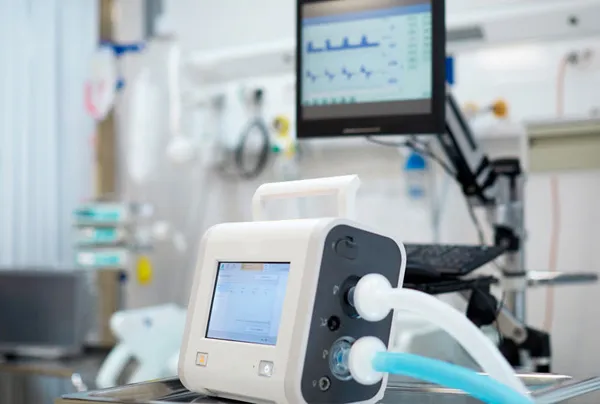
- Medical diagnostic equipment: Patient monitoring displays, surgical navigation systems.
- Transportation systems: Automotive infotainment, railway control panels.
- Payment terminals: PIN-on-glass payment systems, ATM interfaces.
- EV charging stations: Outdoor charging interfaces requiring vandal resistance.
Notably, aluminosilicate glass commands premium pricing (50-150% higher than soda-lime) but provides superior total cost of ownership through reduced maintenance, replacement, and downtime costs. Furthermore, its ability to support thin form factors (1-4mm) while maintaining strength makes it ideal for modern industrial design requirements.
2. Soda-Lime Glass: The Reliable Workhorse
Soda-lime glass remains the foundation of industrial cover glass applications where cost-effectiveness and proven reliability matter more than premium performance characteristics. Moreover, its widespread availability and established supply chains make it the go-to choice for many industrial equipment manufacturers.
Proven Industrial Advantages
- Cost-effective solution for high-volume applications.
- Excellent compatibility with thermal tempering processes.
- Predictable performance characteristics and quality consistency.
- Broad thickness range availability (2-12mm).
- Well-established manufacturing and testing standards.
Optimal Industrial Applications
- Industrial control panels: Basic HMI interfaces, machine operator stations.
- Building automation: HVAC control systems, lighting control panels.
- Entry-level medical devices: Basic diagnostic displays, patient information systems.
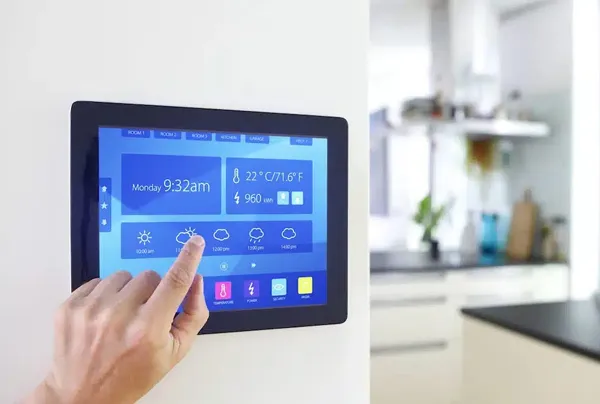
- Smart home interfaces: Wall-mounted control panels, security system displays.
- Industrial kiosks: Information displays, basic self-service terminals.
However, soda-lime glass requires careful consideration of thickness and tempering to meet industrial durability requirements. Nevertheless, when properly specified and processed, it provides excellent value for applications prioritizing reliability over premium performance features.
3. Borosilicate Glass: The High-Temperature Specialist
Borosilicate glass excels in industrial applications requiring exceptional thermal stability and chemical resistance. Additionally, its unique composition makes it invaluable for specialized environments where temperature variations and chemical exposure are concerns.
Specialized Industrial Properties
- Ultra-low thermal expansion coefficient (3.3 × 10⁻⁶ K⁻¹).
- Exceptional thermal shock resistance.
- Superior chemical inertness and corrosion resistance.
- Stable optical properties across temperature ranges.
- Compatibility with high-temperature processing and sterilization.
Specialized Industrial Applications
- High-temperature industrial processes: Furnace control systems, hot environment displays.
- Medical sterilization equipment: Autoclave-compatible interfaces, surgical equipment displays.
- Chemical processing industries: Reactor control panels, laboratory equipment interfaces.
- Food processing equipment: High-temperature washdown environments, pasteurization controls.
- Aerospace and defense: Extreme environment applications, military specification equipment.
For instance, borosilicate glass enables medical equipment to undergo repeated autoclave sterilization cycles without degradation. Furthermore, its chemical resistance makes it suitable for harsh industrial environments where cleaning chemicals and process fluids might damage other glass types.
4. Sapphire Glass: The Ultimate Performance Solution
Sapphire glass represents the pinnacle of industrial cover glass performance for the most demanding applications. However, its exceptional properties come with significantly higher costs that limit use to specialized, high-value applications.
Extreme Performance Characteristics
- 9 Mohs hardness rating (second only to diamond).
- Virtually impossible to scratch in normal industrial use.
- Excellent optical transmission and clarity.
- Complete chemical inertness.
- Superior electrical properties for advanced touch systems.
Specialized Industrial Applications
- Extreme environment displays: Military field equipment, aerospace systems.
- High-security systems: Critical infrastructure controls, defense applications.
- Precision instrumentation: Scientific equipment interfaces, measurement systems.
- Marine environments: Underwater systems, offshore platform controls.
- Mining and oil exploration: Ruggedized field equipment, drilling control systems.
On the other hand, sapphire’s premium cost (5-10 times higher than aluminosilicate) limits its use to applications where ultimate performance justifies the investment. Therefore, it’s primarily specified for small-format, mission-critical applications where failure is not acceptable.
Industrial Strengthening Processes
Industrial cover glass achieves its superior performance through specialized strengthening processes that exceed consumer-grade treatments. Moreover, industrial applications require documented testing and certification to meet regulatory requirements.
Chemical Ion Exchange: Premium Industrial Strengthening
Chemical strengthening produces the highest performance industrial cover glass through controlled ion exchange processes. First, glass undergoes immersion in molten potassium salt baths at precisely controlled temperatures. Then, larger potassium ions replace smaller sodium ions, creating powerful surface compression.
Industrial Advantages of Chemical Strengthening
- Achieves 6-8 times baseline glass strength.
- Enables thin glass solutions (1-3mm) with high durability.
- Provides uniform strength distribution.
- Maintains optical clarity and dimensional precision.
- Compatible with advanced coating systems.
Thermal Tempering: Industrial Volume Solution
Thermal tempering provides cost-effective strengthening for industrial applications requiring thicker glass panels. Additionally, this process creates safety glass that breaks into small, less dangerous fragments.
Industrial thermal tempering benefits:
- Cost-effective for larger panels and high volumes.
- Excellent for thick glass applications (4-12mm).
- Creates compliant safety glass for regulatory requirements.
- Well-established process with predictable results.
- Compatible with most industrial glass types.
Industrial Coatings and Surface Treatments
Industrial cover glass often requires specialized surface treatments to meet application-specific requirements:
| Coating Type | Industrial Function | Key Applications |
| Anti-Glare (AG) | Reduces reflections in bright environments | Outdoor HMI, charging stations, kiosks |
| Anti-Reflection (AR) | Maximizes display visibility | Medical imaging, precision instruments |
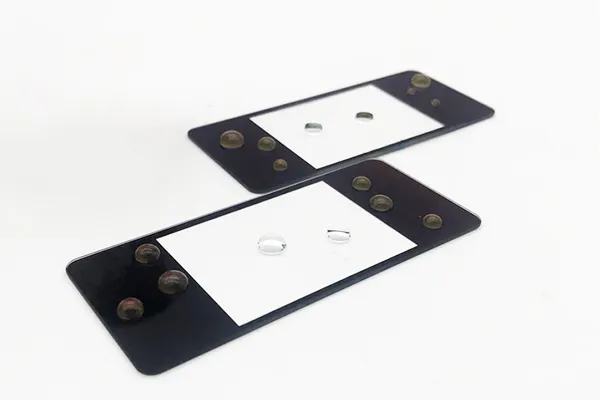
| Anti-Fingerprint (AF) | Repels oils and smudges from touch | HMI touchscreens, payment terminals |
| Antimicrobial | Kills bacteria and viruses | Healthcare devices, food processing |
| Chemical Resistant | Protects against cleaning agents | Laboratory equipment, chemical plants |
| Conductive (ITO) | Enables advanced touch functionality | Precision touch interfaces, PIN-on-glass |
Industry-Specific Cover Glass Requirements
Industrial Control and HMI Systems
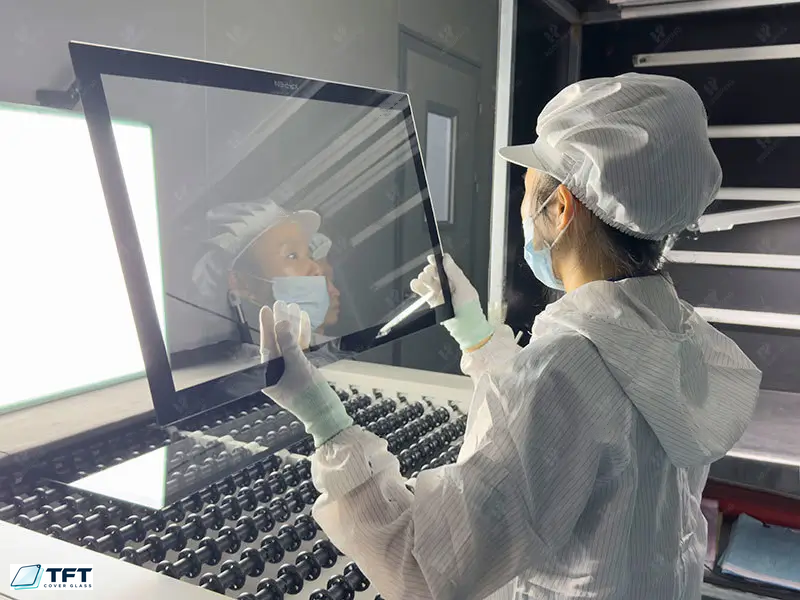
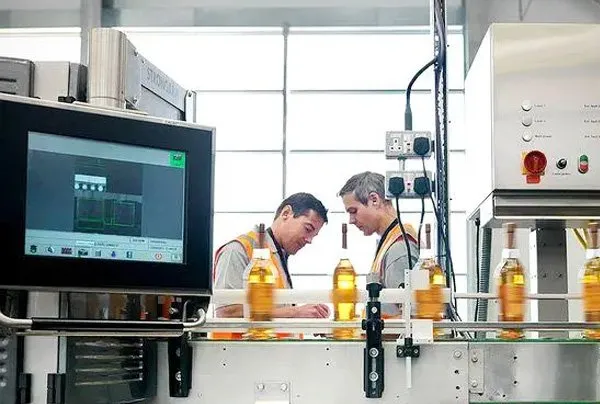
Industrial HMI applications represent the largest segment of industrial cover glass demand. Moreover, these systems must operate reliably in factory environments with dust, vibration, temperature variations, and potential physical abuse.
Critical HMI requirements:
- Environmental protection: IP65/67 sealing for dust and moisture resistance.
- Temperature performance: -20°C to +60°C operating range typical.
- Touch precision: Accurate response through protective glass up to 15mm.
- Impact resistance: IK08+ rating for vandal and accident protection.
- EMI compliance: Electromagnetic interference resistance per IEC standards.
Additionally, IK rating compliance has become increasingly important across industrial applications. Moreover, many industries now specify IK07-IK10 impact resistance standards for cover glass, particularly in EV charging stations, outdoor lighting fixtures, industrial control panels, and exposed outdoor installations where mechanical protection is critical.
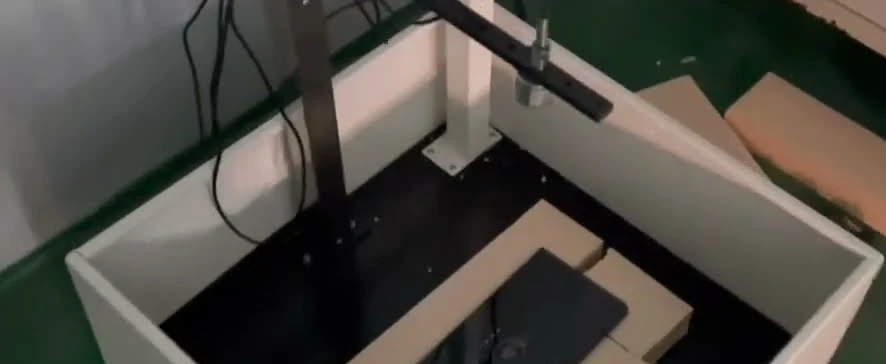
Furthermore, the shift toward “PIN on Glass” technology in industrial systems eliminates mechanical buttons, increasing demands on cover glass performance and reliability.
Medical Device Applications
Medical cover glass applications face the most stringent requirements, combining patient safety, regulatory compliance, and clinical workflow demands. Additionally, post-COVID healthcare priorities emphasize infection control and easy sanitization.
Medical-specific requirements:
- Biocompatibility: ISO 10993 compliance for patient-contact applications.
- Impact resistance: FDA 21 CFR 801.410 standards for patient safety.
- Sterilization compatibility: Gamma, ETO, and steam sterilization cycles.
- Antimicrobial properties: Surface treatments that kill pathogens.
- Optical clarity: Critical for accurate diagnosis and imaging.
For instance, surgical navigation systems require optically perfect cover glass to ensure precise instrument positioning. Meanwhile, patient monitoring equipment needs glass that remains clear and responsive after thousands of cleaning cycles.
Payment Terminal and Financial Systems
Payment terminal cover glass must balance security, durability, and user experience while meeting strict financial industry standards. Moreover, the shift toward contactless and PIN-on-glass technologies increases performance demands.
Payment system requirements:
- Security certification: PCI PTS 5.x compliance mandatory.
- Tamper resistance: Protection against skimming and fraud attempts.
- Outdoor durability: UV resistance and weatherproofing for gas stations, parking.
- Vandal protection: High impact resistance for unattended installations.
- Touch precision: Accurate PIN entry and gesture recognition.
EV Charging Station Displays
Electric vehicle charging infrastructure represents a rapidly growing market with demanding cover glass requirements. Additionally, EU regulations mandate displays on all public charging stations, creating guaranteed demand.
EV charging station requirements:
- Extreme temperatures: -40°C to +85°C for all-climate operation.
- Environmental sealing: IP65 minimum, IP67 preferred for weather protection.
- Impact protection: IK08-IK10 rating mandatory for vandal resistance in public installations.
- Optical performance: 1,000-2,000 cd/m² brightness with anti-glare treatments.
- UV resistance: Years of outdoor exposure without degradation.
For example, premium charging stations use 15-32″ displays requiring large-format cover glass with precise optical bonding to eliminate air gaps and improve contrast ratios.
Smart Home and Building Automation
Smart building control panels combine aesthetic requirements with functional demands. Moreover, battery-powered operation and wireless connectivity create unique constraints.
Smart building requirements:
- Low power consumption: ≤5W/m² for battery operation.
- Aesthetic integration: Minimal bezels and seamless glass fronts.
- Proximity sensing: Automatic wake-up without physical contact.
- Wireless performance: No interference with Wi-Fi, Zigbee, BLE signals.
- Easy installation: Retrofit compatibility with existing infrastructure.
Cover Glass Selection Guide for Industrial Applications
Selecting optimal cover glass for industrial applications requires systematic evaluation of performance requirements, environmental conditions, and regulatory compliance needs. Additionally, total cost of ownership analysis often justifies premium materials through reduced maintenance and longer service life.
Step 1: Assess Environmental and Performance Requirements
Critical evaluation criteria:
- Operating temperature range: Standard (-20°C to +60°C) vs. extreme (-40°C to +85°C).
- Physical durability needs: Light duty vs. heavy industrial vs. vandal-resistant.
- Chemical exposure: Cleaning agents, process chemicals, outdoor pollutants.
- Touch technology requirements: Resistive, capacitive, or advanced gesture recognition.
- Optical performance: Standard visibility vs. high-brightness outdoor viewing.
Step 2: Determine Regulatory and Certification Requirements
Industry-specific standards:
- Medical devices: FDA, ISO 10993, IEC 60601 compliance required.
- Industrial equipment: UL, CE, IEC standards for safety and EMC.
- Payment systems: PCI PTS certification mandatory.
- Transportation: Automotive IATF 16949, railway EN 50155 standards.
- Food/pharmaceutical: FDA food contact, cleanroom compatibility.
- Impact resistance: IK rating compliance (IK07-IK10) required for outdoor applications, lighting fixtures, and exposed installations.
Step 3: Optimize Size, Thickness, and Form Factor
Industrial sizing considerations:
- Small displays (under 7″): All materials viable, sapphire cost-competitive for premium applications.
- Medium displays (7-15″): Aluminosilicate optimal for high-performance, soda-lime for cost-sensitive.
- Large displays (over 15″): Soda-lime preferred for cost control, aluminosilicate for premium installations.
Thickness optimization:
- 1-3mm: Chemical strengthening enables thin, strong solutions.
- 3-6mm: Balanced approach for most industrial applications.
- 6mm+: Maximum protection for extreme environments.
Step 4: Consider Total Cost of Ownership
TCO factors beyond initial cost:
- Service life: 10-20 years for industrial vs. 2-3 years consumer.
- Maintenance requirements: Cleaning frequency, replacement intervals.
- Downtime costs: Production losses from equipment failure.
- Certification costs: Testing and compliance documentation.
- Inventory management: Spare parts and service support.
Why Choose TFT Cover Glass for Industrial Cover Glass Solutions
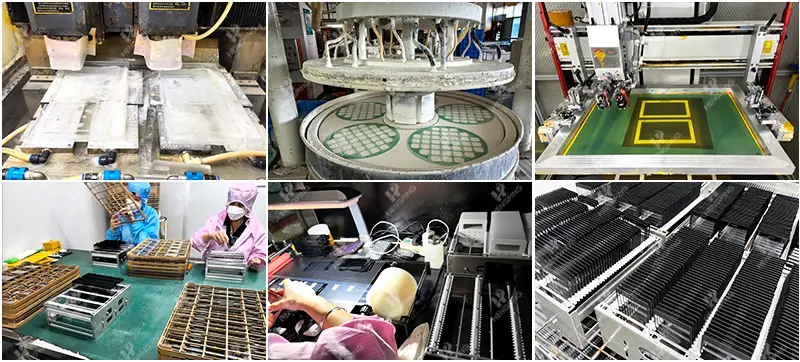
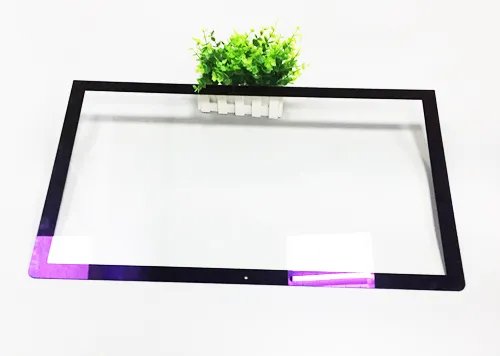
At TFT Cover Glass, we’ve specialized in cover glass manufacturing for over 15 years, serving demanding applications across manufacturing, healthcare, transportation, and infrastructure sectors. Our comprehensive in-house processing capabilities enable us to deliver custom cover glass solutions that meet the most stringent performance requirements for any industrial application.
Advanced Processing and Manufacturing Excellence
Complete in-house processing capabilities:
- Chemical strengthening systems: Ion-exchange processing for premium durability and 9H hardness.
- Thermal tempering equipment: Safety glass production for regulatory compliance.
- Specialized coating application: AG, AR, AF, antimicrobial, and conductive (ITO) treatments.
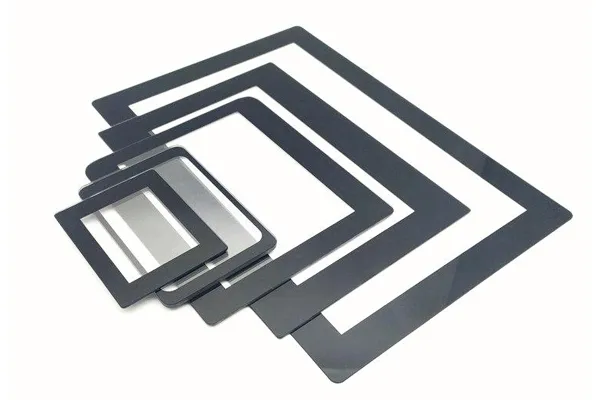
- Precision CNC machining: Complex shapes and tight tolerances for custom requirements.
- Edge processing services: Polishing, grinding, and beveling for professional finishes.
- Printing capabilities: Silk screen printing and digital printing for logos, graphics, and functional markings.
- Optical bonding technology: Air-gap elimination for enhanced optical performance.
Comprehensive Quality Testing and Validation
Rigorous testing protocols for industrial applications:
- Environmental simulation: Temperature cycling, humidity, chemical exposure testing.
- Mechanical performance: Impact resistance, flexural strength, surface hardness validation.
- Optical performance: Transmittance, haze, color consistency measurement.
- Functional testing: Touch response accuracy and coating durability assessment.
- Certification support: Complete documentation for medical, automotive, payment, and industrial standards.
- Traceability systems: Full material and process tracking for quality assurance.
Custom Engineering and Application Support
Comprehensive technical services:
- Application engineering: Material selection and thickness optimization guidance.
- Design consultation: Coating specification and integration recommendations.
- Rapid prototyping: 7-14 day sample production for validation testing.
- Custom tooling: Dedicated fixtures and processes for volume production.
- Global logistics: Worldwide shipping with tracking and insurance.
- 24/7 technical support: Engineering assistance across all time zones.
“We understand that industrial applications demand more than just glass – they require comprehensive solutions that meet specific performance requirements, regulatory standards, and operational constraints. Our 20+ years of experience enables us to deliver exactly what industrial customers need.” – TFT Cover Glass Engineering Team
5 Frequently Asked Questions About Industrial Cover Glass
1. How do I select the right thickness and material for harsh industrial environments?
Thickness selection depends on impact requirements and touch functionality needs. Additionally, 2-6mm works for most industrial applications, while 6mm+ provides IK10 impact resistance for high-risk environments. Moreover, chemically strengthened aluminosilicate handles -35°C to +85°C operational ranges, while tempered soda-lime offers cost-effective 9H hardness for basic protection.
2. What certifications are required for different industrial applications?
Requirements vary by industry. Furthermore, medical devices need FDA compliance and ISO 10993 biocompatibility, payment terminals require PCI certification and UL listings, while EV charging stations must meet NEVI compliance and IP66 weatherproofing standards. Additionally, general industrial equipment typically requires IEC standards and appropriate NEMA ratings for environmental protection.
3. How do I evaluate durability for my specific operating environment?
Performance validation depends on environmental stresses. Moreover, outdoor applications need UV stabilization and IK10 impact resistance, chemical environments require specific resistance testing and thermal cycling validation, while high-traffic areas benefit from 9H surface hardness and ground edges. Furthermore, expected industrial lifespan ranges from 5-10 years with proper material selection and installation.
4. What engineering support is available during the design process?
Comprehensive technical services include material selection consultation, FEA thermal stress modeling, and performance testing capabilities. Additionally, customization options cover CNC machining with ±0.05mm tolerances, various edge treatments, and multi-layer printing for harsh environments. Moreover, quality assurance includes 100% visual inspection, AQL sampling, and material traceability throughout the project lifecycle.
5. How does industrial pricing differ from consumer applications?
Industrial applications typically cost 20-40% more than consumer products due to tighter specifications and certification requirements. Furthermore, custom processing like chemical strengthening adds 30-100% premium, while volume discounts begin at 1,000+ units. However, the superior durability and technical support deliver 30-50% better total cost of ownership compared to consumer-grade alternatives in demanding applications.
Conclusion
Understanding the different types of industrial cover glass is essential for successful equipment design in today’s demanding industrial environments. Aluminosilicate glass provides optimal performance for premium applications, soda-lime offers reliable cost-effectiveness, borosilicate excels in thermal-critical environments, while sapphire delivers ultimate durability for mission-critical systems. Moreover, the industrial cover glass market continues evolving with advanced touch technologies and sustainability initiatives, driven by Industry 4.0 and digital transformation demands.
Success requires understanding application requirements, environmental conditions, regulatory standards, and total cost of ownership implications. At TFT Cover Glass, our 15+ years of industrial expertise and comprehensive manufacturing capabilities ensure your equipment delivers the durability, functionality, and performance that modern industrial applications demand.


 EN
 FR
 DE
 ES
 PT
 IT
 NL
 DA
 RU
 AR
 TR
 JA
 KO
 ID
 UK
 TH
 VI
 PL
 MS
 ET
 EL