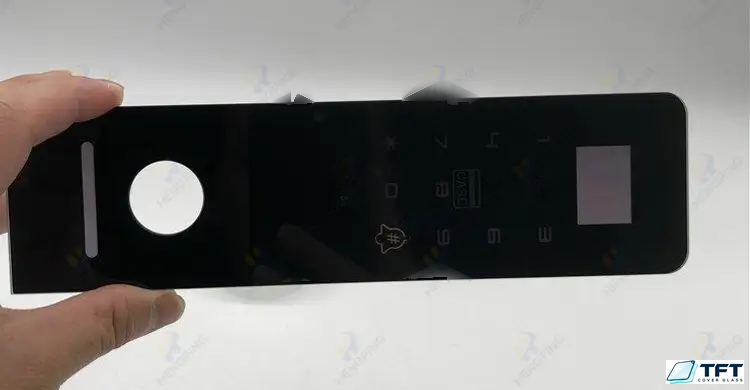
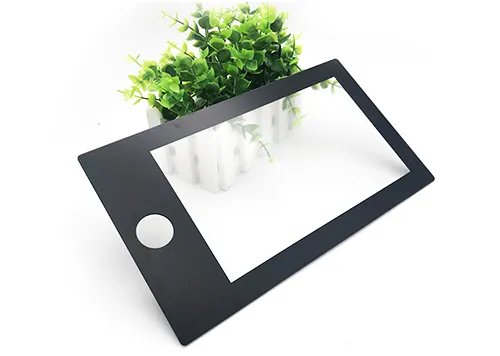
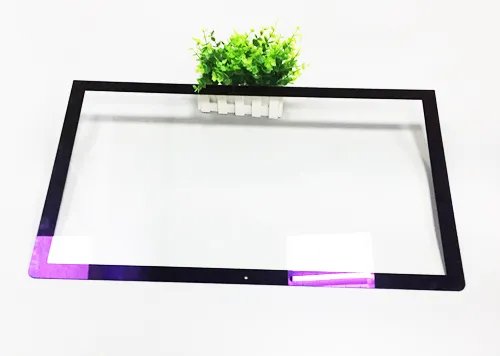
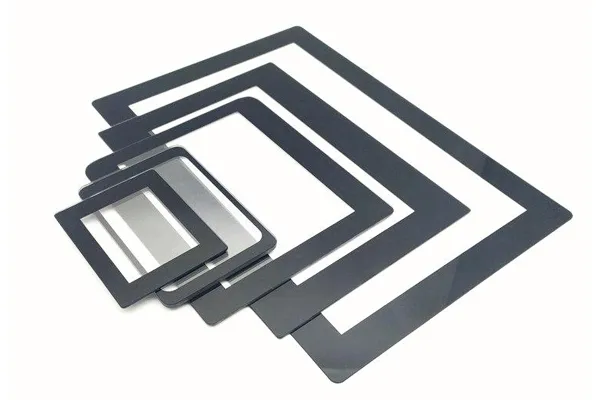
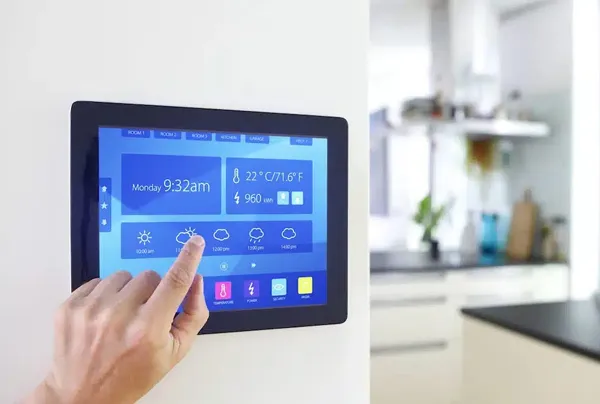
Products with dead front display glass panels are increasing popular among customers since it offers a modern, high-end aesthetic and easy-to-clean look. Dead front glass panels are widely used in in premium appliances (like refrigerators, ovens, and microwaves), smart home devices, and other sectors. There are several ways to achieve dead front effect on cover glass panels, among which tinted grey glass can be a good choice. This article will offers tips for choosing tinted grey glass to make dead front glass panels.
Tips for Making Dead Front Glass Panels with Tinted Grey Glass
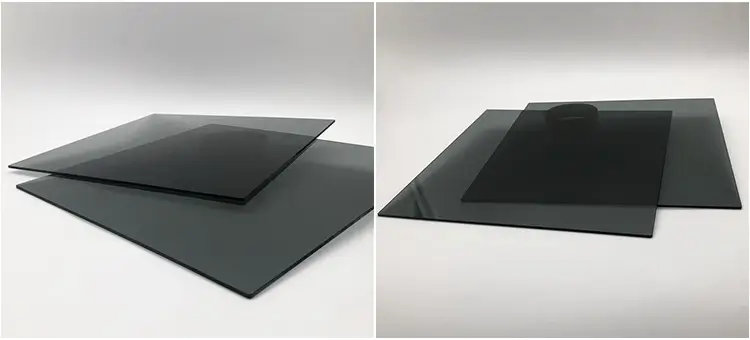
Grey tinted glass has become an ideal material for achieving a dead front (all black) effect for display cover glass panels. Its ability to combine aesthetics with functionality has made it a popular choice in the production of large-area black glass panels. If you’re considering using grey glass for your next project, here are some useful tips for successfully creating dead front effect glass panels.
Choose the Right Thickness of Tinted Grey Glass
For display cover glass panels made of tinted grey glass, the thickness plays a crucial role in both stability and visual quality. While grey glass is available in thicknesses ranging from 0.7mm to 6.0mm or even thicker, not all options are suitable for display glass panels due to quality control issues.
For best results, the following tested, stabilized and mass-produced grey glass thicknesses are recommended: 1.8mm, 2.1mm, 3.0mm, 4.0mm, 5.0mm.
These thicknesses have been thoroughly tested for production stability. If you need a different thickness, we recommend thorough testing to ensure it meets the required quality standards.
Understand the Transmittance Rates of Tinted Grey Glass
It should be noted that the light transmittance of tinted grey glass cannot be adjusted. The color and transparency of the tinted glass are determined by the material itself, meaning the transmittance is fixed for each thickness. Here’s a quick guide to the transmittance rates of commonly used grey glass thicknesses:
| Thickness | Transmittance (550nm) |
| 1.8mm | 40% ±3 |
| 2.1mm | 41.5% ±3 |
| 3.0mm | 28% ±5 |
| 4.0mm | 20% ±3 |
This is important when designing your product to ensure the desired level of transparency is achieved.
Choose Suitable Surface Treatment of Tinted Grey Glass
In cover glass panel industry, surface treatment is an very important process to achieve best performance and user experiences. The most commonly used surface treatment for cover glass have anti-glare (AG), anti-reflective (AR) and anti-fingerprint (AF). Are these surface treatment suitable for cover glass panels made of tinted grey glass? Here are answers and tips.
-
Anti-glare (AG) Treatment
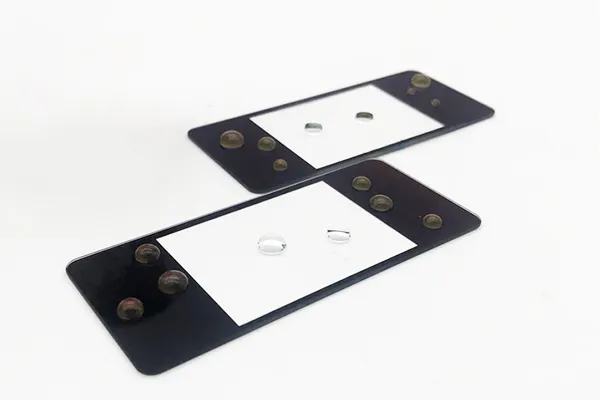
Grey glass panels can benefit from AG (anti-glare) treatments, which reduce reflections and improve visibility under strong lighting conditions. Whether it’s etched AG or sprayed AG coating, both options can effectively eliminate glare while preserving the high-quality appearance of the glass.
If your application of tinted grey glass needs to be used in environments with varying light conditions, such as industrial displays, medical equipment, or outdoor kiosks, choose AG processing for the best results.
-
Anti-Reflection (AR) Coating
While AR (anti-reflection) coating can enhance the light transmittance of certain materials, it’s not recommended for grey glass panels. Grey glass has inherent properties that already reduce glare and reflection, so adding AR treatment won’t significantly improve its performance. In fact, it might not provide much added value in terms of light transmission, so we advise skipping this step for grey glass panels.
-
Anti-Fingerprint (AF) Coating
If the glass panel is going to be touch-sensitive, consider adding an AF (anti-fingerprint) coating. Not only does it prevent smudges and fingerprints, but it also improves the smoothness and tactile experience of the panel, making it more comfortable for users to interact with. This is especially important for devices that are used frequently or in environments where cleanliness is key, such as smart home control panels, etc.
Notice the Printing on Tinted Grey Glass
The printing can enhance the visual appeal of glass panels, providing brand identity or functional markings, while maintaining the panel’s aesthetics and utility. So, you may be tempted to print white designs or logos on grey glass panels, but it’s not recommended if you want clear visibility. The printed white color will often appear quite subtle when viewed from the front, which reduces its practical impact. If you do need to print on gray glass, consider alternatives like:
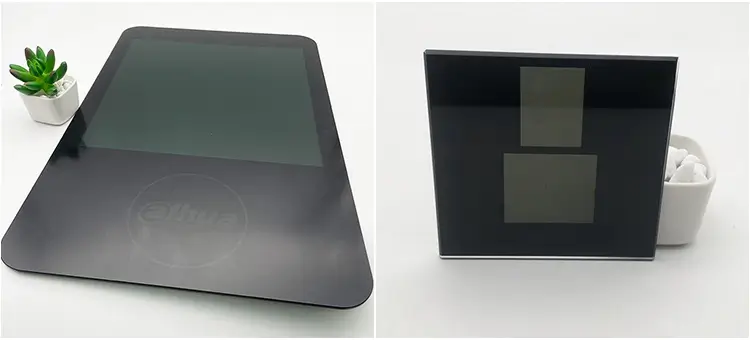
- Border Color: Black is the most recommended for a sleek, unobtrusive look, and it can be customized as needed.
- Logo or Graphics: Choose from silver or translucent black for a more subtle but eye-catching design, or don’t even print the panel for a cleaner aesthetic.
Handling and Processing Tips
When handling grey glass, always ensure it’s protected from scratches and impact, especially when using thinner materials (like 1.8mm or 2.1mm). The glass should be processed with care to preserve both its optical quality and surface integrity.
Conclusion
Grey tinted glass is an excellent choice for creating dead front glass panels, offering a perfect balance of aesthetic appeal and practical functionality. By following these tips, especially regarding thickness, transmittance, treatments, and printing, you can ensure the best possible outcome for your display panel products. Whether you are working with industrial, medical, or consumer electronics, tinted grey glass can help you achieve that sleek, black look with superior performance. If there are any questions about tinted grey glass, dead front display glass or other, just contact us directly, our technical team would be happy to offer your technical supports.





 EN
 FR
 DE
 ES
 PT
 IT
 NL
 DA
 RU
 AR
 TR
 JA
 KO
 ID
 UK
 TH
 VI
 PL
 MS
 ET
 EL