In today’s tech-driven world, cover glass panels have become ubiquitous, from the smartphones and tablets we use every day, to the increasing popularity of interactive kiosks, smart home panels, industrial control panels, and medical diagnostic equipment, and more.
Behind this technological revolution, two glass materials: the traditional soda-lime glass and the emerging Gorilla Glass, are engaged in a fierce competition. This blog will delve into the properties, advantages, disadvantages, and application scenarios of these two raw glass materials for cover glass manufacturing and help you make informed decisions when selecting glass materials for the glass panels of your specific needs.
Soda-Lime Vs. Gorilla Glass Composition: Unveiling the Difference
Soda-Lime Glass: A Classic Formula for Cost-Effectiveness
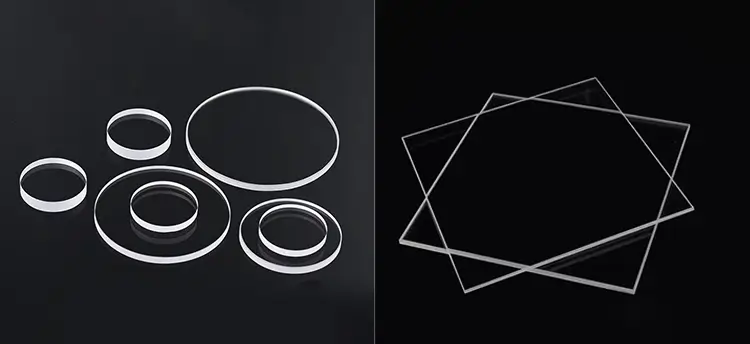
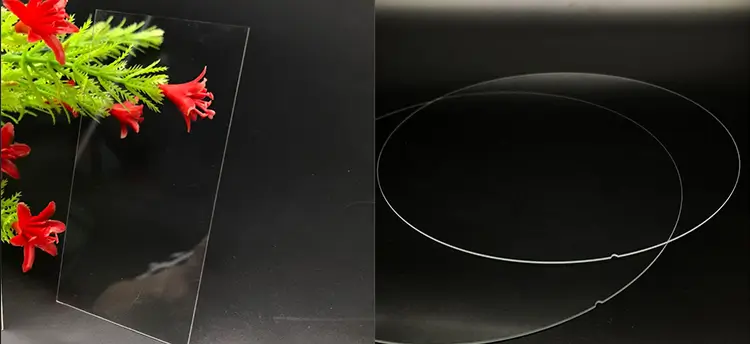
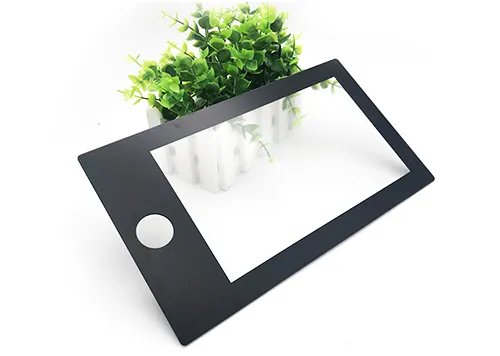
Soda Lime Glass for Screen Cover GlassSoda-lime glass, as its name suggests, primarily comprises silica sand, sodium oxide, and calcium oxide. This time-tested glass material offers excellent light transmittance, chemical stability, and ease of processing, making it a suitable choice for a wide range of applications, particularly in cost-sensitive scenarios.
And, the most widely used soda lime glass for cover glass manufacturing is low iron glass, also known as ultra-clear glass. (Rea more: TOP 5 Soda Lime Glass Manufacturer in China >>)
Gorilla Glass: A Specialized Formula for Toughness and Durability
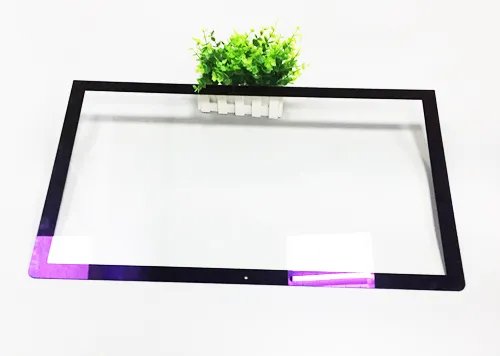
Gorilla Glass for Screen Cover GlassGorilla Glass, developed by Corning, is a special type of aluminosilicate glass. It undergoes an ion-exchange process to enhance its strength, giving it superior impact and scratch resistance.
Soda-Lime Glass Vs. Gorilla Glass: Chemical Composition: A Closer Look
The table below provides a comparative overview of the typical chemical compositions of soda-lime glass and Gorilla Glass:
Component
Soda-Lime Glass (%)
Gorilla Glass (%)
Primary Function
SiO<sub>2</sub> (Silicon Dioxide)
71-74
68-72
Forms the glass network structure, providing transparency
Na<sub>2</sub>O (Sodium Oxide)
12-16
<13
Lowers the melting point, enhances processing properties
CaO (Calcium Oxide)
8-12
8-13
Increases chemical stability and hardness
Al<sub>2</sub>O<sub>3</sub> (Aluminum Oxide)
0.5-2
>13
Enhances chemical stability, improves scratch resistance
MgO (Magnesium Oxide)
0-4
0-6
Improves thermal shock resistance
K<sub>2</sub>O (Potassium Oxide)
0-4
< 1
Lowers the melting point, improves optical properties
Note: The composition table above is for reference only. Actual compositions may vary slightly depending on the manufacturer and specific application.
Soda-Lime Vs. Gorilla Glass: Performance and Applications
Soda-Lime Glass
Advantages: Cost-effective, high light transmittance, good chemical stability.
Limitations: Relatively low impact resistance, prone to scratching, typically thicker.
Typical Applications: Low-end displays, indoor digital signage, some industrial control panels.
Gorilla Glass
Advantages: Superior scratch resistance, excellent impact resistance, thinner and lighter.
Typical Applications: Smartphones, tablets, high-end displays, outdoor digital signage, industrial control panels, new energy charging pile, medical devices, automotive displays.
Soda-lime vs. Gorilla Glass: Which is Right for You?
Soda-lime glass and Gorilla Glass each have their own strengths and weaknesses. The choice between the two depends on the specific application requirements and budget considerations. (Read more about How to Choose Right Glass Materials for Glass Panels >>)
For applications where cost is a major factor and high strength is not essential, soda-lime glass remains a cost-effective solution.
For applications demanding enhanced strength, durability, and impact resistance, Gorilla Glass emerges as the superior choice.
TFT Cover Glass, a leading manufacturer specializing in cover glass solutions, boasts over 15 years of experience in the screen and display cover glass industry. Our deep expertise allows us to provide invaluable guidance in selecting the optimal glass materials to meet the specific demands of your applications.
We understand that each project is unique, and we are committed to working closely with you to identify the perfect cover glass solution that balances performance, durability, and cost-effectiveness. Welcome to contact us for more information!
Why is Gorilla Glass Stronger than Soda-Lime Glass?
As we know, Gorilla Glass reigns supreme in the world of display and touchscreen glass panels, widely acclaimed for its exceptional strength and durability. But what makes this remarkable material so much tougher than traditional soda-lime glass? The answer lies in a combination of four key factors: a robust chemical composition, an innovative ion-exchange process, superior damage resistance, and a thinner, lighter design.
Gorilla Glass
Chemical Composition: Laying the Foundation for Strength
Let’s begin by examining the chemical composition—the primary distinction between these two types of glass.
As before mentioned, soda-lime glass primarily consists of silica, soda, and lime. This traditional glass possesses a relatively simple structure, akin to glass beads interconnected by flexible chains, lacking sufficient internal cohesion. This structural simplicity translates to limited hardness and strength, making it susceptible to scratches and breakage.
Gorilla Glass: Reinforcing with Aluminum, Building a Tougher Network
While, Gorilla Glass introduces a key ingredient into the mix: aluminum oxide (Al<sub>2</sub>O<sub>3</sub>). The addition of alumina is analogous to incorporating shorter, more rigid “chains” within the glass network. This results in a denser, more tightly bound structure, significantly enhancing the glass’s hardness and scratch resistance.
Manufacturing Processes: Ion Exchange for Enhanced Strength
Soda-Lime Glass: Annealing for Stress Relief, Limited Strength Gains
The soda-lime glass manufacturing process involves shaping the molten glass, followed by an annealing process. Annealing involves controlled cooling to relieve internal stresses that might make the glass prone to breakage. However, while annealing enhances the glass’s overall integrity, it doesn’t fundamentally alter its structure, resulting in limited improvements in strength.
Gorilla Glass: Ion Exchange, Creating a “Surface Armor”
The remarkable strength of Gorilla Glass stems from a unique ion-exchange process. The formed glass is immersed in a molten potassium salt bath, where smaller sodium ions are replaced by larger potassium ions. This substitution creates a “compressive stress layer” on the glass surface.
Illustrating the Ion Exchange Process
Process
Description
1. Glass Forming
Molten glass is shaped into the desired form.
2. Ion Exchange
The formed glass is submerged in a high-temperature molten potassium salt bath.
3. Cooling
The glass is removed from the bath and cooled.
4.Surface Strengthening
Larger potassium ions create a “compressive stress layer” on the glass surface.
Unveiling the Secret of Compressive Stress
This “compressive stress layer” acts like an invisible armor, enabling the glass to withstand greater external forces. When an external force attempts to bend or break the glass, the compressive stress layer exerts an opposing force, significantly increasing the glass’s flexural strength and impact resistance.
Conclusion
Gorilla Glass surpasses soda-lime glass in strength due to a powerful synergy between its unique chemical composition and the innovative ion-exchange process.
The higher concentration of alumina in Gorilla Glass significantly enhances the “cohesive strength” of the glass network, making it inherently more robust. Furthermore, the ion-exchange process forms a “compressive stress layer” on the glass surface, acting like an “invisible armor” that bolsters its impact resistance. These two factors, working in tandem, contribute to the exceptional strength of Gorilla Glass, solidifying its role as an indispensable glass material in our touch-driven era.
If you still have questions about soda lime and Gorilla glass, welcome to contact us directly, and our professional technicians will reply as soon as possible.




 EN
 FR
 DE
 ES
 PT
 IT
 NL
 DA
 RU
 AR
 TR
 JA
 KO
 ID
 UK
 TH
 VI
 PL
 MS
 ET
 EL