Introduction
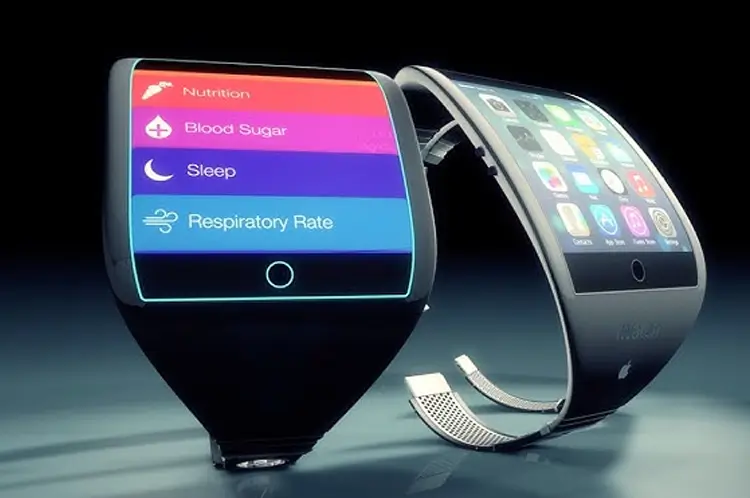
Ever wondered how the sleek, curved glass in your smartphone, car windshield, or modern building facade comes to life? It’s all thanks to 3D curved tempered glass, the secret behind the seamless, bezel-less designs of many modern devices. In this article, we’ll take you behind the scenes of the complex manufacturing process, explaining each step from initial cutting and shaping to final tempering and quality control, revealing how this versatile glass material is created.
What is 3D Curved Tempered Glass?
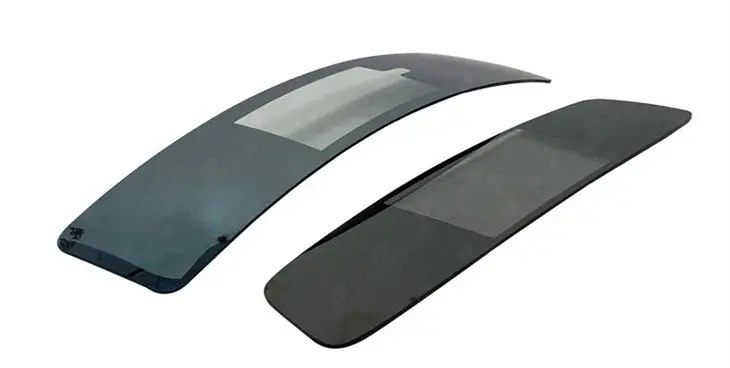
3D curved tempered glass is a specially shaped, heat-treated glass that combines elegant three-dimensional curves with enhanced strength and safety, ideal for modern design and functionality.
3D Curved Tempered Glass
3D curved tempered glass is made by heating flat glass to approximately 600°C (1,112°F) until it softens, then bending it into complex three dimensional curves using molds or gravity, followed by rapid cooling to temper it. This process boosts its strength up to five times that of regular glass while ensuring it shatters into safe, blunt fragments. Widely used in architecture, automotive, and electronics, 3D curved tempered glass blends durability with aesthetic appeal. (Read more: Chemical Tempered Glass >>)
The Origin of 3D Curved Glass Processing
Hot bending is the main technique for curved glass and research suggests the 3D hot bending process likely began in the United States during the 1920s to 1930s, driven by the automotive industry’s demand for curved windshields. Its early growth aligned with the rise of car manufacturing in the 1930s, later expanding into architecture and furniture by the mid 20th century. Today, 3D curved glass serves diverse fields like buildings (curved facades), vehicles (windshields), and electronics (curved screens), showcasing its mix of safety and style.
Superior Performance and Advantages of 3D Curved Glass
3D curved glass offers a combination of aesthetic and performance advantages. Its curved edges extend beyond the middle frame, creating a fuller, more visually appealing screen compared to standard 2D glass, enhancing both the aesthetic and tactile experience. (Read more: Glass Edge Types >>)
Furthermore, 3D glass is lightweight, transparent, fingerprint-resistant, anti-glare, and weather-resistant, making it ideal for enhancing the appearance and touch feel of smart devices. These characteristics meet the design requirements of modern 3C products, leading to its widespread use in home appliance panels, smartphones, smartwatches, tablets, wearable smart products, dashboards, and more.
How 3D Curved Tempered Glass is Made?
In 3D glass processing, the hot bending technique stands out as a highly challenging process due to its demand for precision and advanced equipment. From selecting graphite materials and designing CNC-machined molds to controlling the bending process, each step tests a manufacturer’s technical expertise. At TFT Cover Glass, we’ve mastered this art to deliver flawless 3D curved tempered glass. Below, we explore the principle and detailed workflow of this remarkable process.
Manufacturing Principle of 3D Curved Tempered Glass
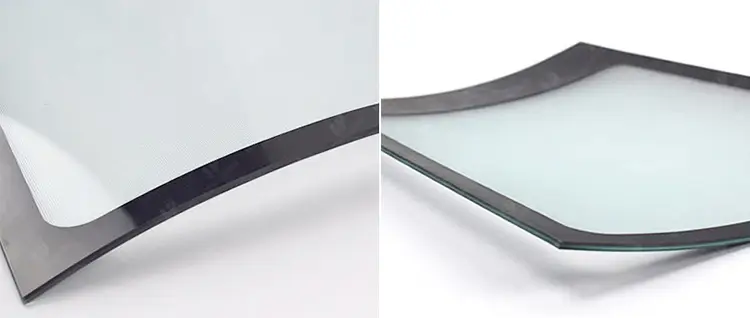
The 3D curved glass heat bending process involves placing precisely cut glass blanks between custom-designed graphite molds within a multi-zone heating furnace. The furnace gradually raises the temperature to approximately 600°C (1112°F), softening the glass to a pliable state. The softened glass then gradually conforms to the curvature of the mold under the force of gravity or with the aid of external pressure. Following the forming stage, the glass is held in place under pressure and gradually cooled (or rapidly cooled for tempering) to achieve its final 3D curved shape.
3D Curved Tempered Glass Hot Bending Process
Workflow: Cutting → Edge Grinding → Ultrasonic Cleaning → Hot Bending → Double-Sided Polishing → Chemical Strengthening → Silk Printing, Coating → Anti-Fingerprint (AF) Treatment → Lamination;
Here’s a step-by-step breakdown of 3D curved tempered glass:
- Cutting
The process begins with cutting flat glass sheets to size based on client specifications. A margin of about 0.1mm per side is added to account for processing. These dimensions are programmed into a CNC glass cutting machine, which produces rough blanks.
- CNC Edge Grinding
The rough blanks undergo CNC precision grinding using a fine wheel slot to remove excess material. Edges are beveled, and holes (e.g., for cameras) are drilled with high precision (up to 0.01mm accuracy). This step refines the glass shape to meet final product standards.
- Grinding and Polishing
Polishing powder is applied, and the glass is worked with tools under controlled pressure in complex relative motions. This thins the glass to the required thickness and polishes it to a mirror-like finish, ensuring clarity and smoothness.
- Ultrasonic Cleaning
An ultrasonic bath removes residual debris and polishing compounds from the surface, preparing the glass for the next stage with a pristine finish.
- Glass Hot Bending
The cleaned glass is placed between graphite molds in a hot bending furnace, heated to around 600°C across 16 to 22 temperature zones for uniform heat distribution. This prevents stress fractures as the glass softens and conforms to the mold’s curve under gravity or applied pressure. Furnace size and glass arc radius influence the outcome, requiring meticulous control.
- Double-Sided Polishing
Post-bending, the glass surface is polished using cashmere wheels. By adjusting wheel speed, pressure, and polishing duration, often with grinding powder or foam, the glass achieves a flawless, transparent finish free of imperfections.
- Chemical Strengthening
The glass is immersed in a high-purity potassium nitrate solution mixed with catalysts, heated to around 450°C for 4 to 5 hours in a strengthening furnace. This triggers ion exchange between potassium and sodium ions on the surface, forming a reinforced layer with a hardness of up to 7H, enhancing scratch and impact resistance. (Read more: 9H Tempered Glass >>)
- UV Transfer (Texturing)
Known as GDF (Glass Decoration Film) texturing, this step uses UV transfer to apply patterns or digital designs onto an explosion-proof PET film without pixel loss. This adds visual texture to the glass surface.
- Coating (PVD and AF Treatment)
Physical Vapor Deposition (PVD) applies a thin film to improve wear resistance, followed by an Anti-Fingerprint (AF) coating. The AF solution forms a smooth, durable layer that repels fingerprints and oils, ensuring easy cleaning and a comfortable touch.
- Lamination
Finally, the decorated explosion-proof film is bonded to the glass cover, completing the assembly. This step ensures the 3D curved tempered glass is ready for integration into final products like smartphones or dashboards.
Conclusion
The manufacturing of 3D curved tempered glass is a testament to precision and innovation, merging advanced technology with skilled artistry. From cutting and hot bending to chemical strengthening and final lamination, each step turns raw glass into a durable, elegant product that drives modern design. Despite challenges like high production costs and strict standards, the outcome is exceptional, delivering stunning curves with superior strength and functionality. Ready to transform your vision with custom 3D curved glass? Contact TFT Cover Glass today to discover how we can shape your next project!



 EN
 FR
 DE
 ES
 PT
 IT
 NL
 DA
 RU
 AR
 TR
 JA
 KO
 ID
 UK
 TH
 VI
 PL
 MS
 ET
 EL