
Introduction
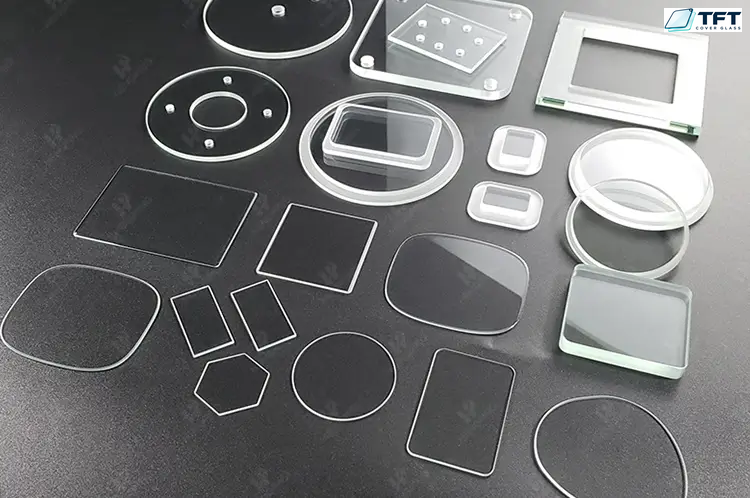
For custom glass panels, whether for displays, touchscreen, or other applications, every detail matters. While the design and glass material properties often take center stage, every glass manufacturing process silently dictates the final cost, quality and even lead time of the cover glass panels. Of these critical processes, none has a more direct and immediate impact on the material efficiency than glass cutting, especially glass cutting yield. This blog explains why a high cutting yield isn’t just a manufacturer’s internal goal, but a crucial factor that delivers direct benefits to your project’s success.
What is Glass Cutting Yield?
Many clients understand that “yield” generally refers to efficiency, but its profound impact on their specific custom glass projects is often underestimated. Simply put, glass cutting yield is the percentage of usable, finished glass panels successfully cut from a raw sheet of glass, compared to the total area of that raw sheet.
Glass Cutting Yield Formula
Cutting Yield (%) = (Qualified Glass Qty * Finished Part Length * Finished Part Width) / (Raw Sheet Length * Raw Sheet Width) * 100%
From the formula, it is clear that a high glass cutting yield means minimal material waste, while a low yield indicates significant material is being discarded as offcuts or rejected due to cutting defects.
Key Factors to Maximize Glass Cutting Yield
Understanding the factors that affect cutting yield is one thing, but seeing how these factors are combined with actual raw material dimensions and necessary cutting allowances really puts the concept into practice. The selection of the glass raw material and the precise calculation of the cutting allowance are the basis for maximising material utilisation.
At TFT Cover Glass, our glass cutting process begins with a clear understanding of:
- Standard Raw Glass Sheet Sizes: These vary by glass type and thickness. Selecting the optimal raw sheet for a specific application is a key first step.
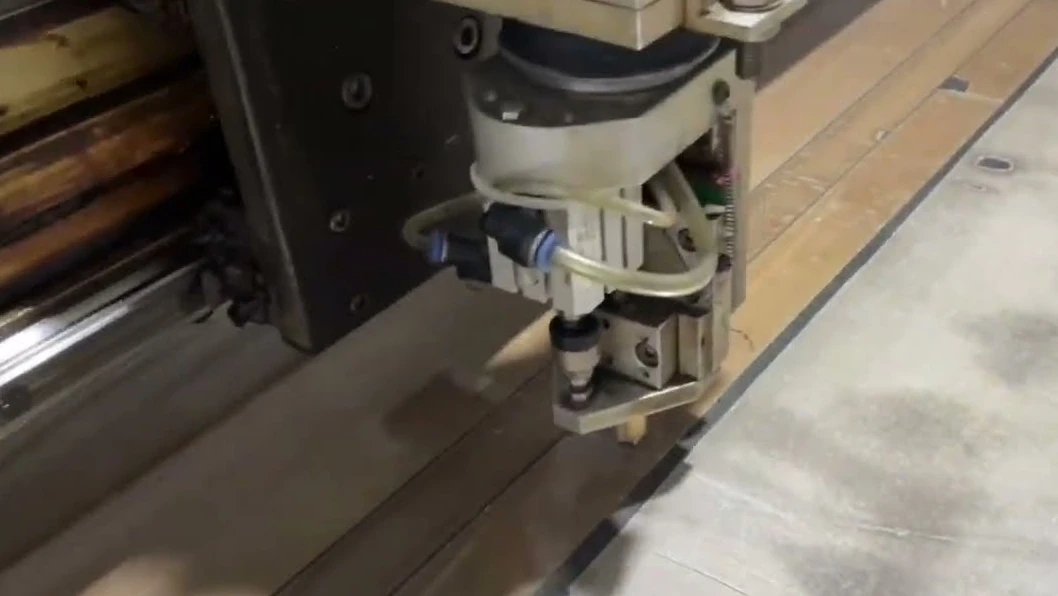
- Cutting Allowances (Kerf & Edge Margins): When glass is cut, a small amount of material is removed by the cutting tool (the “kerf”). Additionally, a small margin is often left around each part, especially if further edge processing (like grinding or polishing) is required, or simply to ensure a clean break and robust edge. This allowance depends on glass thickness and cutting technology.
Typical Raw Glass Sheet Sizes and Cutting Allowances:
To make it clear, here are some common industry reference points for raw glass sheet sizes, as well as typical minimum allowances required for length and width when cutting. These allowances ensure a clean cut and fit the kerf.
| Glass Thickness (mm) | Standard Raw Glass Sheet Size (mm) (Examples) | Typical Min. Allowance for Length & Width (mm per side, for cutting) |
| 0.25 | 1000 × 1200 | 0.05 – 0.15 (total 0.1-0.3) |
| 0.4 | 1000 × 1500 | 0.05 – 0.15 (total 0.1-0.3) |
| 0.55/0.7/1.1 | 1244.6 × 1092.2 | 0.05 – 0.15 (total 0.1-0.3) |
| 1.0/1.1 | 1500 × 1900 | 0.05 – 0.25 (total 0.1-0.5) |
| Above 2.0 | 1830 × 2440 | 0.25 – 0.5 (total 0.5-1.0) |
| 3.0 & above | 1830 × 2440; 2440 × 3660 | 0.25 – 0.5 (total 0.5-1.0) |
Note: Actual standard sizes and allowances can vary based on specific material, supplier, and equipment capabilities. The values above are illustrative.
How Raw Sheet Selection Impacts Cutting Yield – Illustrative Example
Let’s consider a practical example to see how the choice of raw glass sheet dramatically affects the cutting yield for a specific panel size.
- Required Finished Glass Panel Size: 454mm (Length) x 131mm (Width) x 4mm (Thickness)
- Cutting Allowance: For 4mm thick glass, let’s assume a 0.5mm allowance is needed on each side of the panel for cutting.
- Effective Length for Cutting = 454mm + 0.5mm (one side) + 0.5mm (other side) = 455mm
- Effective Width for Cutting = 131mm + 0.5mm (one side) + 0.5mm (other side) = 132mm
Now, let’s see how many of these 455mm x 132mm effective parts we can get from different standard raw sheet sizes and what the resulting cutting yield would be.
Scenario 1: Using Raw Sheet Size 1830mm x 2440mm
| Orientation | Calculation Steps | Result |
| A: Panels along 1830mm (Length-wise) | ||
| Effective Panel Length for Cutting | 455 mm | |
| Effective Panel Width for Cutting | 132 mm | |
| Qty along Raw Sheet Length (1830mm) | 1830 mm / 455 mm | 4.02 → 4 pcs |
| Qty along Raw Sheet Width (2440mm) | 2440 mm / 132 mm | 18.48 → 18 pcs |
| Total Qualified Panels (Orientation A) | 4 pcs × 18 pcs | 72 pcs |
| Cutting Yield (Orientation A) | (72 × 454 × 131) / (1830 × 2440) × 100% | ~95.9% (Saida reported 95%) |
| B: Panels along 1830mm (Width-wise) | ||
| Effective Panel Length for Cutting | 132 mm | |
| Effective Panel Width for Cutting | 455 mm | |
| Qty along Raw Sheet Length (1830mm) | 1830 mm / 132 mm | 13.86 → 13 pcs |
| Qty along Raw Sheet Width (2440mm) | 2440 mm / 455 mm | 5.36 → 5 pcs |
| Total Qualified Panels (Orientation B) | 13 pcs × 5 pcs | 65 pcs |
| Cutting Yield (Orientation B) | (65 × 454 × 131) / (1830 × 2440) × 100% | ~86.9% (Saida reported 80%) |
In this scenario, Orientation A (placing the 455mm dimension along the 1830mm side of the raw sheet) yields a significantly higher number of parts (72 pcs) and a cutting yield of approximately 95.9%.
Scenario 2: Using Raw Sheet Size 2240mm x 3360mm
Now let’s analyze the yield using a different common large raw sheet size of 2240mm x 3360mm for the same required panel (effective cutting size 455mm x 132mm).
| Orientation | Calculation Steps | Result |
| A: Panels with 455mm along 2240mm (Length-wise) | ||
| Effective Panel Length for Cutting | 455 mm | |
| Effective Panel Width for Cutting | 132 mm | |
| Qty along Raw Sheet Length (2240mm) | 2240 mm / 455 mm | 4.92 → 4 pcs |
| Qty along Raw Sheet Width (3360mm) | 3360 mm / 132 mm | 25.45 → 25 pcs |
| Total Qualified Panels (Orientation A) | 4 pcs × 25 pcs | 100 pcs |
| Cutting Yield (Orientation A) | (100 × 454 × 131) / (2240 × 3360) × 100% | ~79.1% |
| B: Panels with 132mm along 2240mm (Width-wise) | ||
| Effective Panel Length for Cutting | 132 mm | |
| Effective Panel Width for Cutting | 455 mm | |
| Qty along Raw Sheet Length (2240mm) | 2240 mm / 132 mm | 16.97 → 16 pcs |
| Qty along Raw Sheet Width (3360mm) | 3360 mm / 455 mm | 7.38 → 7 pcs |
| Total Qualified Panels (Orientation B) | 16 pcs × 7 pcs | 112 pcs |
| Cutting Yield (Orientation B) | (112 × 454 × 131) / (2240 × 3360) × 100% | ~88.6% |
Similarly, for Scenario 2, utilizing the 2240mm x 3360mm raw sheet, Orientation B (placing the 132mm panel dimension along the 2240mm side of the raw sheet) is more advantageous, yielding a higher number of parts (112 pcs) and a cutting yield of approximately 88.6%.
Example Conclusion:
Based on simple rectangular nesting calculations:
- For the 1830mm x 2440mm raw sheet, Orientation A yields ~95.9% (72 pcs).
- For the 2240mm x 3360mm raw sheet, Orientation B yields ~88.6% (112 pcs).
Key Takeways from the Cutting Yield Example
The detailed example above clearly illustrates several critical points about optimizing glass cutting yield:
- Raw Sheet Size is Paramount for Yield: For the same finished panel size, utilizing different raw glass sheet dimensions can result in significantly different material utilization rates (Cutting Yield). In the example adapted from industry data, the 1830x2440mm sheet offered a higher reported cutting yield (approx. 95%) for the specific panel, whereas the larger 2240x3360mm sheet, despite potentially yielding more pieces in total, had a lower reported best-case yield (approx. 75%).
- Maximizing Quantity Doesn’t Always Mean Maximizing Yield: While a larger raw sheet might produce a higher absolute number of finished parts, it doesn’t automatically equate to the most efficient use of material. Cutting Yield specifically measures the proportion of material effectively utilized, not just the gross output.
- Cutting Orientation (Nesting Layout) is Equally Crucial: For any given raw sheet, the orientation of the finished parts (e.g., aligning the long edge of the panel with the long or short edge of the raw sheet) will also lead to different quantities and, consequently, different cutting yields.
- Real-World Optimization Surpasses Simple Calculation: Basic mathematical division can provide a theoretical maximum for parts and yield. However, in actual production, professional nesting software considers a multitude of additional factors – such as blade path (kerf) allowances, common-line cutting opportunities, defect avoidance on the raw sheet, and optimizing the cutting tool path. The resulting optimized yield may differ from simple calculations but always aims to maximize the actual usable good parts.
At TFT Cover Glass, we profoundly understand that every detail impacts the cost and quality of custom glass panels. It is with this understanding that we have developed and leverage specialized knowledge, advanced technology, and precisely managed processes to optimize raw material selection and cutting strategies. This allows us to maximize material utilization, thereby reducing costs, ensuring consistent quality, and providing reliable, efficient service for our customers.
Conclusion
Glass cutting yield is much more than a technical parameter. It’s our commitment to ultimate efficiency, precision manufacturing, and the success of your project. We understand that your core expectations for custom tempered glass panels are superior quality, on-time delivery, and better cost-effectiveness. To meet these expectations, we diligently optimize every aspect of our cutting yield processes, committed to turning every millimeter of precious raw material into a competitive advantage that creates real value for you.






 EN
 FR
 DE
 ES
 PT
 IT
 NL
 DA
 RU
 AR
 TR
 JA
 KO
 ID
 UK
 TH
 VI
 PL
 MS
 ET
 EL