
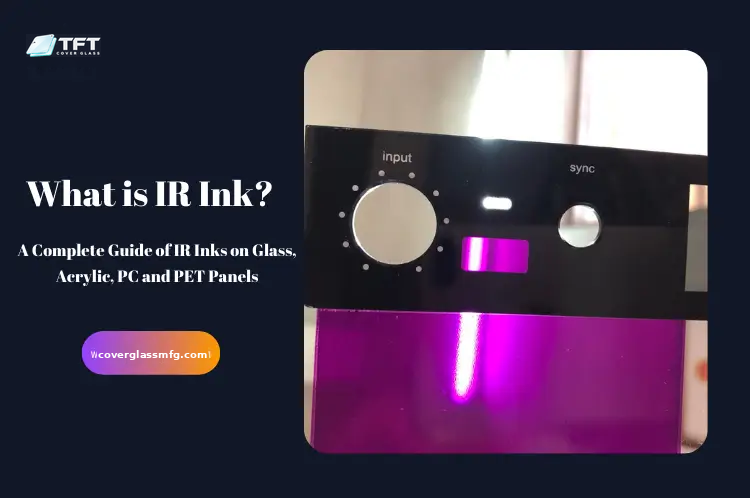
In an increasingly interconnected world, seamless interaction between humans and devices is paramount. Infrared (IR) light technology plays a crucial role in this interaction, yet often goes unnoticed. From remote controls to touchscreens, IR light facilitates communication and control across a wide range of applications. IR ink, a specialized ink that selectively transmits infrared light while blocking visible and ultraviolet light, lies at the heart of this technology. This article will delve into the composition, properties, and widespread applications of IR ink within the panel industry.
What is IR Ink?
IR ink is a specially formulated ink that transmits infrared (IR) light while blocking block visible light (light that can be seen by the eye) and ultraviolet light (such as sunlight). Printed onto transparent substrates, it creates a coating film that precisely controls light transmission at specific wavelengths.
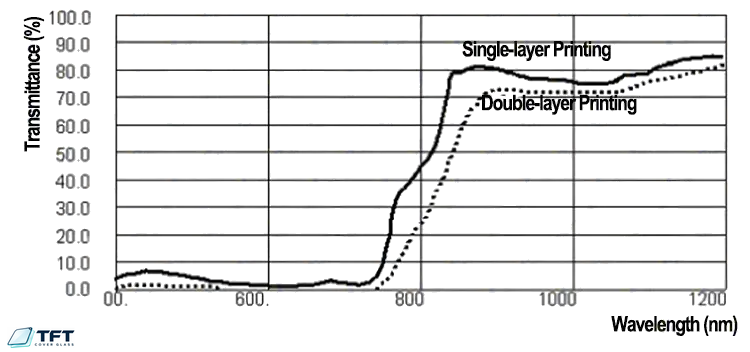
IR (infrared) ink exhibits low transmittance for visible light (e.g., at 550nm) while maintaining high transmittance for infrared light at wavelengths above 800nm. This characteristic makes it widely used in printing the infrared signal receiving windows of electronic products.
How Does IR Ink Works?
The functionality of IR ink is based on its selective absorption and transmission of light at different wavelengths. Here’s a breakdown of the process:
- Infrared Light Transmission: When infrared light (typically near-infrared light with wavelengths between 700nm and 1100nm) strikes an area printed with IR ink, the ink allows this light to pass through.
- Visible and Ultraviolet Light Blocking: Simultaneously, IR ink effectively absorbs or reflects visible light (wavelengths between approximately 400nm and 700nm) and ultraviolet light (wavelengths below 400nm), preventing them from passing through the ink layer.
- Photoelectric Conversion: The infrared light that passes through the IR ink then reaches a photosensitive element, such as a photodiode or phototransistor. These components convert the received infrared light signal into a corresponding electrical signal.
- Signal Amplification and Processing: The converted electrical signal is usually weak and needs to be amplified and processed before it can be used to control or drive other devices.
What Can IR Ink Be Printed On?
IR inks can be printed on a variety of materials, most commonly transparent substrates. Here are some examples:
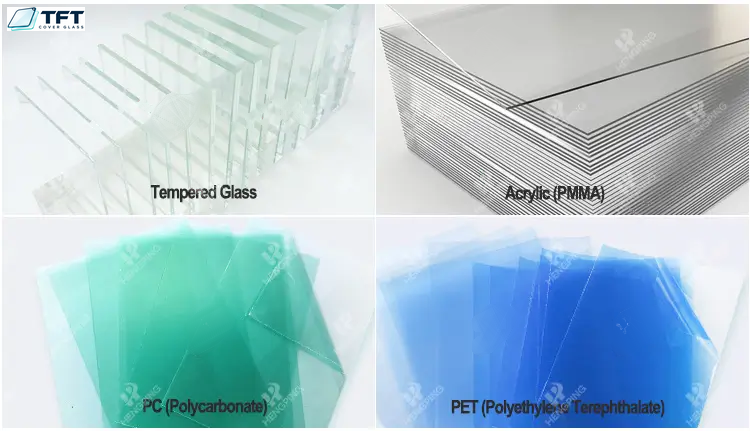
- Tempered Glass: Tempered glass is a very common substrate for IR ink, particularly for applications like touch screens, interactive displays, and sensor covers.
- Plastic Films: Various types of plastic films, including PET (polyethylene terephthalate), PC (polycarbonate), and PMMA (polymethyl methacrylate), are suitable for IR ink printing. These are often used in flexible displays, wearable devices, and other applications requiring flexibility.
- Acrylic: Similar to plastic films, acrylic offers good transparency and can be used with IR inks.
- ITO-coated Substrates: Indium tin oxide (ITO) is a transparent conductive oxide often used in touchscreens. IR inks can be printed on ITO-coated substrates for integrated functionality.
The choice of IR ink printing substrate depends on the specific application and its requirements, such as flexibility, durability, temperature resistance, and optical properties. Factors like the ink formulation and the printing process also play a role in determining substrate compatibility.
What Are the Different Types of IR Ink?
IR inks can be categorized based on different criteria. Here are some common classifications:
- By Spectral Properties
- Absorptive IR Ink: These inks function by absorbing specific wavelengths of infrared light. They typically contain specialized dyes or pigments that absorb visible and ultraviolet light while allowing infrared light to pass through.
- Reflective IR Ink: These inks function by reflecting specific wavelengths of infrared light. They typically contain metals or other reflective materials. This type of ink is less common.
- Transmissive IR Ink: These inks primarily focus on transmitting specific wavelengths of infrared light while blocking other wavelengths. This is the most common type of IR ink, often used in applications like remote control receiver windows. It’s important to note that transmissive IR inks usually also absorb visible and ultraviolet light.
- By Drying Method
- Thermoset IR Ink: Requires heat for curing and film formation.
- UV-Curable IR Ink: Requires ultraviolet light exposure for curing.
- Solvent-Based IR Ink: Dries and cures through solvent evaporation.
IR inks can also be categorized by drying method, application area, and chemical composition and more, which are not detailed here. It’s important to note that these classifications are not mutually exclusive. A single IR ink can belong to multiple categories. Selecting the appropriate IR ink requires comprehensive consideration of the specific application requirements.
How to Measure IR Ink Transmittance?
Measuring the transmittance of IR ink requires specialized equipment. Here are three common methods:
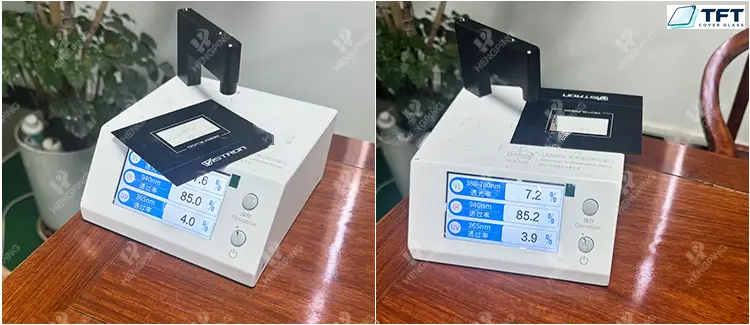
- UV-Vis-NIR Spectrophotometer: This is the most accurate method, capable of measuring transmittance at different wavelengths. The ink sample is placed in the instrument, and the intensity of light passing through both the sample and a blank substrate is measured to calculate transmittance.
- Infrared Light Source and Power Meter: This simpler method uses an infrared light source to illuminate the sample. A power meter measures the change in light power before and after passing through the sample, allowing for transmittance calculation. Accuracy is slightly lower than with a spectrophotometer.
- Infrared Camera and Image Analysis Software: This method provides a visual assessment of IR ink transmittance. An infrared camera captures an image of the sample, and software analyzes the grayscale values, converting them to transmittance. Calibration is necessary for accurate results.
Accurate IR ink transmittance measurements depend on controlling several factors. First, the substrate’s transmittance must be accounted for. Consistent ink thickness is also crucial, as it directly impacts transmittance. Selecting the correct wavelength range is essential, as is maintaining a consistent measurement angle. For the highest accuracy, a spectrophotometer remains the preferred method, but the final choice depends on specific needs and available resources.
IR Ink on Glass, Acrylic, and PC/PET: A Detailed Look at Applications
IR inks play a vital role in various applications, especially those requiring infrared light interaction. Here’s a detailed look at its uses on glass panels, acrylic window panels, and PET/PET window panels:
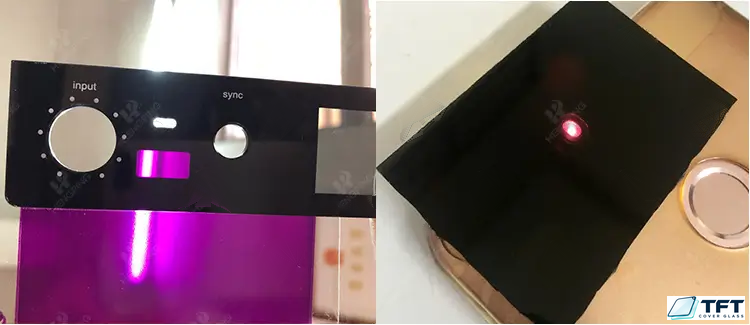
Glass Panels
- Touchscreens: IR inks are crucial in touchscreen technology, particularly for large interactive displays and certain industrial applications. The ink is printed in a grid pattern, creating a matrix of infrared beams. When a finger or other object breaks these beams, the system pinpoints the touch location.
- IR Filters: In cameras, sensors, and other optical systems, IR inks can act as filters, selectively blocking or transmitting specific wavelengths of infrared light. This improves image quality, reduces interference, and enables features like night vision.
- Smart Windows: Some smart window technologies utilize IR inks to control solar radiation transmittance. By adjusting the ink’s properties, the amount of heat and light entering a room can be dynamically controlled, improving energy efficiency and comfort.
- Automotive Heads-Up Displays (HUDs): IR inks can be used in the manufacturing of HUDs, projecting information onto the windshield for easy viewing by the driver.
Acrylic Window Panels
- IR Transmission Windows: Acrylic panels combined with IR ink create transmission windows for remote controls, sensors, and other IR devices. The ink allows IR signals to pass through while blocking visible light, maintaining both aesthetics and functionality.
- Signage: IR inks can create hidden patterns or information on acrylic panels, visible only under infrared light. This can be used for security markings, anti-counterfeiting measures, and other specialized applications.
- Art Installations: Artists can utilize IR inks on acrylic panels to create unique artwork, exploring the possibilities of light and interaction.
PET/PET Window Panels
- Flexible Touchscreens: The flexibility of PET film makes it an ideal substrate for flexible displays and wearable devices. IR inks can be printed on PET film to enable touchscreen functionality.
- Membrane Switches: IR inks can be used in the manufacturing of membrane switches, a low-cost, lightweight switching solution often found in consumer electronics and industrial control panels.
- Smart Packaging: IR inks can be integrated into PET packaging for product authentication, anti-counterfeiting, and interactive experiences.
The applications of IR inks on glass, acrylic (PMMA), PC and PET panels are extensive, ranging from everyday electronics to cutting-edge technology. The choice of substrate and ink type depends on the specific application requirements, such as desired transmittance, durability, flexibility, and cost. As technology continues to advance, the application areas for IR inks are expected to expand further.
Custom IR Ink Printing Supplier
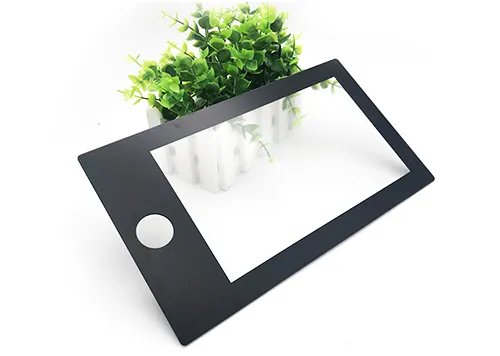
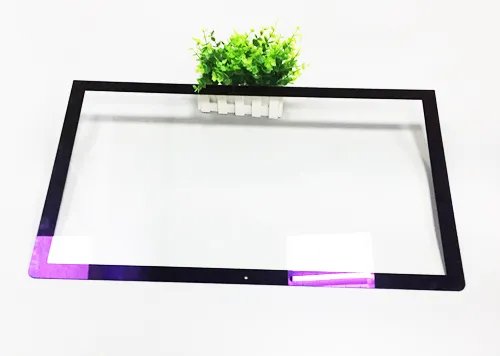
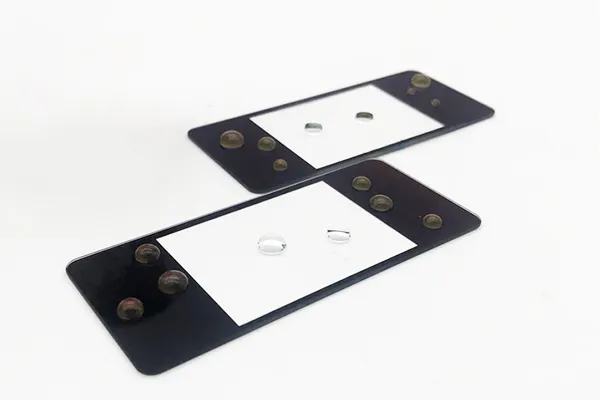
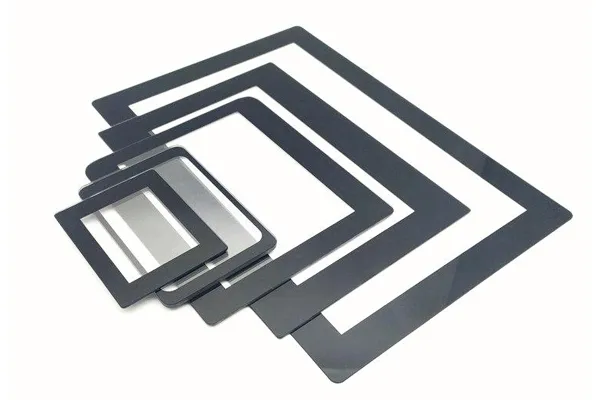
TFT Cover Glass offers customized solutions for a variety of window panels leveraging its advanced IR ink printing technology. We are proficient in printing on various substrates, including glass, acrylic, and PET, and can precisely control key parameters such as ink thickness and transmittance according to customer specifications. Whether you require intricate pattern designs or high-precision registration, TFT Cover Glass delivers exceptional results, meeting all your IR ink printing needs.
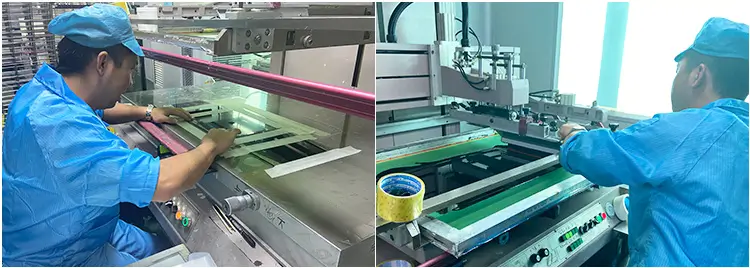
Our experienced team of engineers is dedicated to providing clients with optimal IR ink printing solutions. From material selection to process optimization, we offer comprehensive technical support throughout the entire process, ensuring the final product achieves peak performance. TFT Cover Glass is your trusted partner for product innovation and market success.






 EN
 FR
 DE
 ES
 PT
 IT
 NL
 DA
 RU
 AR
 TR
 JA
 KO
 ID
 UK
 TH
 VI
 PL
 MS
 ET
 EL