Introduction
The access control industry is experiencing unprecedented growth, with smart access systems becoming the cornerstone of modern security infrastructure. From residential buildings and office complexes to luxury hotels, hospitals, and industrial facilities, traditional key-and-lock mechanisms are giving way to sophisticated electronic solutions across every sector. This widespread adoption has driven the demand for high-performance cover glass panels to skyrocket.
This comprehensive guide explores the essential design elements that separate ordinary glass panels or acrylic panels from exceptional ones, covering everything from aesthetic enhancements to technical specifications that ensure long-term performance in demanding environments.
What’s Cover Glass Panels for Access Control System?
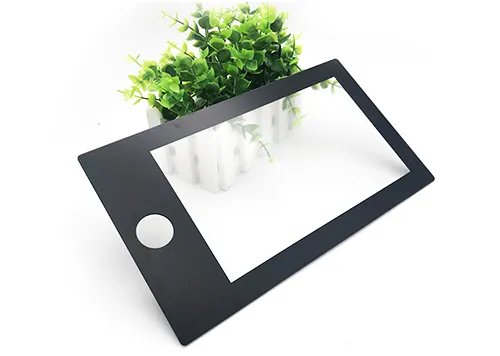
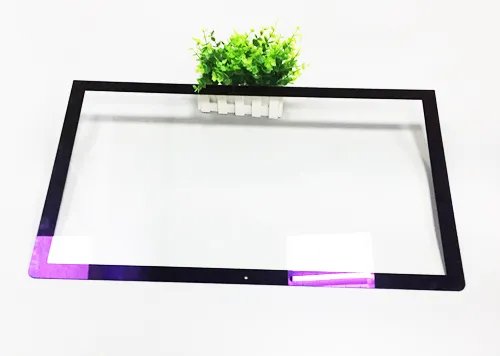
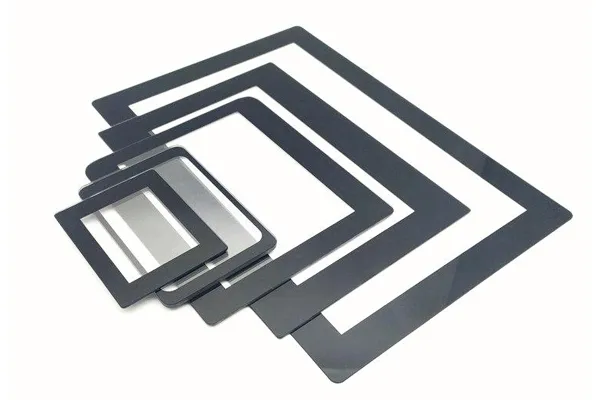
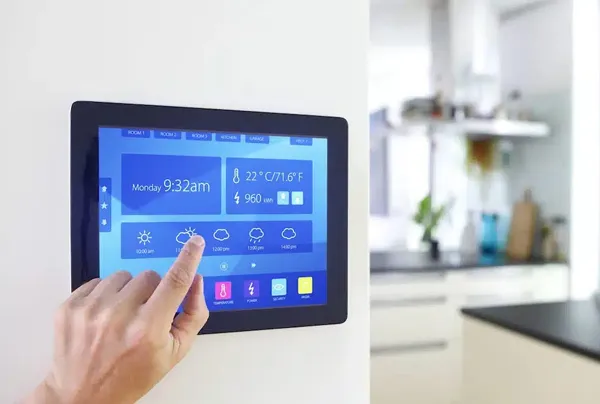
A cover glass panel for an access control system is the primary external interface that protects the display, touch sensors, and internal electronics while providing a conduit for user interaction and system status indication. These custom-made glass components combine durability, functionality, and aesthetic appeal to create seamless user experiences.
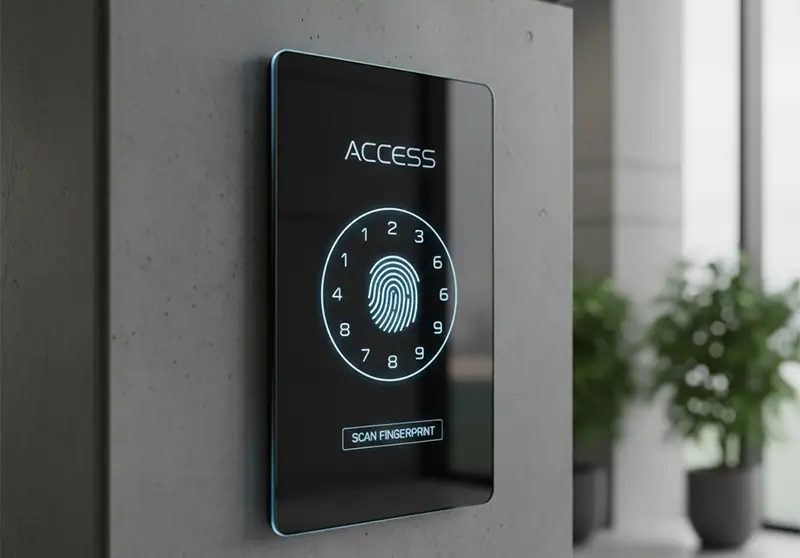
Cover glass panel design plays a crucial role in determining the success of any access control system. These protective layers not only safeguard sensitive electronic components but also directly impact user experience, durability, and overall system reliability. From outdoor weatherproofing to maintaining crystal-clear display visibility, every design decision matters.
Typical Materials for Smart Access Glass Panel
For access control systems, the primary glass materials used for smart access glass panels are:
- Soda Lime Glass: This is a widely used and cost-effective glass material, offering good clarity and workability. While it can be strengthened, it has lower thermal shock resistance compared to other options.
- Aluminosilicate Glass: Offering enhanced properties such as greater strength, superior scratch resistance, and better thermal shock resistance compared to soda lime glass, aluminosilicate glass is often chosen for applications requiring higher performance and durability, especially for interactive surfaces.
These glass substrates can be sourced from leading brands like Corning, Schott, Panda Glass, AGC, and NSG, ensuring consistent quality and performance. Furthermore, all glass undergoes strengthening processes, either through thermal tempering or chemical strengthening, to deliver exceptional impact and scratch resistance, as well as enhanced safety.
Main Process for Smart Access Glass Panel
The fabrication of cover glass panels involves several key processes, including:
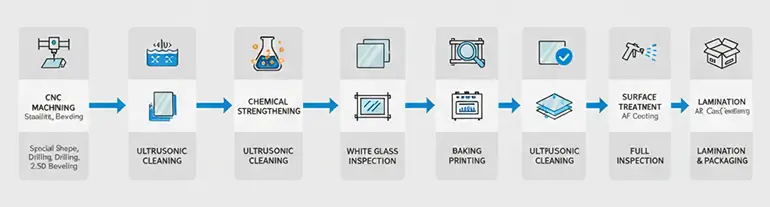
- Cutting and shaping the glass to precise dimensions.
- Edge finishing (e.g., 2.5D beveling).
- Drilling or creating cut-outs for buttons or indicators.
- Surface treatments (e.g., anti-glare, anti-fingerprint coatings).
- Printing (using various inks and techniques like silk screening).
- Tempering or chemical strengthening.
- Assembly with other components (like touch sensors or display layers).
Typical Printing Options for Smart Access Glass Panels
Digital printing and silkscreen printing are common methods for customizing glass panels. These techniques allow for various effects, from subtle indicators to full-color graphics.
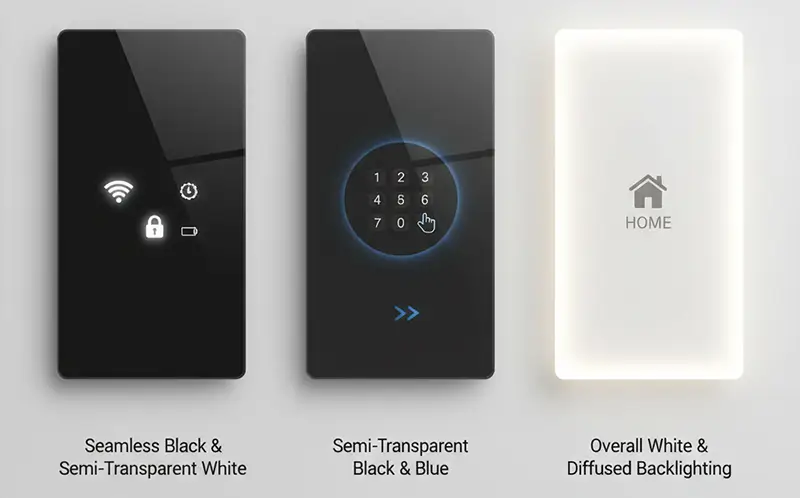
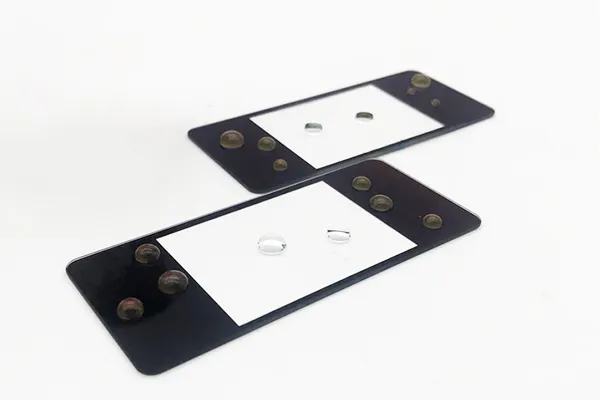
- Overall Black Printing with Semi-Transparent Printing:
This technique is often used to achieve a “seamless black” effect, where the display area appears black when off but becomes visible when illuminated.- Semi-transparent Black: Used for subtle indicators, frosted effects, or when a controlled level of light transmission (e.g., 1% to 50%) is desired for illuminated elements. This can create a sophisticated, almost floating appearance for printed elements.
- Semi-transparent White: Can be used for backlighting or discreetly displaying information.
- Semi-transparent Blue: Suitable for status lights or aesthetic accents, offering a distinct visual cue.
- Overall White Printing with Semi-transparent White Printing:
This approach can be used for creating diffused backlighting effects or for designs where a soft, luminous appearance is desired. The semi-transparent white ink allows light to pass through while maintaining a diffused quality.
Special Requirements for Access Control Systems
Beyond basic functionality, access control systems often demand specialized features due to their application in various environments:
- Durability: Resistance to harsh weather, constant touch interactions, and potential impacts.
- Readability: Clear display of information even in bright or variable lighting conditions.
- Aesthetics: Seamless integration with building design and modern technology.
- Security: Robustness against tampering and breakage.
5 Keys to Designing Cover Glass Panels for Access Control Systems
2.5D Edge Design
The 2.5D curved edge design represents a significant advancement in both aesthetics and functionality. This smooth edge treatment transforms flat glass panels into premium-feeling components that enhance the overall product experience.
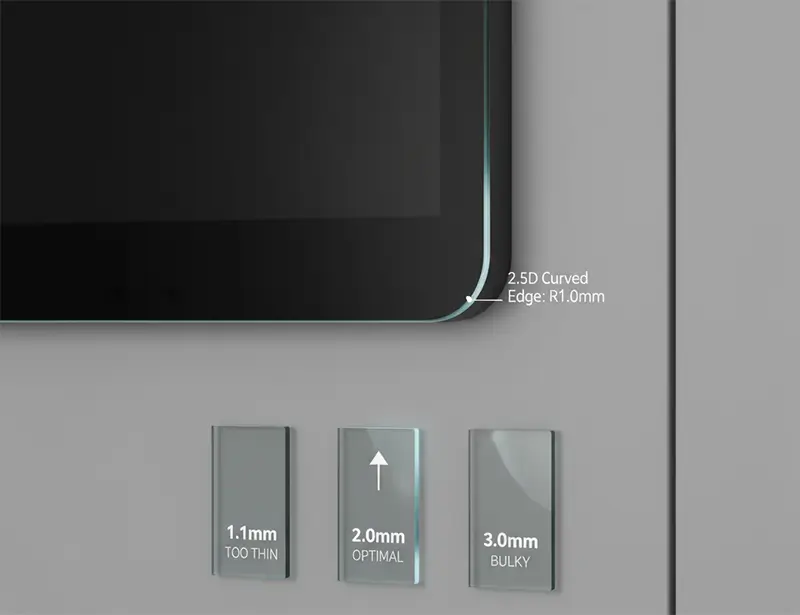
Visual Enhancement Benefits: The curved edge creates a three-dimensional appearance that adds depth and sophistication to access control panels. This design element elevates the perceived quality of the entire system, making it appear more modern and premium.
Optimal Thickness Selection: For 2.5D edge design, the ideal specification is 2.0mm glass thickness paired with R1.0mm edge radius. This combination provides the perfect balance:
- 1.1mm Thickness: Too thin, lacks visual impact and structural integrity
- 3.0mm Thickness: Excessively heavy, appears bulky and outdated
- 2.0mm Thickness: The optimal balance of durability, weight, and visual appeal
Importance of Tactile Quality: The smooth curved edge provides a premium tactile experience, important for frequently-touched access control interfaces. This design reduces stress concentrations at edges, improving overall durability and user safety.
All-Black Integration Technology
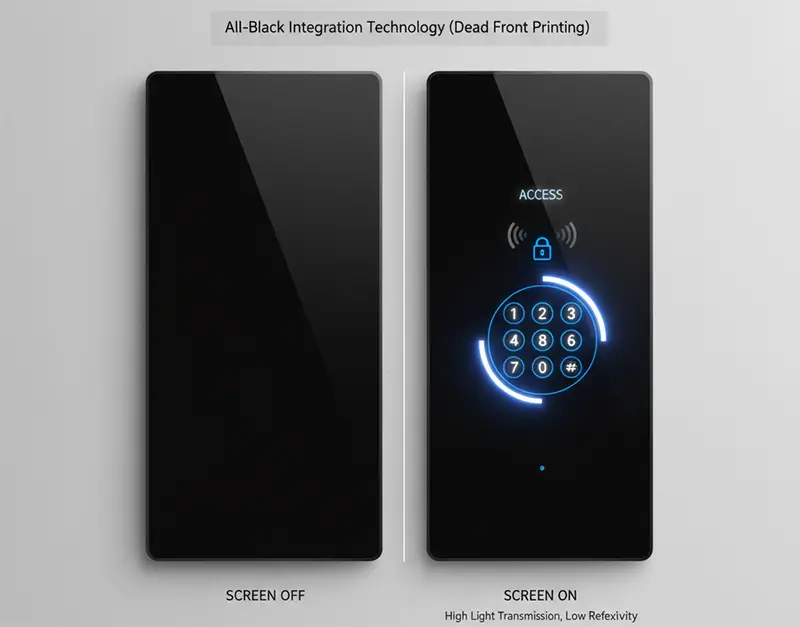
All-black integration technology, also known as dead front printing technology or seamless black technology, represents the pinnacle of modern display integration, creating seamless visual experiences that adapt to system states.
Core Principles and Visual Effects
The technology’s essence lies in its dual-state functionality: when the screen is off, it presents a pure, deep “total black” visual effect, creating a borderless, minimalist integrated appearance. When the screen activates, it perfectly balances high light transmission with low reflectivity, ensuring display content remains sharp and clear without interference.
4 Implementation Methods:
- Screen Printing Method: Direct ink application to the glass surface offers a cost-effective solution for large production volumes. When properly processed with appropriate curing techniques, this method delivers excellent long-term durability.
- Coating Method: Thin-film deposition techniques provide precise optical property control with uniform coverage across large surfaces. This method allows manufacturers to fine-tune light transmission and reflection characteristics with exceptional consistency.
- Film Lamination Method: Adhesive film application offers design flexibility and enables multiple functional layers within a single structure. This approach is ideal for complex optical requirements and allows design modifications during development phases.
- Polarizer Integration: Optical polarization control integrates polarizing films to achieve enhanced contrast ratios and reduced reflections. This advanced technique improves display visibility and user experience across various lighting conditions.
Additional Functional Features
All-black glass panels can incorporate multiple enhanced characteristics:
- Anti-glare (AG) properties: Reduces surface reflections and glare
- Anti-fingerprint (AF) coating: Maintains clean appearance with minimal maintenance
- Scratch resistance: Preserves optical clarity over extended use periods
3. Ink Adhesion and UV Resistance
Outdoor access control applications face the ultimate durability challenge, requiring specialized solutions to maintain appearance and functionality over years of environmental exposure.
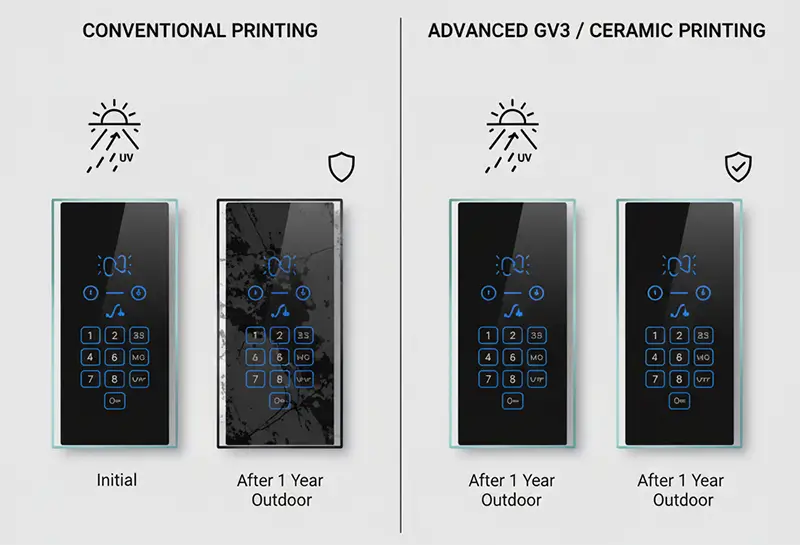
Outdoor Application Challenges:
- Intense UV radiation causing ink degradation
- Temperature cycling from -40°C to +85°C
- Moisture, humidity, and chemical exposure
- Mechanical stress from expansion and contraction
Advanced GV3 Screen Printing Solution (≤2mm Glass): This premium printing standard addresses outdoor durability through:
- UV-resistant ink formulations: Pass rigorous UV aging tests without color shift or adhesion loss
- Chemical strengthening compatibility: Maintains glass flatness while ensuring thermal and chemical stability
- Long-term performance: Proven stability under intense light exposure for extended periods
Ceramic Screen Printing Solution (≥2mm Glass): Unlike conventional screen printing, ceramic printing integrates thermal strengthening:
- Ink fusion process: Ink becomes permanently integrated into glass surface
- Lifetime durability: Ink lifespan matches glass substrate – no delamination possible
- Safety glass properties: Creates true safety glass that fragments into safe, blunt pieces upon breakage
UV Aging Test Standards: Both solutions undergo comprehensive testing including:
- ASTM G154 xenon arc exposure testing
- 1000+ hour accelerated aging cycles
- Color stability measurements (ΔE values)
- Adhesion strength verification
4. Pinhole-Free Printing Quality
Printing defects can compromise both aesthetics and functionality in access control applications. Pinhole formation results from insufficient printing experience and improper layer thickness control.
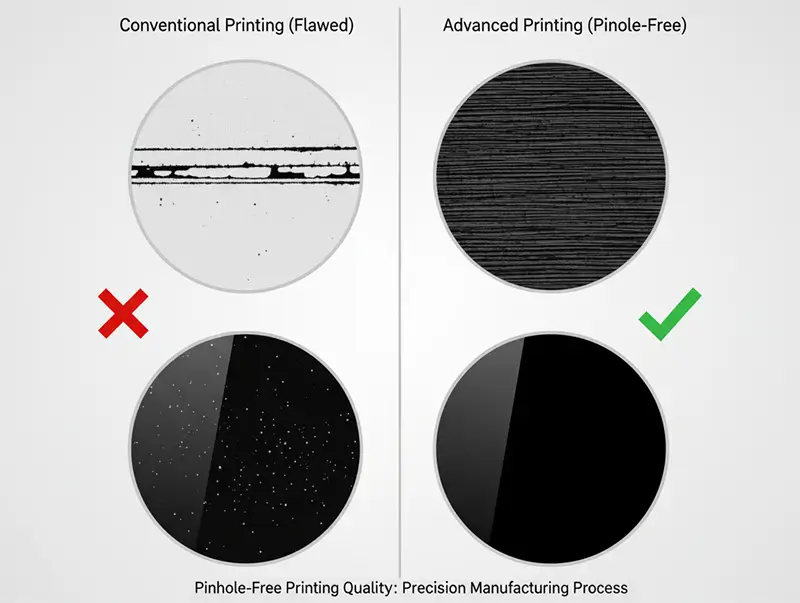
Professional manufacturing addresses this through:
- Optimized screen mesh selection: Proper mesh count for ink viscosity
- Controlled printing parameters: Pressure, speed, and gap settings
- Quality inspection protocols: 100% visual inspection under controlled lighting
- Process validation: Statistical process control for consistent results
Whether requirements call for opaque black, semi-transparent black, or any other specification, professional manufacturers maintain zero-defect quality standards through proven process control.
5. Impact Resistance and Durability
Access control panels face potential vandalism and accidental impact, requiring engineered solutions based on standardized testing.
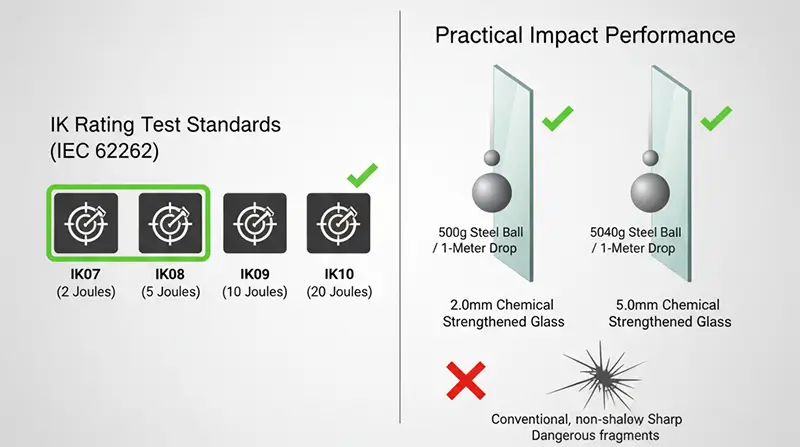
IK Rating Test Standards: The International Electrotechnical Commission (IEC) 62262 standard defines impact protection levels:
- IK07: Withstands 2 joules impact energy
- IK08: Withstands 5 joules impact energy
- IK09: Withstands 10 joules impact energy
- IK10: Withstands 20 joules impact energy
Practical Impact Performance: Real-world testing demonstrates measurable improvements with thickness optimization:
- 21-inch, 2mm chemical glass: Survives 500g steel ball drop from 1-meter height
- Same size, 5mm thickness: Survives 1040g steel ball drop from 1-meter height
Acrylic Panels vs Glass Panels for Access Control Systems
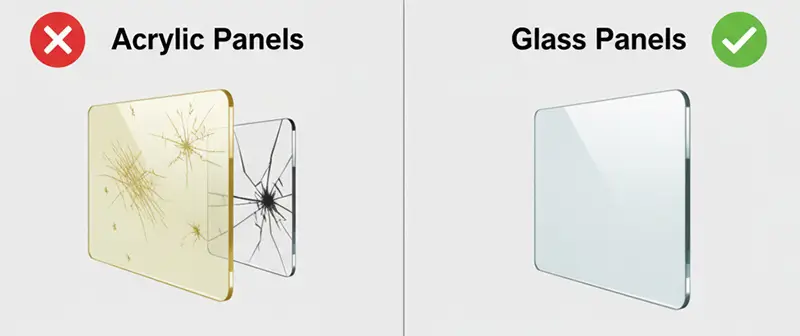
The access control industry is witnessing a significant shift from traditional acrylic panels to premium glass solutions. As building owners and facility managers prioritize long-term performance and aesthetic appeal, many are choosing to upgrade their acrylic-based access control systems to glass panels for enhanced durability and professional appearance.
Acrylic Panel Advantages
- Lower material and processing costs.
- Lighter weight for easier installation.
- Impact resistance without shattering.
- Easier machining and modification.
Acrylic Panel Limitations
- Susceptible to scratching and abrasion.
- UV degradation causes yellowing.
- Lower temperature resistance.
- Chemical susceptibility to many solvents.
- Plastic appearance affects perceived quality.
Glass Panel Advantages
- Superior scratch resistance for long-term clarity.
- Excellent chemical resistance to cleaning agents.
- Higher temperature resistance (-40°C to +150°C).
- Better UV stability – no yellowing over time.
- Premium tactile feel and appearance.
- Recyclable and environmentally friendly.
Glass Panel Considerations
- Higher initial cost compared to acrylic.
- Greater weight requires robust mounting.
- Requires specialized processing equipment.
- Brittle failure mode (though safety glass minimizes risk).
This upgrade trend reflects the growing recognition that glass panels provide superior long-term value despite higher initial investment. For professional access control systems, especially outdoor applications, the enhanced durability, optical clarity, and premium appearance justify the cost difference in most commercial applications.
Conclusion
The cover glass panel for an access control system is far more than a simple protective shell—it is an integral part of the user interface, a reflection of brand quality, and a key determinant of long-term performance. By mastering the five essential design elements: 2.5D edge design, all-black integration technology, UV-resistant ink systems, pinhole-free printing quality, and impact resistance optimization, businesses can create access control solutions that are both secure and visually stunning.
For premium glass solutions that incorporate these critical design keys, TFT Cover Glass specializes in cover glass panel design and manufacturing. We provide technical support, rapid prototyping services, and can share successful case studies from various access control applications to help your projects stand out in today’s competitive market.



 EN
 FR
 DE
 ES
 PT
 IT
 NL
 DA
 RU
 AR
 TR
 JA
 KO
 ID
 UK
 TH
 VI
 PL
 MS
 ET
 EL