What is Touch Panels?
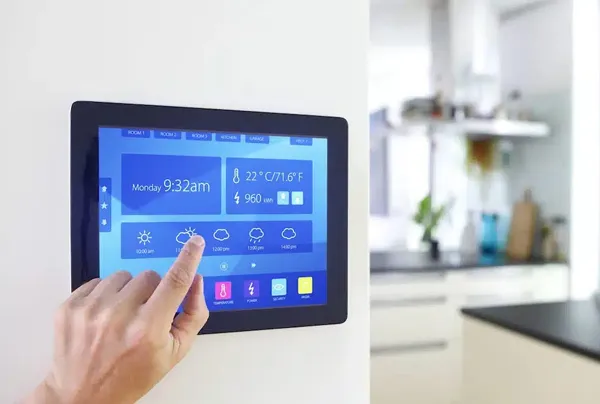
A touch panel, also known as a touchscreen, is an input device capable of converting contact between a finger or other object and a display into an electronic signal. Simply put, it means that when the user taps and swipes their finger on the screen, the device recognizes the user’s movement and responds accordingly.
Touch Panels Structure
Touch panels are generally composed of the following parts:
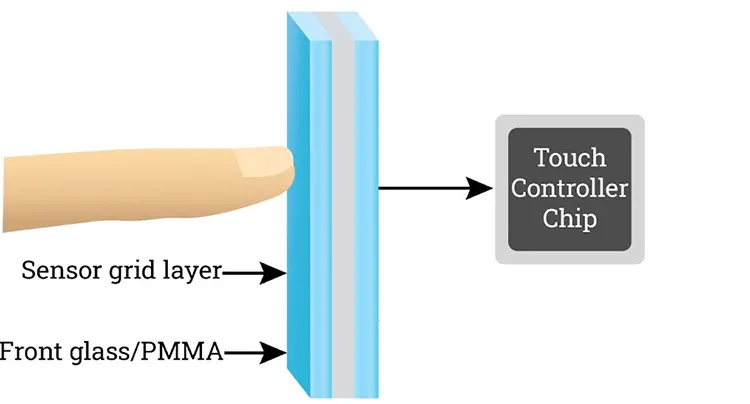
- Substrate: The substrate material for touch panels needs to have high light transmittance, high hardness and scratch resistance, as well as good processing performance. Now, the commonly used materials are glass, plastic (such as acrylic) or other materials.
- Sensor Layer: It is responsible for sensing the touch action, common types are resistive, capacitive, infrared, surface acoustic wave.
- Controller: It converts the signals collected by the induction layer into signals that can be recognized by the device and processed.
Applications of Touch Panels
As a key component of human-computer interaction, touch panels have been integrated into every aspect of our lives and continue to evolve, bringing us a more convenient and smarter experience. The applications of touch panels are very wide, almost all devices that require human-computer interaction will use it. The following are some common application scenarios:
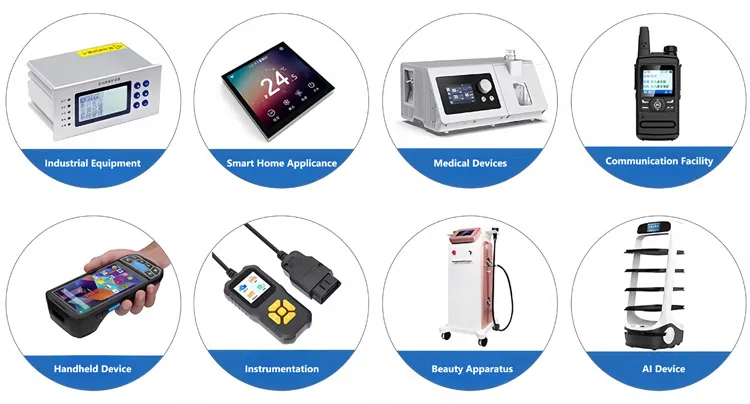
- Consumer Electronics: Smart phones, tablet PCs, laptops, e-book readers, smart watches and so on;
- Industrial Equipment: Industrial automation control system, medical equipment, financial equipment, transportation equipment, etc.;
- Home Appliances: Smart TV, Smart Refrigerator, Smart Washing Machine, Smart Oven, Smart Home Temperature Control System, Smart Door Lock etc.
- Other Fields: Electronic whiteboard, intelligent learning machine, etc.), advertising machine, digital signage, game machine, etc.
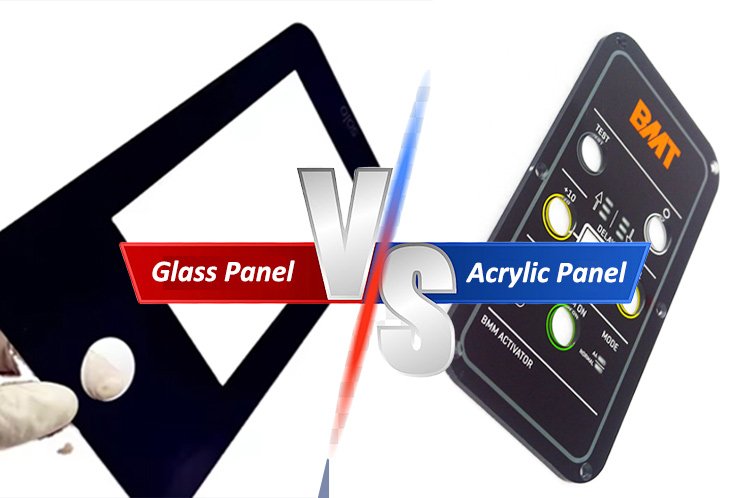
Glass Panel Vs. Acrylic Panel: Which is BEST for Touch Panels?
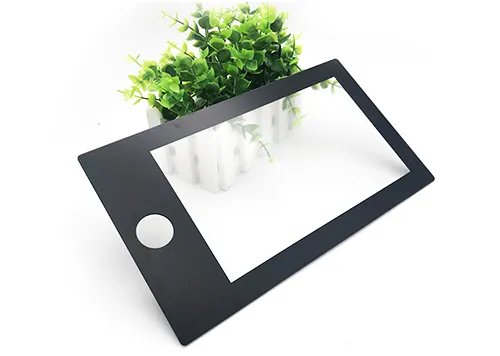
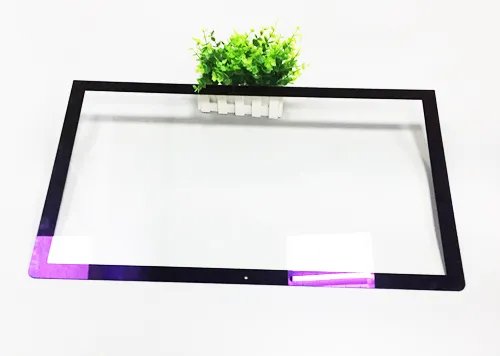
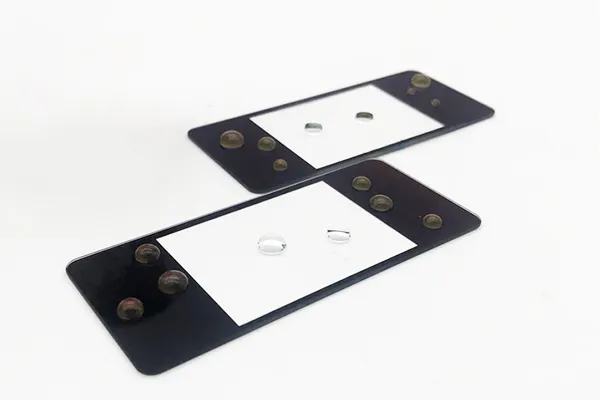
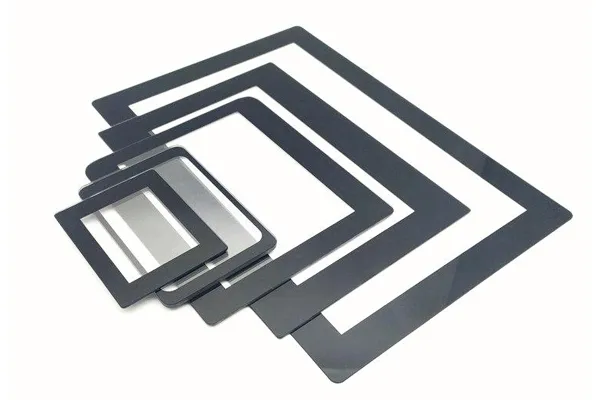
As above mentioned, glass and acrylic are the most used front cover panels materials for touch screen. However, many customers are considering replacing the
acrylic panel on the touch screen with a
glass cover. In fact, most touchscreens today are designed and equipped with glass cover. From the practical application point of view, glass cover is a better choice. Here simply introduces why choose glass cover plate instead of acrylic cover plate?
Touch Sensitivity
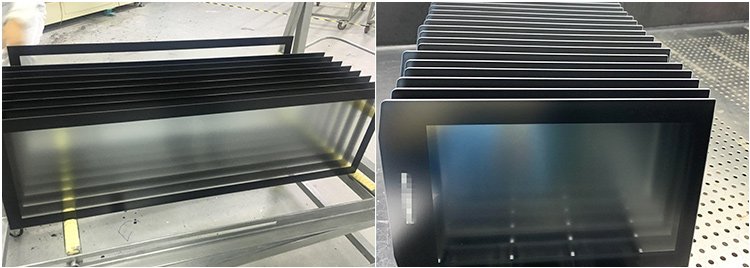
In terms of touch sensitivity, the glass cover is significantly better. The glass surface is smoother and less prone to unevenness, which contributes to the smoothness and stability of the fingertip when sliding on the touchscreen. At the same time, glass has better optical transparency, which allows it to transmit touch signals more accurately. Moreover, glass can be made thinner (up to 0.12mm), which not only maintains strength, but also reduces the pressure transfer path when touching, improving touch sensitivity and responsiveness.
Hardness and Abrasion Resistance
In terms of hardness and abrasion resistance, glass covers also have obvious advantages. Touchscreens need to be touched and slid frequently, and glass is harder, more wear-resistant, and less prone to scratches than acrylic, and can better resist the wear and tear caused by daily use. In addition, glass is an inorganic material that is not easily affected by chemical corrosion or ultraviolet rays of sunlight and will not turn yellow or be affected by chemicals over time, thus extending the service life of the device and reducing maintenance and replacement costs.
Optical Transmittance and Heat Resistance
With up to 92% optical transmittance and color reproduction, glass provides a clearer, more accurate display, which is critical to the touchscreen user experience. Moreover, glass is highly thermally stable and does not suffer from problems such as distortion due to high temperatures. While acrylic is less resistant to high temperatures and is easily deformed or melted in high temperature environments.
Sustainability
Glass is a natural material that can be reused through recycling and is highly environmentally friendly, in contrast to acrylic, which is a synthetic plastic that can have environmental impacts from the production process and is relatively more complex to recycle and dispose of.
In many applications, we highly recommend cover glass as for touch panels. But, compared with acrylic panels, the cost of glass panel is a little higher. So, choosing glass panel or acrylic panel should take several factors into considerations, including materials, size, shapes, printing colors, coatings, cost and more. If you need professional suggestions to help you evaluate your project, just contact us any time!






 EN
 FR
 DE
 ES
 PT
 IT
 NL
 DA
 RU
 AR
 TR
 JA
 KO
 ID
 UK
 TH
 VI
 PL
 MS
 ET
 EL