
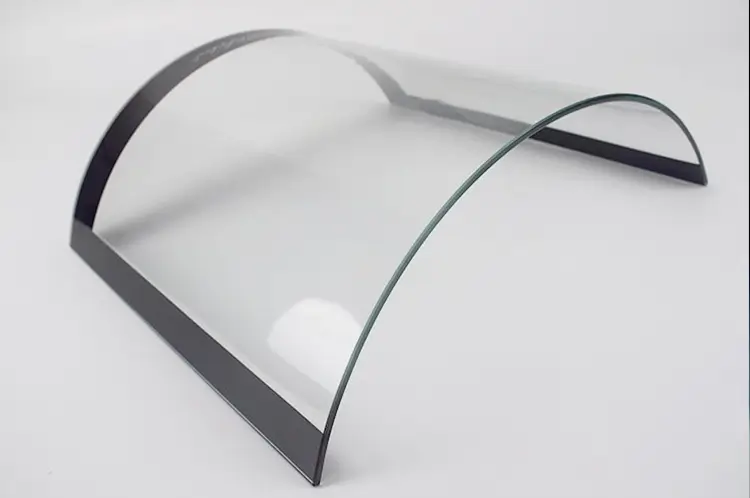
Looking for custom curved tempered glass? This article explains how curved tempered glass is manufactured, detailing everything you need to know about processes.
Introduction
Curved glass is reshaping the world of architecture, automotive design, interior innovation, commercial displays and more, but one question often remains: Can tempered glass be curved? In this article, we’ll provide a clear, definitive answer while exploring the science, process, and possibilities behind curved tempered glass.
Tempered glass cannot be curved after tempering, but it can be bent before the tempering process, resulting in strong, safe, and stunning curved tempered glass.
A clear understanding of curved tempered glass capabilities is essential for designers and manufacturers seeking to maximize design possibilities while maintaining safety and structural integrity. Let’s explore it.
Can Tempered Glass Be Curved?
When it comes to curving tempered glass, the answer isn’t a simple yes or no since it depends on timing. Tempered glass cannot be curved after tempering, but it can be curved before the tempering process, opening up a world of possibilities for custom designs. Post-tempering, the glass’s internal stresses lock it into a rigid state, shattering if bent; however, curving it prior to tempering creates a strong, safe, and beautifully shaped product.
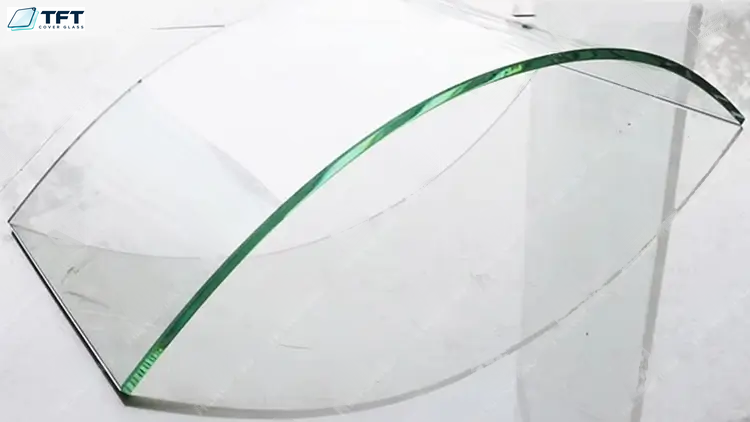
Why Curved Tempered Glass Must Be Shaped Before Tempering?
Tempered glass is made by heating annealed glass to approximately 620°C (1,148°F) until it’s malleable, then rapidly cooling it with high-pressure air jets. This quenching process creates a balance of compressive stresses on the surface and tensile stresses inside, making the glass up to five times stronger than its untreated counterpart. Once tempered, this stress equilibrium is set, attempting to bend it afterward disrupts the balance, causing the glass to fracture into small, blunt pieces. This is why curved tempered glass must be bent before tempering and post-tempering curvature is impossible.
How Curved Tempered Glass is Achieved?
The manufacturing of curved tempered glass is a multi-stage process that demands meticulous control and a deep understanding of glass properties. The key is to integrate the shaping and strengthening steps seamlessly, as tempered glass cannot be curved after it has been treated. In this approach, annealed glass is heated to its softening point in a specialized bending furnace, where it’s molded into the desired curve using precision tools or gravity. Once the shape is achieved, the tempering process kicks in; rapid cooling locks in both the strength and the curvature. While the resulting curved tempered glass retains all the safety and durability benefits of flat tempered glass, it now has a dynamic, flowing form.
What Bending Methods Are Used to Create Curved Tempered Glass?
While it’s impossible to bend tempered glass after the tempering process, curved tempered glass is indeed a reality thanks to specialized techniques that combine shaping and tempering. These primarily involve hot bending, where the glass is shaped while it’s still hot and pliable.
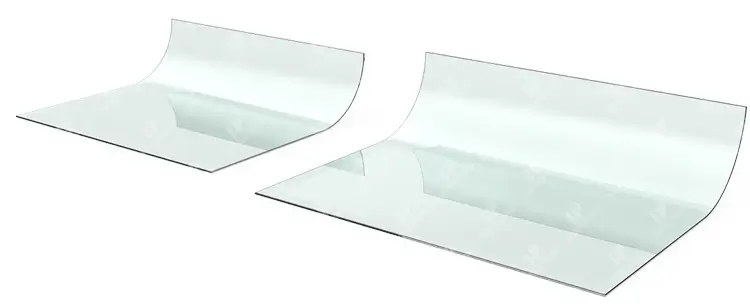
Gravity Sag Bending
This method involves placing a sheet of annealed glass over a mold and heating it until it softens and sags into the desired shape under its own weight. The shaped glass is then rapidly cooled to achieve tempering.
- Pros: Suitable for large panels and simple curves.
- Cons: Limited control over precise curvature; may result in variations in thickness.
Press Bending
In this method, the annealed glass is heated and then pressed between two molds to achieve the desired shape. This offers more precise control over the curvature compared to gravity sag bending. The shaped glass is then tempered.
- Pros: Higher precision; suitable for more complex curves.
- Cons: Can be more expensive than gravity sag bending; limited to smaller panel sizes.
Roller Bending
Annealed glass is passed through a series of rollers that gradually bend it into the desired shape as it’s heated. This method is often used for high-volume production of relatively simple curved shapes. The shaped glass is then tempered.
- Pros: High-volume production; consistent results.
- Cons: Limited to simpler curves; may not be suitable for all glass types.
Why Choose Curved Tempered Glass?
Curved tempered glass offers a compelling combination of safety, strength, and design flexibility that few other materials can match. Its enhanced impact resistance makes it ideal for safety-critical applications, while its ability to be shaped into flowing curves and dynamic forms opens up a world of creative possibilities. Unlike standard annealed glass, curved tempered glass shatters into small, relatively harmless fragments, minimizing the risk of injury. This makes it the perfect choice for everything from architectural facades and automotive windshields to furniture and shower enclosures. For projects where both safety and visual appeal are paramount, curved tempered glass is the clear winner.
What Are Common Applications of Curved Tempered Glass?
Curved tempered glass finds applications in a wide range of industries, where both safety and aesthetic appeal are paramount:
- Appliance Manufacturing: Oven doors and refrigerator shelves made of curved tempered glass provide heat resistance and safety.
- Digital Displays: Increasingly found in curved displays to make the image more immersive.
- Automotive Industry: Curved windshields and windows provide enhanced visibility and aerodynamic performance while ensuring passenger safety in the event of an accident.
- Architecture: Curved glass facades, balustrades, and skylights create stunning architectural features while meeting stringent safety codes.
- Furniture Design: Curved tempered glass tabletops and shelving offer a modern and elegant look while providing durability and safety.
What Are the Alternatives to Curved Tempered Glass?
Curved tempered glass isn’t your only option. While alternatives like annealed or laminated curved glass offer their own advantages, understanding the trade-offs is key to making the right choice for your project. Let’s compare them directly.
| Glass Type | Curving Possible? | Strength | Safety Features | Best For |
|---|---|---|---|---|
| Curved Tempered Glass | Yes (pre-tempering) | High | Blunt fragments when broken | Facades, windows, furniture |
| Laminated Curved Glass | Yes | Moderate | Holds together when shattered | Skylights, noise reduction |
| Annealed Curved Glass | Yes | Low | Sharp shards when broken | Decorative, low-risk uses |
When your project demands both resilience and a refined aesthetic, curved tempered glass often emerges as the ideal solution. However, it’s important to understand the alternatives. Annealed glass, while easier to shape, lacks the strength required for many applications. Laminated glass provides enhanced safety through its layered construction, but may not offer the same level of impact resistance as tempered glass. At TFT Cover Glass, we have experience on what needs to get done. Be it design or materials, trust that we can help.
Conclusion
So, can tempered glass be curved? Absolutely – when crafted with expertise before tempering, it becomes a powerhouse of design and durability. From its creation process to its standout benefits, curved tempered glass is a testament to how innovation can transform a simple material into something extraordinary. TFT Cover Glass provides custom curved glass solutions that do just that, giving the designers and manufacturers what they are exactly hoping for, and no compromise. Reach out today, and let’s solve your curved glass needs!



 EN
 FR
 DE
 ES
 PT
 IT
 NL
 DA
 RU
 AR
 TR
 JA
 KO
 ID
 UK
 TH
 VI
 PL
 MS
 ET
 EL